
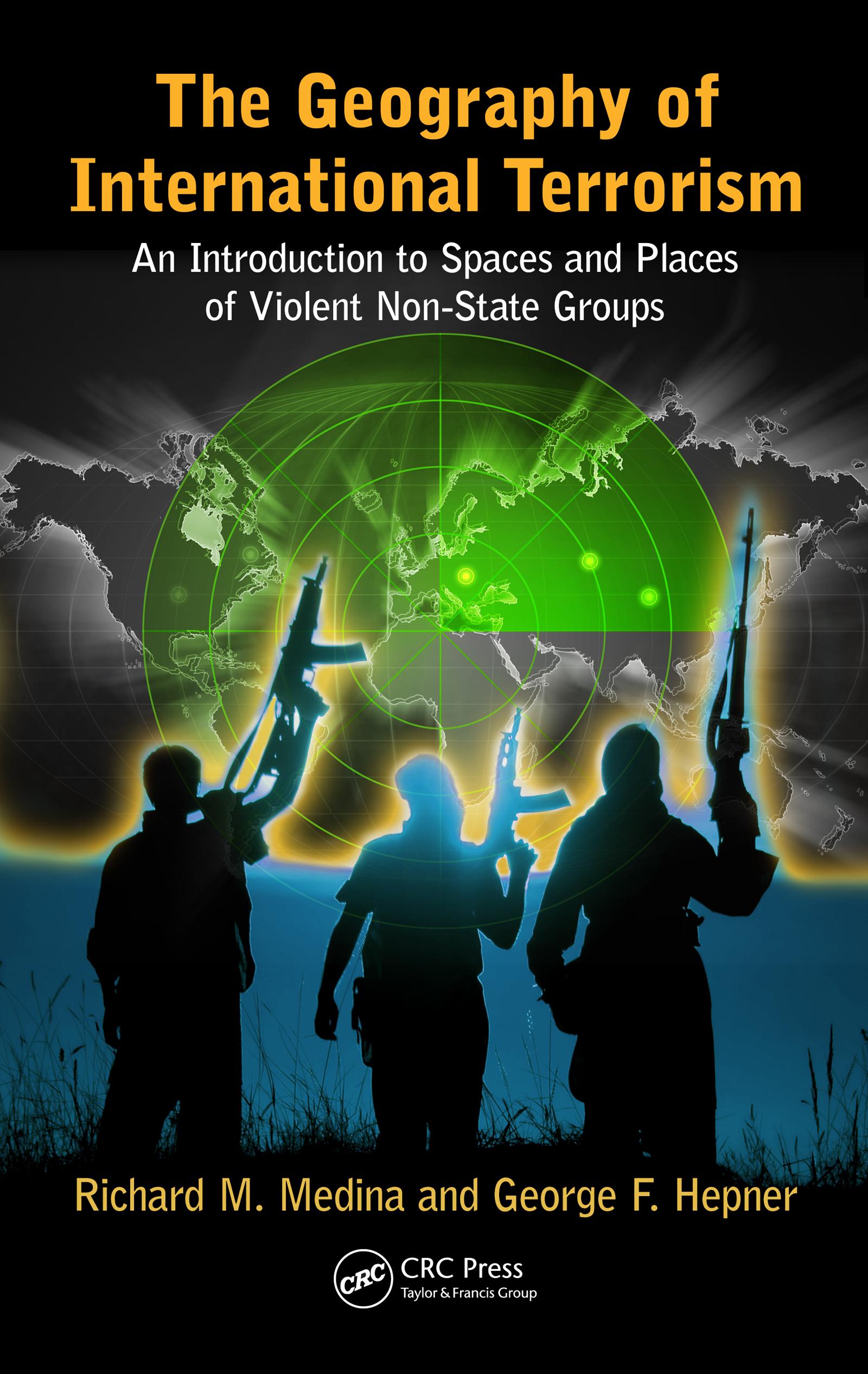
While geography is not the only factor to shape human behavior, its influence on terrorists’ motivations, behaviors, options, and activities is a primary consideration in understanding terrorism. Taking a different approach than many other books on terrorism, The Geography of International Terrorism: An Introduction to Spaces and Places of Violent Non-State Groups presents an accessible, cross-disciplinary approach to managing terrorism on a global scale. The authors articulate the role of physical and human geography in terrorist ideology, operations, haven formation, and control.
Providing the wider perspective required for preempting and countering terrorism, the book focuses on the geographic perspective in a more explicit manner than previous treatments of the topic. The authors examine networks as global systems and discuss new geospatial technologies in counterterrorism, supplying a blend of concepts and techniques that support policy development within the governing counter terrorist community.
There are hundreds of books on terrorism, but few if any focus on the influence of geography, geospatial analysis, and geospatial intelligence approaches. A combination of academic theory and practical applications, this book provides the vertical linkage between topics at the high resolution level, such as sense of place and cultural identity of a clan or tribe with regional and global geographic-scale issues critical to understanding 21st century international terrorist groups.
Betal enkelt med kort, Klarna, Apple Pay eller Google Pay. Ikke fornøyd? Du har alltid 14 dagers angrerett. Les mer i våre vilkår. Har du spørsmål, send oss en e-post på hello@memmo.org.
Memmo gjør det enklere å studere – uansett hvor du er i verden. Hos oss samler du pensumbøker og smarte studieverktøy på ett og samme sted: sammendrag, quizer, podkaster og flashcards. Og så Ted, din studiekompis som svarer på alt du lurer på. Over 50 000 studenter studerer allerede her – bygget for at du skal lære raskere og stresse mindre.