
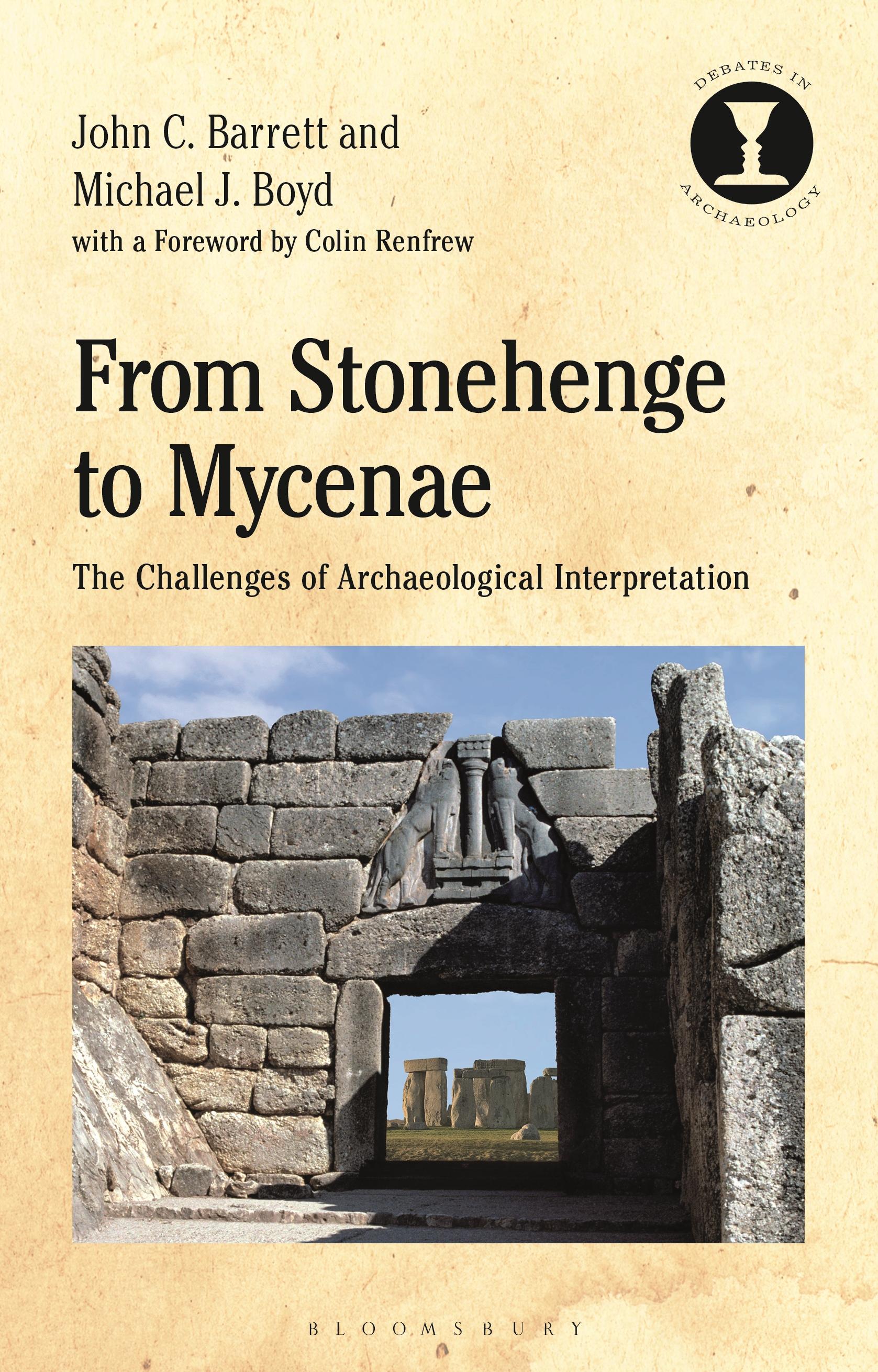
This book reconsiders how we can understand archaeology on a grand scale by abandoning the claims that material remains stand for the people and institutions that produced them, or that genetic change somehow caused cultural change. Our challenge is to understand the worlds that made great projects like the building of Stonehenge or Mycenae possible. The radiocarbon revolution made the old view that the architecture of Mycenae influenced the building of Stonehenge untenable. But the recent use of 'big data' and of genetic histories have led archaeology back to a worldview where 'big problems' are assumed to require 'big solutions'.
Making an animated plea for bottom-up rather than top-down solutions, the authors consider how life was made possible by living in the local and materially distinct worlds of the period. By considering how people once built connections between each other through their production and use of things, their movement between and occupancy of places, and their treatment of the dead, we learn about the kinds of identities that people constructed for themselves. Stonehenge did not require an architect from Mycenae for it to be built, but the builders of Stonehenge and Mycenae would have shared a mutual recognition of the kinds of humans that they were, and the kinds of practices these monuments were once host to.
Making an animated plea for bottom-up rather than top-down solutions, the authors consider how life was made possible by living in the local and materially distinct worlds of the period. By considering how people once built connections between each other through their production and use of things, their movement between and occupancy of places, and their treatment of the dead, we learn about the kinds of identities that people constructed for themselves. Stonehenge did not require an architect from Mycenae for it to be built, but the builders of Stonehenge and Mycenae would have shared a mutual recognition of the kinds of humans that they were, and the kinds of practices these monuments were once host to.
Betal enkelt med kort, Klarna, Apple Pay eller Google Pay. Ikke fornøyd? Du har alltid 14 dagers angrerett. Les mer i våre vilkår. Har du spørsmål, send oss en e-post på hello@memmo.org.
Memmo gjør det enklere å studere – uansett hvor du er i verden. Hos oss samler du pensumbøker og smarte studieverktøy på ett og samme sted: sammendrag, quizer, podkaster og flashcards. Og så Ted, din studiekompis som svarer på alt du lurer på. Over 50 000 studenter studerer allerede her – bygget for at du skal lære raskere og stresse mindre.