
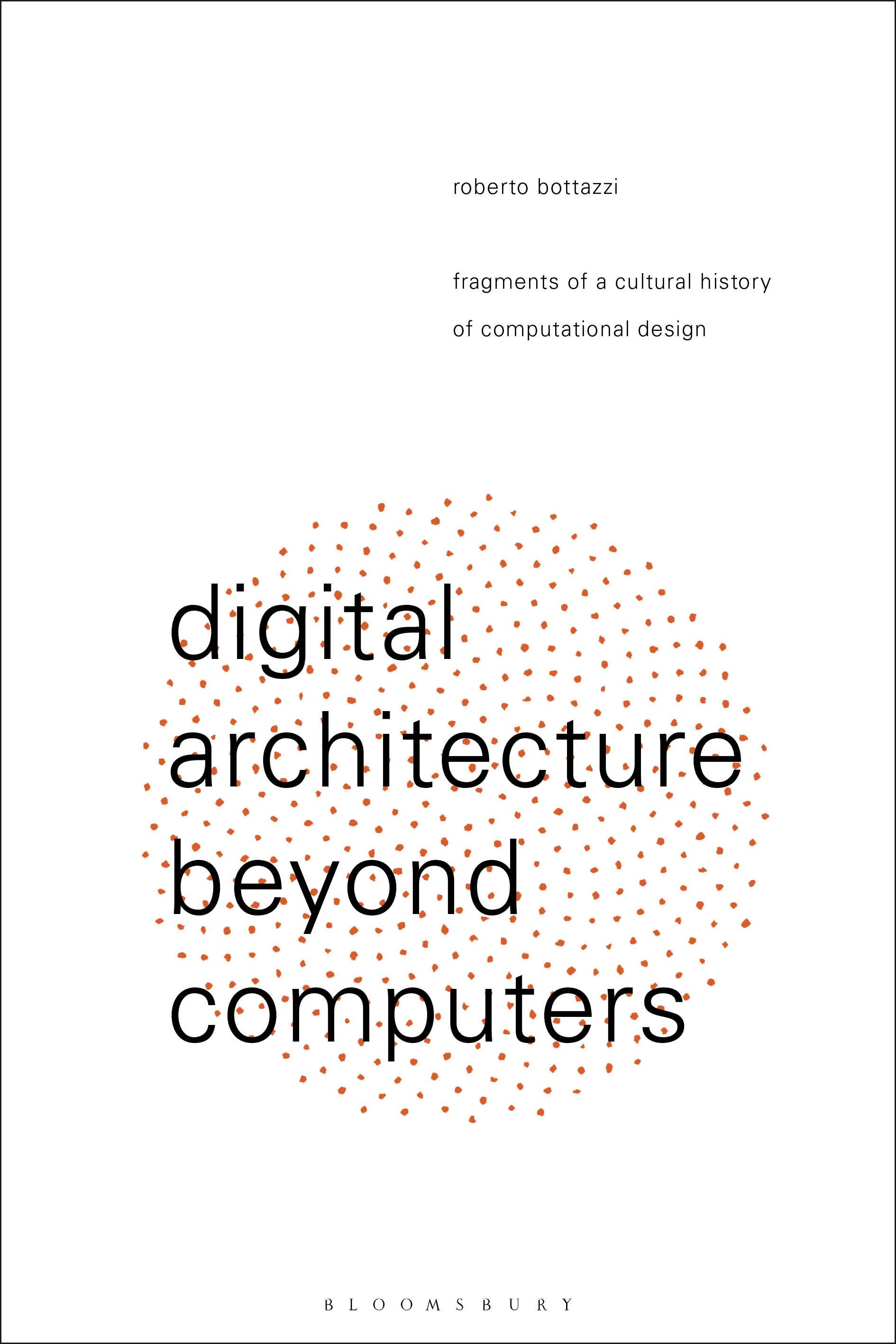
Digital Architecture Beyond Computers explores the deep history of digital architecture, tracing design concepts as far back as the Renaissance and connecting them with the latest software used by designers today. It develops a critical account of how the tools and techniques of digital design have emerged, and allows designers to deepen their understanding of the digital tools they use every day.
What aesthetic, spatial, and philosophical concepts converge within the digital tools architects employ? What is their history? And what kinds of techniques and designs have they given rise to? This book explores the answers to these questions, showing how digital architecture brings together complex ideas and trajectories which span across several domains and have evolved over many centuries. It sets out to unpack these ideas, trace their origin and permeation into architecture, and re-examine their use in contemporary software.
Chapters are arranged around the histories of nine 'fragments' – each a fundamental concept embedded in popular CAD applications: database, layers and fields, parametrics, pixel, programme, randomness, scanning, topology, and voxel/maxel – with each theme examined through a series of historical and contemporary case studies. The book thus connects the digital design process with architectural history and theory, allowing designers and theorists alike to develop more analytical and critical tools with which to conceptualise digital design and its software.
What aesthetic, spatial, and philosophical concepts converge within the digital tools architects employ? What is their history? And what kinds of techniques and designs have they given rise to? This book explores the answers to these questions, showing how digital architecture brings together complex ideas and trajectories which span across several domains and have evolved over many centuries. It sets out to unpack these ideas, trace their origin and permeation into architecture, and re-examine their use in contemporary software.
Chapters are arranged around the histories of nine 'fragments' – each a fundamental concept embedded in popular CAD applications: database, layers and fields, parametrics, pixel, programme, randomness, scanning, topology, and voxel/maxel – with each theme examined through a series of historical and contemporary case studies. The book thus connects the digital design process with architectural history and theory, allowing designers and theorists alike to develop more analytical and critical tools with which to conceptualise digital design and its software.
Betal enkelt med kort, Klarna, Apple Pay eller Google Pay. Ikke fornøyd? Du har alltid 14 dagers angrerett. Les mer i våre vilkår. Har du spørsmål, send oss en e-post på hello@memmo.org.
Memmo gjør det enklere å studere – uansett hvor du er i verden. Hos oss samler du pensumbøker og smarte studieverktøy på ett og samme sted: sammendrag, quizer, podkaster og flashcards. Og så Ted, din studiekompis som svarer på alt du lurer på. Over 50 000 studenter studerer allerede her – bygget for at du skal lære raskere og stresse mindre.