
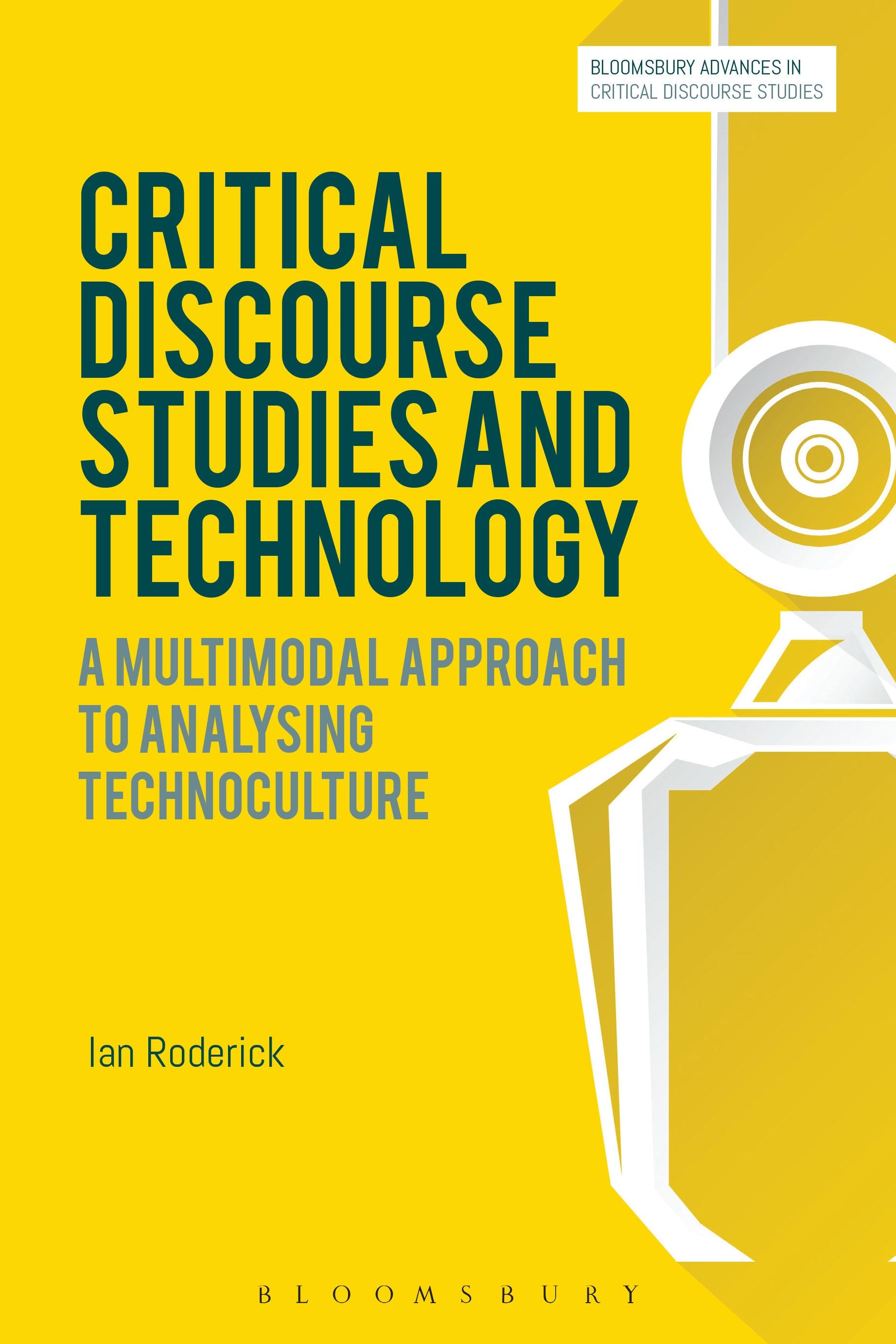
Making a new contribution to the developing field of multimodal critical discourse studies, Ian Roderick's book demonstrates how technologies that tend to be widely represented as innovative, or as simple pragmatic solutions, are always anchored in power relations and are therefore deeply ideological.
A series of examples analysing technologies such as robotics, smart phones or bio-medicine, their functioning and uses, as well as their representations in the media, show that these are embedded within discourses that tell us about social and power relations, identities and political values. The book takes a tour of everyday technologies and how they are represented in different settings. A Disney theme park attraction showing how technology has improved family life makes many assumptions about what is natural in terms of interpersonal relations, pleasure and satisfaction. Advertisements that represent robot workers inform us about the kinds of worker-management relations now characterising work places. Roderick looks at the way that technologies, while often represented as divorced from their production and maintenance, as objects of wonder, need to be seen within a fabric of social relations that tends to be supressed from how we see them as part of a wider technological fetishism.
Engaging with existing theories of technology, the book argues that we must take a more interdisciplinary approach to avoid the pitfalls of social constructivism and technological determinism. Our experiences of technologies are shaped through the relationship between knowledge, practices and institutional forms.
A series of examples analysing technologies such as robotics, smart phones or bio-medicine, their functioning and uses, as well as their representations in the media, show that these are embedded within discourses that tell us about social and power relations, identities and political values. The book takes a tour of everyday technologies and how they are represented in different settings. A Disney theme park attraction showing how technology has improved family life makes many assumptions about what is natural in terms of interpersonal relations, pleasure and satisfaction. Advertisements that represent robot workers inform us about the kinds of worker-management relations now characterising work places. Roderick looks at the way that technologies, while often represented as divorced from their production and maintenance, as objects of wonder, need to be seen within a fabric of social relations that tends to be supressed from how we see them as part of a wider technological fetishism.
Engaging with existing theories of technology, the book argues that we must take a more interdisciplinary approach to avoid the pitfalls of social constructivism and technological determinism. Our experiences of technologies are shaped through the relationship between knowledge, practices and institutional forms.
Betal enkelt med kort, Klarna, Apple Pay eller Google Pay. Ikke fornøyd? Du har alltid 14 dagers angrerett. Les mer i våre vilkår. Har du spørsmål, send oss en e-post på hello@memmo.org.
Memmo gjør det enklere å studere – uansett hvor du er i verden. Hos oss samler du pensumbøker og smarte studieverktøy på ett og samme sted: sammendrag, quizer, podkaster og flashcards. Og så Ted, din studiekompis som svarer på alt du lurer på. Over 50 000 studenter studerer allerede her – bygget for at du skal lære raskere og stresse mindre.