
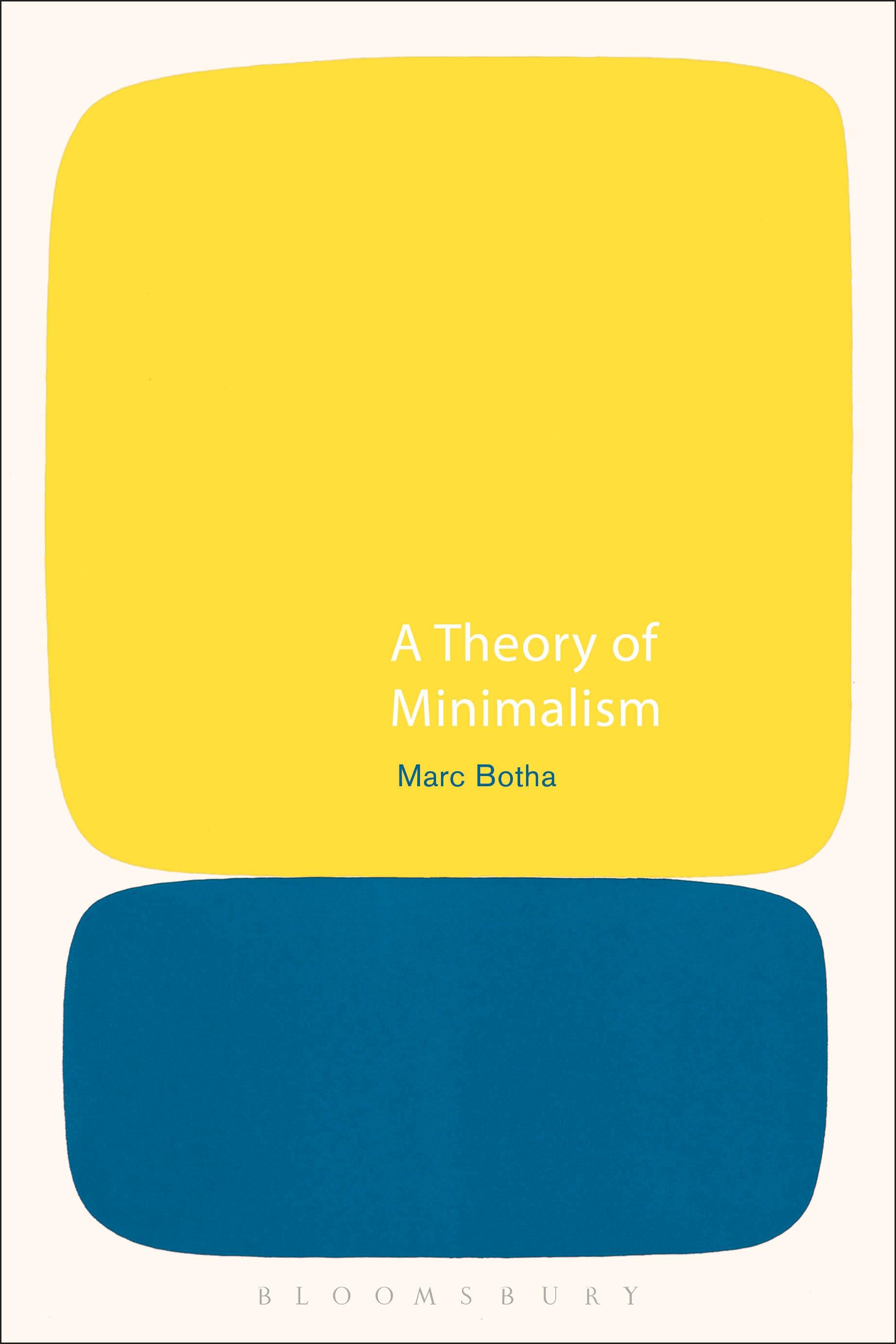
The explosion of minimalism into the worlds of visual arts, music and literature in the mid-to-late twentieth century presents one of the most radical and decisive revolutions in aesthetic history. Detested by some, embraced by others, minimalism's influence was immediate, pervasive and lasting, significantly changing the way we hear music, see art and read literature.
In The Theory of Minimalism, Marc Botha offers the first general theory of minimalism, equally applicable to literature, the visual arts and music. He argues that minimalism establishes an aesthetic paradigm for rethinking realism in genuinely radical terms. In dialogue with thinkers from both the analytic and continental traditions – including Kant, Danto, Agamben, Badiou and Meillassoux – Botha develops a constellation of concepts which together encapsulate the transhistorcial and transdisciplinary reach of minimalism.
Illustrated by a range of historical, canonical and contemporary minimalist works of different media, from the caves of early Christian ascetics to Samuel Beckett's late prose, Botha offers a bold and provocative argument which will equip readers with the tools to engage critically with past, present and future minimalism, and to recognize how, in a culture caught between the poles of excess and austerity, minimalism still matters.
In The Theory of Minimalism, Marc Botha offers the first general theory of minimalism, equally applicable to literature, the visual arts and music. He argues that minimalism establishes an aesthetic paradigm for rethinking realism in genuinely radical terms. In dialogue with thinkers from both the analytic and continental traditions – including Kant, Danto, Agamben, Badiou and Meillassoux – Botha develops a constellation of concepts which together encapsulate the transhistorcial and transdisciplinary reach of minimalism.
Illustrated by a range of historical, canonical and contemporary minimalist works of different media, from the caves of early Christian ascetics to Samuel Beckett's late prose, Botha offers a bold and provocative argument which will equip readers with the tools to engage critically with past, present and future minimalism, and to recognize how, in a culture caught between the poles of excess and austerity, minimalism still matters.
Sider: 304
Kategori: Litteraturvetenskap & Teori
e-ISBN: 9781472526540
Fraktvekt: 1.2 kg
Sendes innen: 1-2 dager
Betal enkelt med kort, Klarna, Apple Pay eller Google Pay. Ikke fornøyd? Du har alltid 14 dagers angrerett. Les mer i våre vilkår. Har du spørsmål, send oss en e-post på hello@memmo.org.
Memmo gjør det enklere å studere – uansett hvor du er i verden. Hos oss samler du pensumbøker og smarte studieverktøy på ett og samme sted: sammendrag, quizer, podkaster og flashcards. Og så Ted, din studiekompis som svarer på alt du lurer på. Over 50 000 studenter studerer allerede her – bygget for at du skal lære raskere og stresse mindre.