
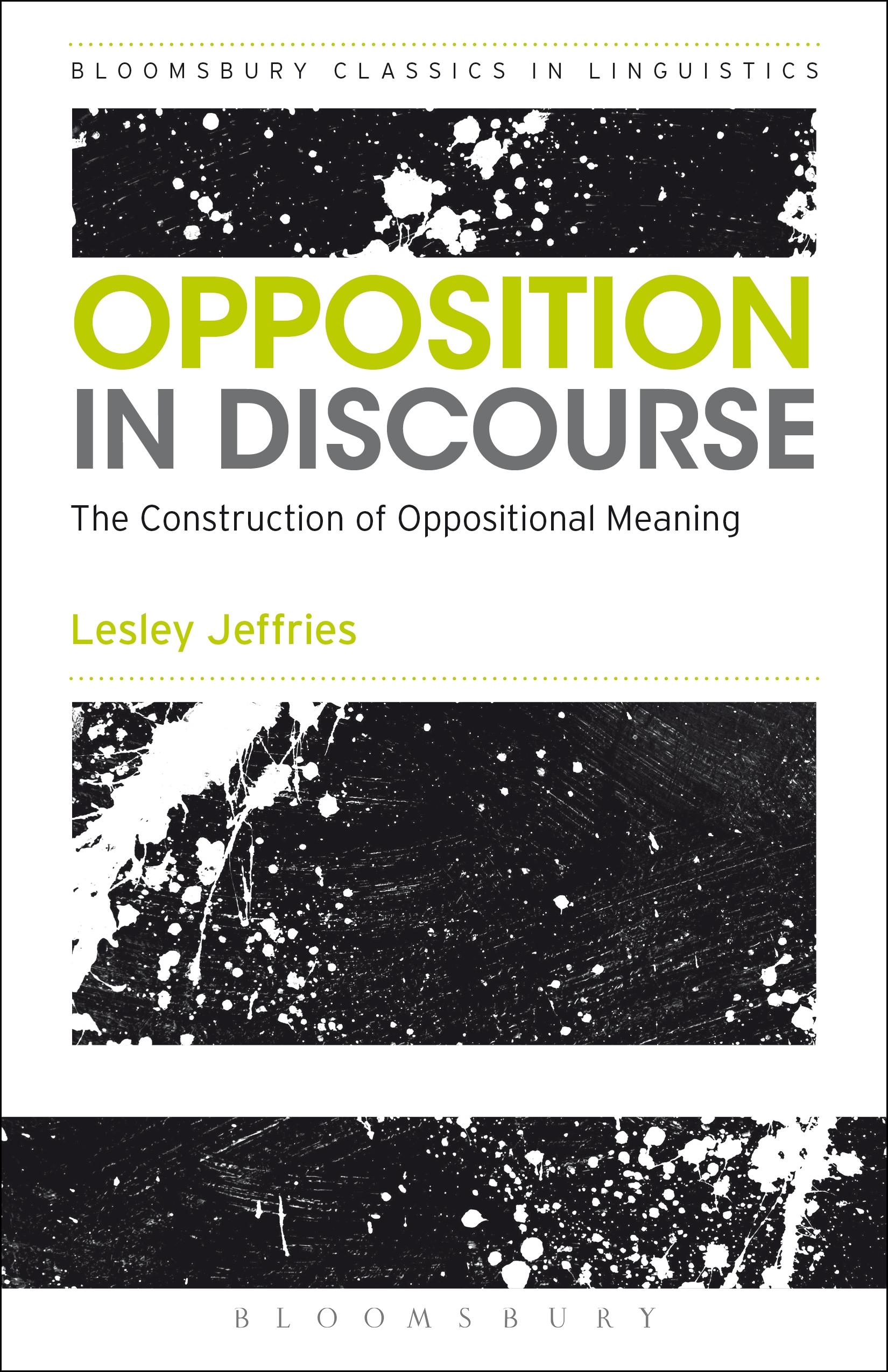
In this important book, Lesley Jeffries introduces a phenomenon which has not been given the attention it deserves - the contextual construction of oppositional meaning. These are opposites not recognisable as such out of context but that are clearly set up this way in the text concerned. The significance of oppositional meaning is well-known but the main emphasis has always been on the conventional opposite: the opposite recognised by lexical semantics.
Starting from socio-cultural viewpoints, moving to original research and then concluding with a new theoretical formulation, this book introduces and consolidates a significant new approach to the analysis of oppositional meaning. It closes with a discussion of the importance of constructed opposition in hegemonic practice and makes a case for the inclusion of opposition as a central tool of critical discourse analysis. It is essential reading for those in stylistics, linguistics and language studies.
Starting from socio-cultural viewpoints, moving to original research and then concluding with a new theoretical formulation, this book introduces and consolidates a significant new approach to the analysis of oppositional meaning. It closes with a discussion of the importance of constructed opposition in hegemonic practice and makes a case for the inclusion of opposition as a central tool of critical discourse analysis. It is essential reading for those in stylistics, linguistics and language studies.
Betal enkelt med kort, Klarna, Apple Pay eller Google Pay. Ikke fornøyd? Du har alltid 14 dagers angrerett. Les mer i våre vilkår. Har du spørsmål, send oss en e-post på hello@memmo.org.
Memmo gjør det enklere å studere – uansett hvor du er i verden. Hos oss samler du pensumbøker og smarte studieverktøy på ett og samme sted: sammendrag, quizer, podkaster og flashcards. Og så Ted, din studiekompis som svarer på alt du lurer på. Over 50 000 studenter studerer allerede her – bygget for at du skal lære raskere og stresse mindre.