
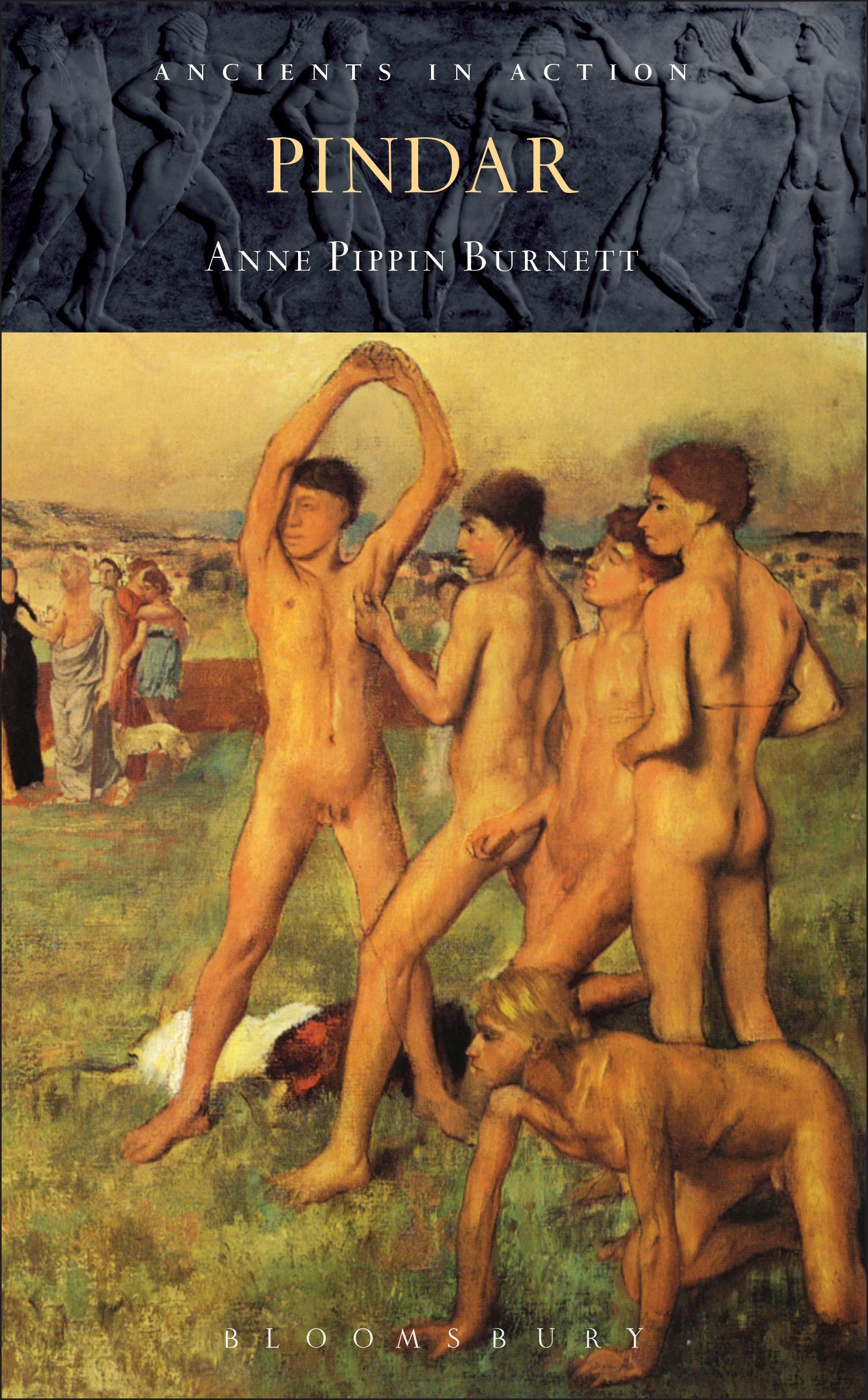
Of all the lyric poets of ancient Greece, Pindar is the one whose work has been best preserved. His odes to victorious Greek athletes were entertainments designed for performance in a hospitable atmosphere of drinking, dining and jokes. The victor has known the favour of the god whose contest he entered, and has brought back pan-Hellenic fame to his family, friends and city. To extend this glory and make it permanent, he has commissioned a song of praise, had dancers trained to sing it, and summoned an audience of kinsmen, neighbours and friends to enjoy it. Pindar's odes contain invocations and prayers, but their most characteristic effects are achieved thhrough the depiction of fragments of myth. Anne Pippin Burnett argues that these passages were meant neither as mere decoration nor as moral instruction, but served rather as a dramatic mechanism by which dancers brought an experience of another world to guests gathered in the banqueting suite of the victor.
Betal enkelt med kort, Klarna, Apple Pay eller Google Pay. Ikke fornøyd? Du har alltid 14 dagers angrerett. Les mer i våre vilkår. Har du spørsmål, send oss en e-post på hello@memmo.org.
Memmo gjør det enklere å studere – uansett hvor du er i verden. Hos oss samler du pensumbøker og smarte studieverktøy på ett og samme sted: sammendrag, quizer, podkaster og flashcards. Og så Ted, din studiekompis som svarer på alt du lurer på. Over 50 000 studenter studerer allerede her – bygget for at du skal lære raskere og stresse mindre.