
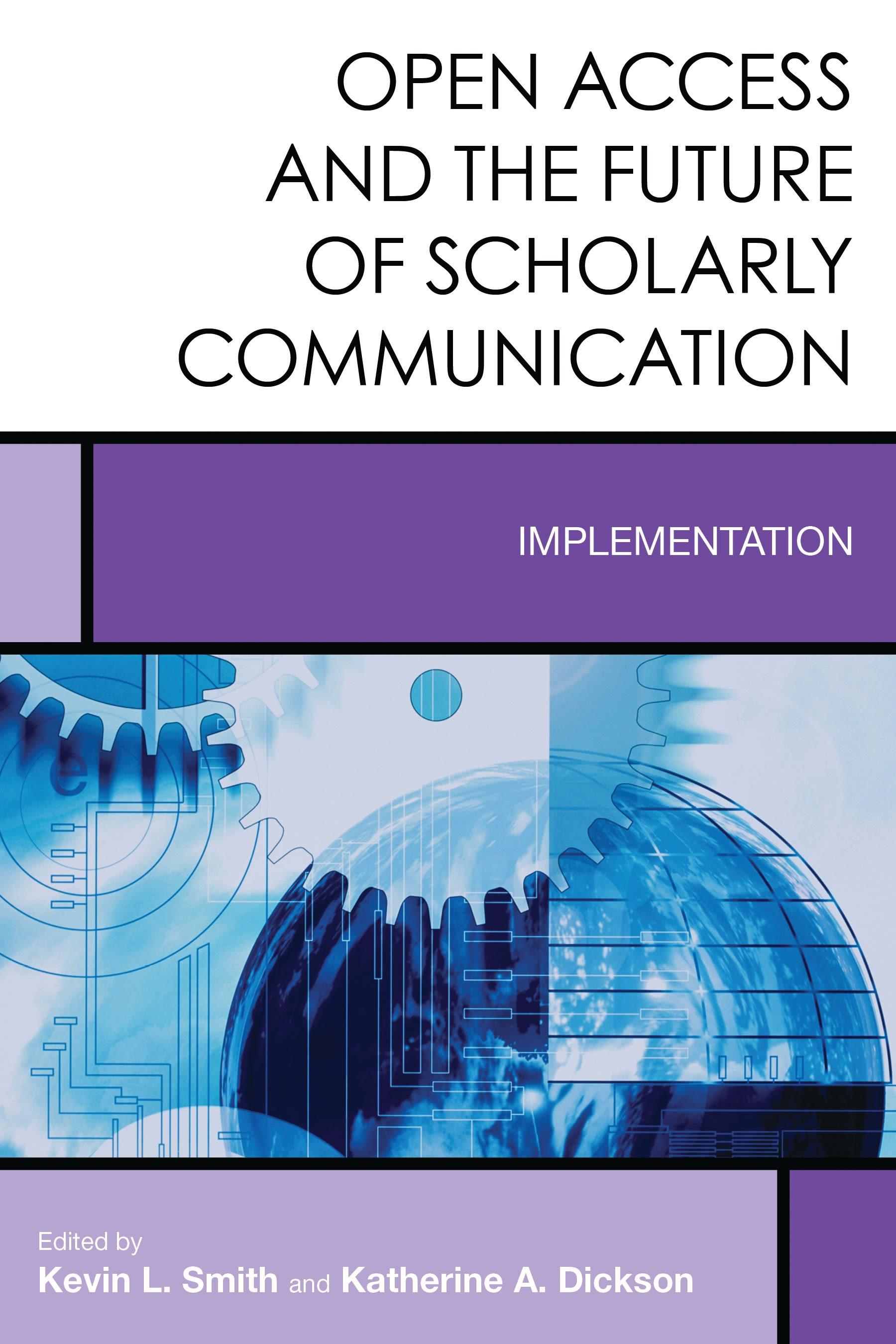
This volume, the second of two in the series Creating the 21st-Century Academic Library that deals with the topic of open access in academic libraries, focuses on the implementation of open access in academic libraries.
Chapters on the legalities and practicalities of open access in academic libraries address the issues associated with copyright, licensing, and intellectual property and include support for courses that require open access distribution of student work. The topic of library services in support of open access is explored, including the library’s role in providing open educational resources, and as an ally and driver of their adoption, for example, by helping defray author fees that are required for open access articles. A detailed look at open access in the context of undergraduate research is provided and considers how librarians can engage undergraduates in conversations about open access. Chapters consider ways to engage undergraduate students in the use, understanding, evaluation, and creation of open access resources. Issues that are of concern to graduate students are also given some attention and central to these are the development of Electronic Thesis and Dissertation (ETD) programs. A chapter examines the library’s role in balancing greater access to graduate student work with the consequences of openness, such as concerns about book contracts and sales, plagiarism, and changes in scholarly research and production. The book concludes with issues surrounding open data and library services in critical data librarianship, including advocacy, preservation, and instruction.
It is hoped that this volume, and the series in general, will be a valuable and exciting addition to the discussions and planning surrounding the future directions, services, and careers in the 21st-century academic library.
Chapters on the legalities and practicalities of open access in academic libraries address the issues associated with copyright, licensing, and intellectual property and include support for courses that require open access distribution of student work. The topic of library services in support of open access is explored, including the library’s role in providing open educational resources, and as an ally and driver of their adoption, for example, by helping defray author fees that are required for open access articles. A detailed look at open access in the context of undergraduate research is provided and considers how librarians can engage undergraduates in conversations about open access. Chapters consider ways to engage undergraduate students in the use, understanding, evaluation, and creation of open access resources. Issues that are of concern to graduate students are also given some attention and central to these are the development of Electronic Thesis and Dissertation (ETD) programs. A chapter examines the library’s role in balancing greater access to graduate student work with the consequences of openness, such as concerns about book contracts and sales, plagiarism, and changes in scholarly research and production. The book concludes with issues surrounding open data and library services in critical data librarianship, including advocacy, preservation, and instruction.
It is hoped that this volume, and the series in general, will be a valuable and exciting addition to the discussions and planning surrounding the future directions, services, and careers in the 21st-century academic library.
Betal enkelt med kort, Klarna, Apple Pay eller Google Pay. Ikke fornøyd? Du har alltid 14 dagers angrerett. Les mer i våre vilkår. Har du spørsmål, send oss en e-post på hello@memmo.org.
Memmo gjør det enklere å studere – uansett hvor du er i verden. Hos oss samler du pensumbøker og smarte studieverktøy på ett og samme sted: sammendrag, quizer, podkaster og flashcards. Og så Ted, din studiekompis som svarer på alt du lurer på. Over 50 000 studenter studerer allerede her – bygget for at du skal lære raskere og stresse mindre.