
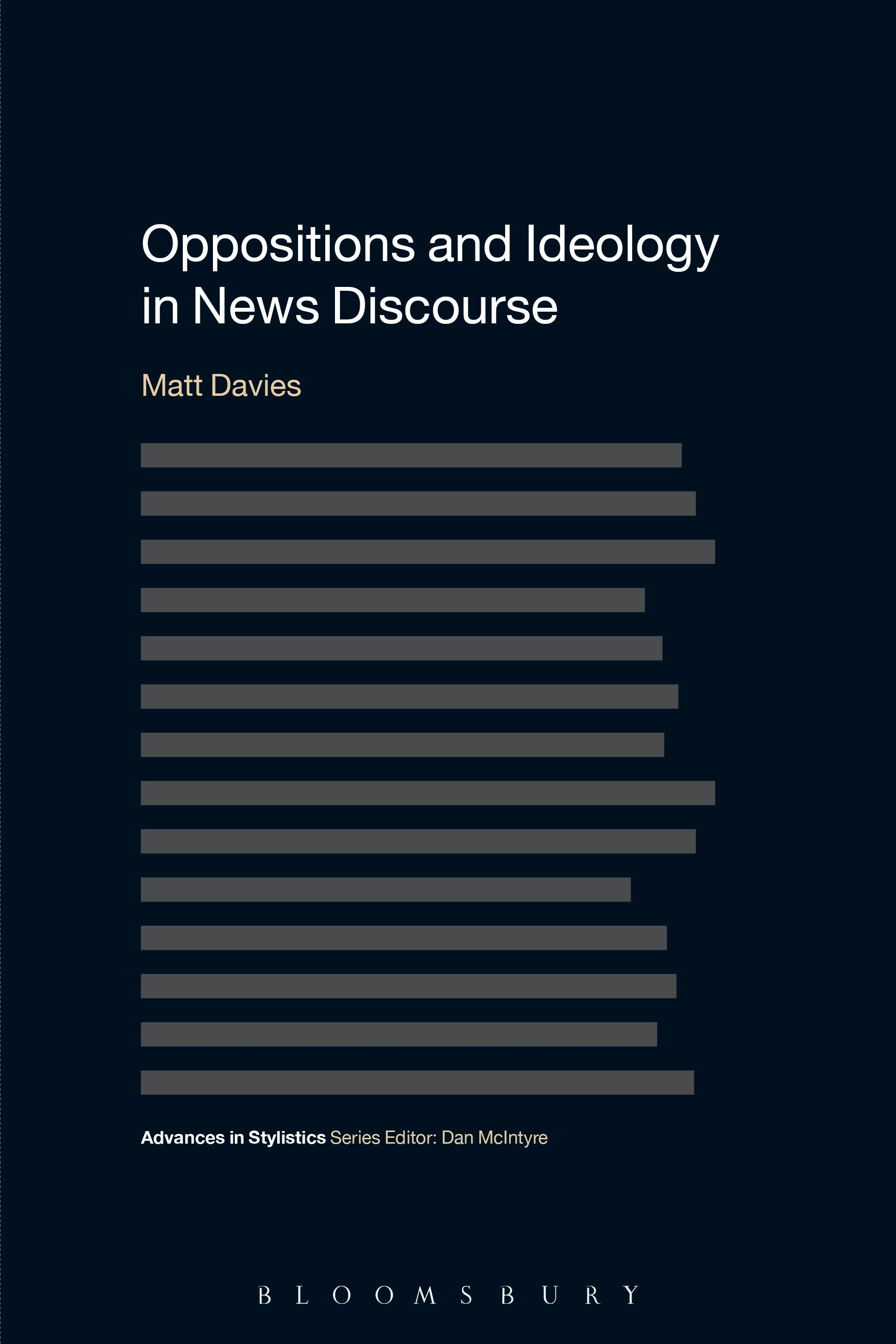
Constructed opposition has proved as viable an area of
research as traditional antonymy, and a useful tool in looking at ideologically
orientated texts. This book investigates
how binary oppositions are constructed discursively and the potential
ideological repercussions of their usage in news reports in the British press.
The focus is particularly on the positive presentation of
groups and individuals subsumed under the first person plural pronouns 'us' and
'we', and the simultaneous marginalization of groups designated as 'they' or
'them'. Exploring the dynamic relations between the linguistic system and
language in context this is a key publication for those involved in discourse
analysis and stylistics.
research as traditional antonymy, and a useful tool in looking at ideologically
orientated texts. This book investigates
how binary oppositions are constructed discursively and the potential
ideological repercussions of their usage in news reports in the British press.
The focus is particularly on the positive presentation of
groups and individuals subsumed under the first person plural pronouns 'us' and
'we', and the simultaneous marginalization of groups designated as 'they' or
'them'. Exploring the dynamic relations between the linguistic system and
language in context this is a key publication for those involved in discourse
analysis and stylistics.
Betal enkelt med kort, Klarna, Apple Pay eller Google Pay. Ikke fornøyd? Du har alltid 14 dagers angrerett. Les mer i våre vilkår. Har du spørsmål, send oss en e-post på hello@memmo.org.
Memmo gjør det enklere å studere – uansett hvor du er i verden. Hos oss samler du pensumbøker og smarte studieverktøy på ett og samme sted: sammendrag, quizer, podkaster og flashcards. Og så Ted, din studiekompis som svarer på alt du lurer på. Over 50 000 studenter studerer allerede her – bygget for at du skal lære raskere og stresse mindre.