
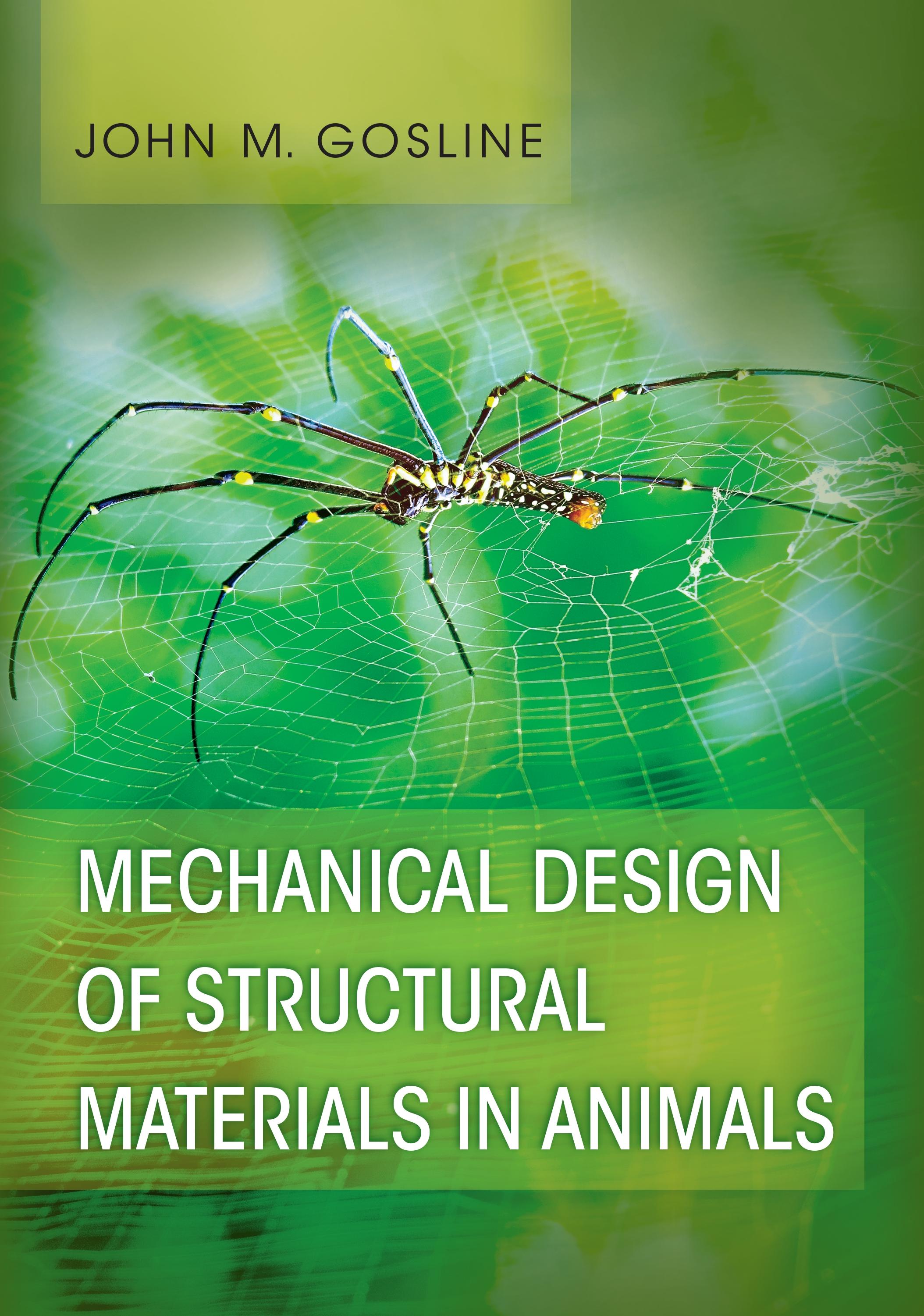
Mechanical Design of Structural Materials in Animals explores the principles underlying how molecules interact to produce the functional attributes of biological materials: their strength and stiffness, ability to absorb and store energy, and ability to resist the fatigue that accrues through a lifetime of physical insults. These attributes play a central role in determining the size and shape of animals, the ways in which they can move, and how they interact with their environment. By showing how structural materials have been designed by evolution, John Gosline sheds important light on how animals work.
Gosline elucidates the pertinent theories for how molecules are arranged into macromolecular structures and how those structures are then built up into whole organisms. In particular, Gosline develops the theory of discontinuous, fiber-reinforced composites, which he employs in a grand synthesis to explain the properties of everything from the body wall of sea anemones to spiders' silks and insect cuticles, tendons, ligaments, and bones. Although the theories are examined in depth, Gosline's elegant discussion makes them accessible to anyone with an interest in the mechanics of life.
Focusing on the materials from which animals are constructed, this book answers fundamental questions about mechanical properties in nature.
Betal enkelt med kort, Klarna, Apple Pay eller Google Pay. Ikke fornøyd? Du har alltid 14 dagers angrerett. Les mer i våre vilkår. Har du spørsmål, send oss en e-post på hello@memmo.org.
Memmo gjør det enklere å studere – uansett hvor du er i verden. Hos oss samler du pensumbøker og smarte studieverktøy på ett og samme sted: sammendrag, quizer, podkaster og flashcards. Og så Ted, din studiekompis som svarer på alt du lurer på. Over 50 000 studenter studerer allerede her – bygget for at du skal lære raskere og stresse mindre.