
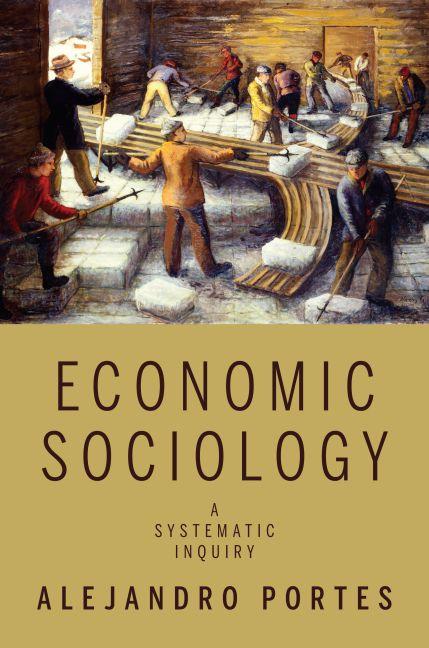
The sociological study of economic activity has witnessed a significant resurgence. Recent texts have chronicled economic sociology's nineteenth-century origins while pointing to the importance of context and power in economic life, yet the field lacks a clear understanding of the role that concepts at different levels of abstraction play in its organization. Economic Sociology fills this critical gap by surveying the current state of the field while advancing a framework for further theoretical development.
Alejandro Portes examines economic sociology's principal assumptions, key explanatory concepts, and selected research sites. He argues that economic activity is embedded in social and cultural relations, but also that power and the unintended consequences of rational purposive action must be factored in when seeking to explain or predict economic behavior. Drawing upon a wealth of examples, Portes identifies three strategic sites of research--the informal economy, ethnic enclaves, and transnational communities--and he eschews grand narratives in favor of mid-range theories that help us understand specific kinds of social action.
The book shows how the meta-assumptions of economic sociology can be transformed, under certain conditions, into testable propositions, and puts forward a theoretical agenda aimed at moving the field out of its present impasse.
Betal enkelt med kort, Klarna, Apple Pay eller Google Pay. Ikke fornøyd? Du har alltid 14 dagers angrerett. Les mer i våre vilkår. Har du spørsmål, send oss en e-post på hello@memmo.org.
Memmo gjør det enklere å studere – uansett hvor du er i verden. Hos oss samler du pensumbøker og smarte studieverktøy på ett og samme sted: sammendrag, quizer, podkaster og flashcards. Og så Ted, din studiekompis som svarer på alt du lurer på. Over 50 000 studenter studerer allerede her – bygget for at du skal lære raskere og stresse mindre.