
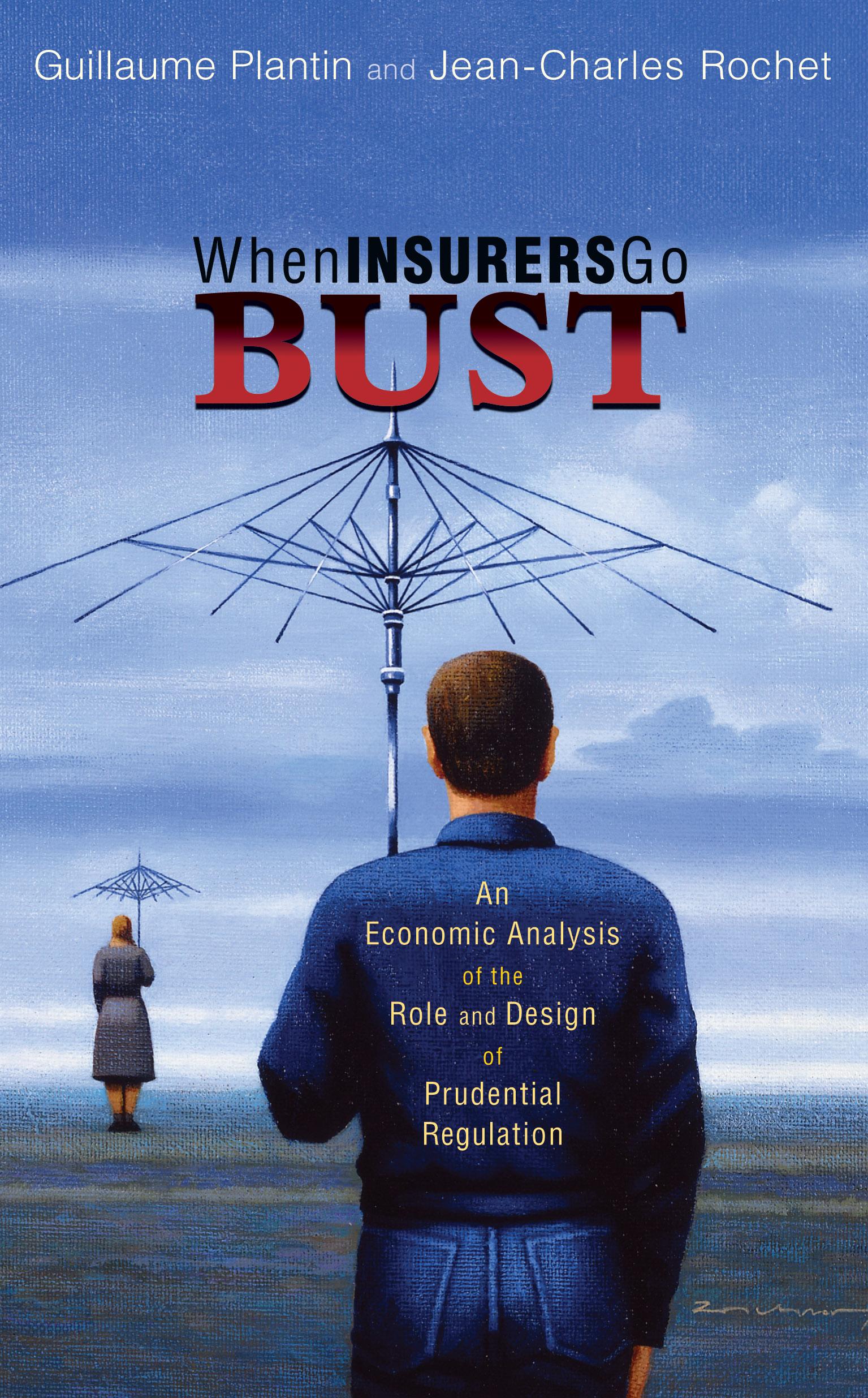
In the 1990s, large insurance companies failed in virtually every major market, prompting a fierce and ongoing debate about how to better protect policyholders. Drawing lessons from the failures of four insurance companies, When Insurers Go Bust dramatically advances this debate by arguing that the current approach to insurance regulation should be replaced with mechanisms that replicate the governance of non-financial firms.
Rather than immediately addressing the minutiae of supervision, Guillaume Plantin and Jean-Charles Rochet first identify a fundamental economic rationale for supervising the solvency of insurance companies: policyholders are the "bankers" of insurance companies. But because policyholders are too dispersed to effectively monitor insurers, it might be efficient to delegate monitoring to an institution--a prudential authority. Applying recent developments in corporate finance theory and the economic theory of organizations, the authors describe in practical terms how such authorities could be created and given the incentives to behave exactly like bankers behave toward borrowers, as "tough" claimholders.
Betal enkelt med kort, Klarna, Apple Pay eller Google Pay. Ikke fornøyd? Du har alltid 14 dagers angrerett. Les mer i våre vilkår. Har du spørsmål, send oss en e-post på hello@memmo.org.
Memmo gjør det enklere å studere – uansett hvor du er i verden. Hos oss samler du pensumbøker og smarte studieverktøy på ett og samme sted: sammendrag, quizer, podkaster og flashcards. Og så Ted, din studiekompis som svarer på alt du lurer på. Over 50 000 studenter studerer allerede her – bygget for at du skal lære raskere og stresse mindre.