
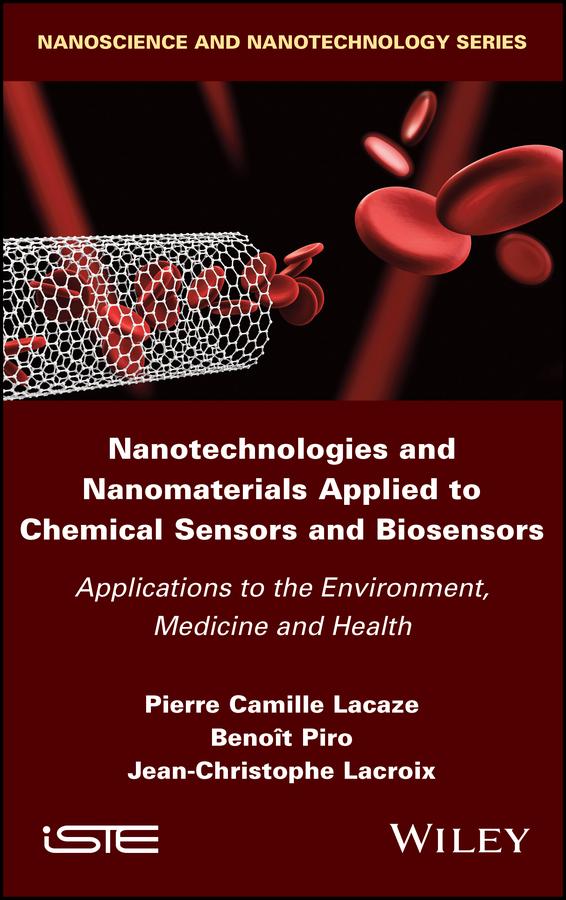
The key social issues of health, medicine, the environment, food and safety cannot be addressed without the support of chemical sensors and biosensors, whose performance is constantly improving in terms of reliability and cost, particularly in the production of autonomous devices connected to the Internet.
Obtaining high-intensity transduction signals arising from the interaction of an analyte and a sensor, enabling the identification and dosage of a given compound, requires the selection of suitable physical measurement methods and the creation of structures that react specifically to different types of analyte.
Nanotechnologies and Nanomaterials Applied to Chemical Sensors and Biosensors details recent advances in the field of sensor design using carbon-based nanomaterials (graphene, carbon nanotubes, carbon quantum dots, etc.) and inorganic nanomaterials (metallic nanoparticles, nanocrystals, transition metal dichalcogenides, etc.), as well as a variety of physical sensing methods (electrochemical, piezoelectric, electromagnetic, optic, optoelectronic, etc.).
Betal enkelt med kort, Klarna, Apple Pay eller Google Pay. Ikke fornøyd? Du har alltid 14 dagers angrerett. Les mer i våre vilkår. Har du spørsmål, send oss en e-post på hello@memmo.org.
Memmo gjør det enklere å studere – uansett hvor du er i verden. Hos oss samler du pensumbøker og smarte studieverktøy på ett og samme sted: sammendrag, quizer, podkaster og flashcards. Og så Ted, din studiekompis som svarer på alt du lurer på. Over 50 000 studenter studerer allerede her – bygget for at du skal lære raskere og stresse mindre.