
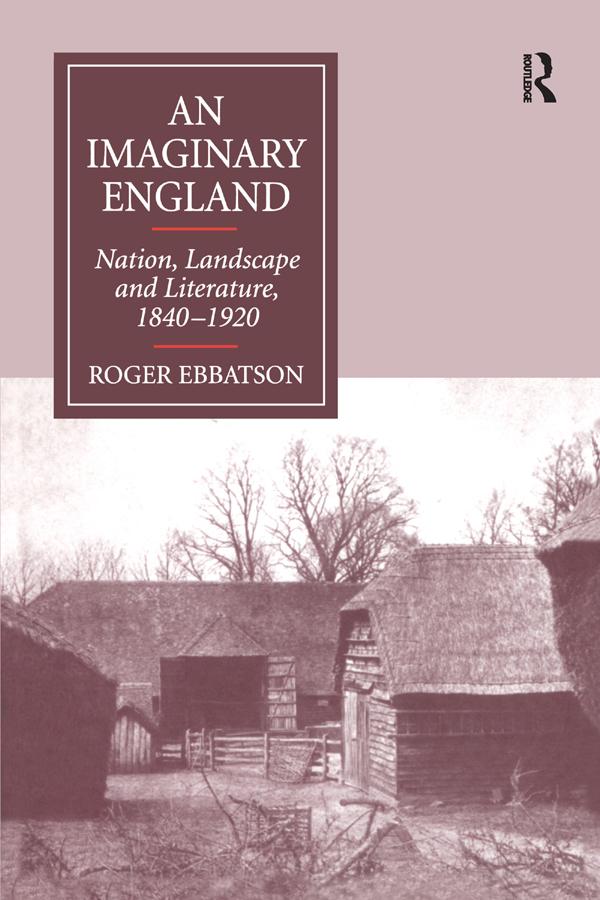
In his highly theorised and original book, Roger Ebbatson traces the emergence of conceptions of England and Englishness from 1840 to 1920. His study concentrates on poetry and fiction by authors such as Alfred Lord Tennyson, Richard Jefferies, Thomas Hardy, Q, Rupert Brooke and D.H. Lawrence, reading them as a body of work through which a series of problematic English identities are imaginatively constructed. Of particular concern is the way literary landscapes serve as signs not only of identity but also of difference. Ebbatson demonstrates how a sense of cultural rootedness is contested during the period by the experiences of those on the societal margins, whether sexual, national, social or racial, resulting in a feeling of homelessness even in the most self-consciously 'English' texts. In the face of gradual imperial and industrial decline, Ebbatson argues, foreign and colonial cultures played a crucial role in transforming Englishness from a stable body of values and experiences into a much more ambiguous concept in continuous conflict with factors on the geographical or psychological 'periphery'.
Betal enkelt med kort, Klarna, Apple Pay eller Google Pay. Ikke fornøyd? Du har alltid 14 dagers angrerett. Les mer i våre vilkår. Har du spørsmål, send oss en e-post på hello@memmo.org.
Memmo gjør det enklere å studere – uansett hvor du er i verden. Hos oss samler du pensumbøker og smarte studieverktøy på ett og samme sted: sammendrag, quizer, podkaster og flashcards. Og så Ted, din studiekompis som svarer på alt du lurer på. Over 50 000 studenter studerer allerede her – bygget for at du skal lære raskere og stresse mindre.
Du vil kanskje også like
Kjøp boken0