
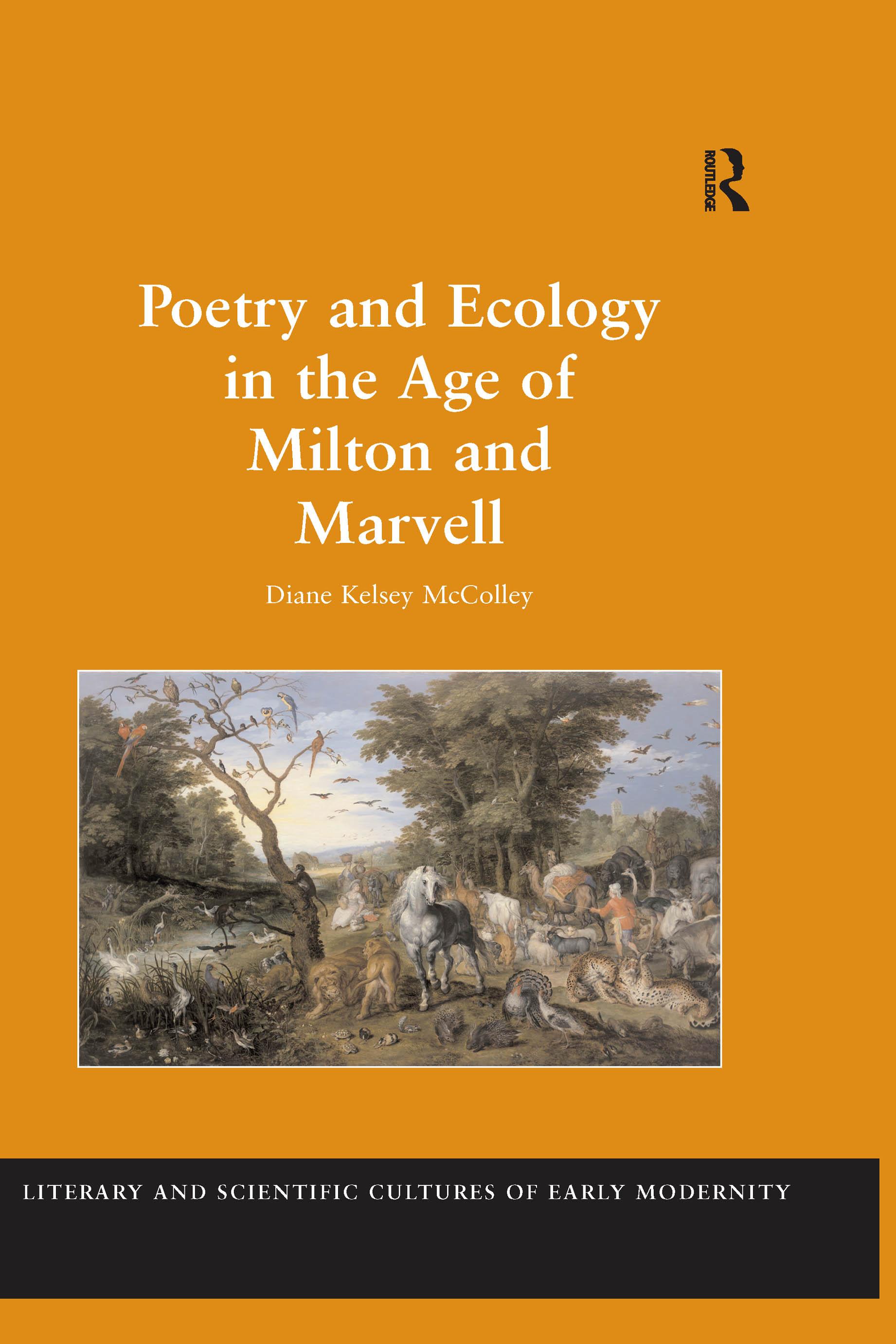
The focus of this study is the perception of nature in the language of poetry and the languages of natural philosophy, technology, theology, and global exploration, primarily in seventeenth-century England. Its premise is that language and the perception of nature vitally affect each other and that seventeenth-century poets, primarily John Milton, Andrew Marvell, and Henry Vaughan, but also Margaret Cavendish, Thomas Traherne, Anne Finch, and others, responded to experimental proto-science and new technology in ways that we now call 'ecological' - concerned with watersheds and habitats and the lives of all creatures. It provides close readings of works by these poets in the contexts of natural history, philosophy, and theology as well as technology and land use, showing how they responded to what are currently considered ecological issues: deforestation, mining, air pollution, drainage of wetlands, destruction of habitats, the sentience and intelligence of animals, overbuilding, global commerce, the politics of land use, and relations between social justice and justice towards the other-than-human world. In this important book, Diane McColley demonstrates the language of poetry, the language of responsible science, and the language of moral and political philosophy all to be necessary parts of public discourse.
Sider: 276
Kategori: Litteraturvetenskap & Teori
e-ISBN: 9781351910637
Fraktvekt: 1.2 kg
Sendes innen: 1-2 dager
Betal enkelt med kort, Klarna, Apple Pay eller Google Pay. Ikke fornøyd? Du har alltid 14 dagers angrerett. Les mer i våre vilkår. Har du spørsmål, send oss en e-post på hello@memmo.org.
Memmo gjør det enklere å studere – uansett hvor du er i verden. Hos oss samler du pensumbøker og smarte studieverktøy på ett og samme sted: sammendrag, quizer, podkaster og flashcards. Og så Ted, din studiekompis som svarer på alt du lurer på. Over 50 000 studenter studerer allerede her – bygget for at du skal lære raskere og stresse mindre.
Du vil kanskje også like
Kjøp boken0