
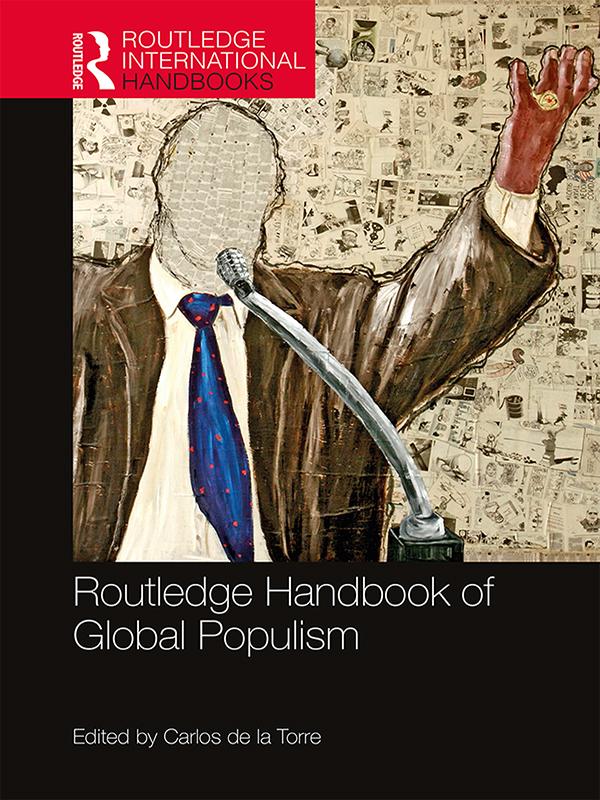
This volume illustrates the diversity of populism globally. When seeking power, populists politicize issues, and point to problems that need to be addressed such as inequalities, the loss of national sovereignty to globalization, or the rule of unresponsive political elites. Yet their solutions tend to be problematic, simplistic, and in most instances, instead of leading to better forms of democracy, their outcomes are authoritarian. Populists use a playbook of concentrating power in the hands of the president, using the legal system instrumentally to punish critics, and attacking the media and civil society. Despite promising to empower the people, populists lead to processes of democratic erosion and even transform malfunctioning democracies into hybrid regimes.
The Routledge Handbook of Global Populism provides instructors, students, and researchers with a thorough and systematic overview of the history and development of populism and analyzes the main debates. It is divided into sections on the theories of populism, on political and social theory and populism, on how populists politicize inequalities and differences, on the media and populism, on its ambiguous relationships with democratization and authoritarianism, and on the distinct regional manifestations of populism. Leading international academics from history, political science, media studies, and sociology map innovative ideas and areas of theoretical and empirical research to understand the phenomenon of global populism.
Betal enkelt med kort, Klarna, Apple Pay eller Google Pay. Ikke fornøyd? Du har alltid 14 dagers angrerett. Les mer i våre vilkår. Har du spørsmål, send oss en e-post på hello@memmo.org.
Memmo gjør det enklere å studere – uansett hvor du er i verden. Hos oss samler du pensumbøker og smarte studieverktøy på ett og samme sted: sammendrag, quizer, podkaster og flashcards. Og så Ted, din studiekompis som svarer på alt du lurer på. Over 50 000 studenter studerer allerede her – bygget for at du skal lære raskere og stresse mindre.