
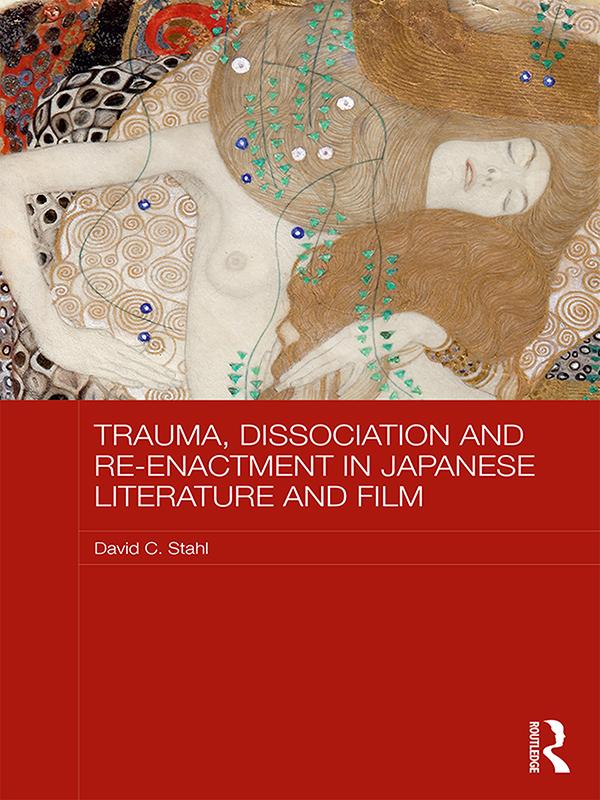
Japanese literature and film have frequently been approached using lenses such as language, genre and ideology. Yet, despite a succession of major social traumas that have marked, and in many ways shaped and defined much of modern Japan, Japanese fiction and cinema have not often been examined psychoanalytically.
In this book, David Stahl conducts in-depth readings and interpretations of a set of Japanese novels and film. By introducing the methodology of trauma/PTSD studies, Stahl seeks to provide a better understanding of the insights of Japanese writers and directors into their societies, cultures and histories. In particular, by building on the work of practitioner-theoreticians, such as Pierre Janet and Judith Herman, Stahl analyses a number of key texts, including Kawabata Yasunari’s Sleeping Beauties (1961), Enchi Fumiko’s Female Masks (1958) and Imamura Sho- hei’s Vengeance is Mine (1979). Consequently, through using concepts of social trauma, dissociation, failed mourning, revenge and narrative memory, this book sheds new light on the psychological aftereffects and transgenerational legacies of trauma depicted in Japanese works.
Trauma, Dissociation and Re-enactment in Japanese Literature and Film will be of interest to students and scholars of Japanese Literature and Cinema, as well as those interested in Japanese History and Trauma Studies.
Betal enkelt med kort, Klarna, Apple Pay eller Google Pay. Ikke fornøyd? Du har alltid 14 dagers angrerett. Les mer i våre vilkår. Har du spørsmål, send oss en e-post på hello@memmo.org.
Memmo gjør det enklere å studere – uansett hvor du er i verden. Hos oss samler du pensumbøker og smarte studieverktøy på ett og samme sted: sammendrag, quizer, podkaster og flashcards. Og så Ted, din studiekompis som svarer på alt du lurer på. Over 50 000 studenter studerer allerede her – bygget for at du skal lære raskere og stresse mindre.