
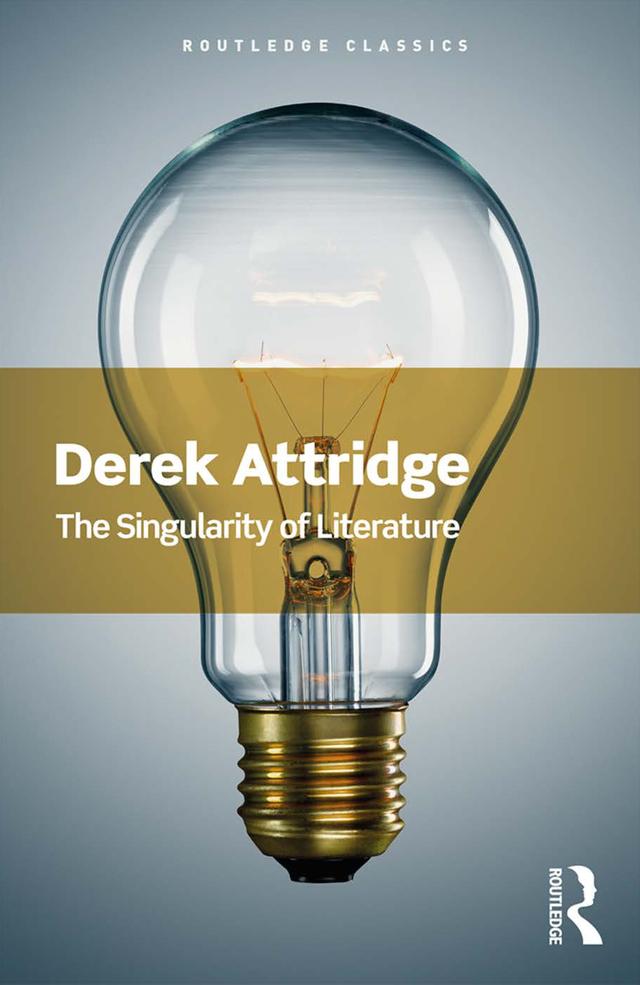
The Iliad and Beowulf provide rich sources of historical information. The novels of Henry Fielding and Henry James may be instructive in the art of moral living. Some go further and argue that Emile Zola and Harriet Beecher Stowe played a part in ameliorating the lives of those existing in harsh circumstances. However, as Derek Attridge argues in this outstanding and acclaimed book, none of these capacities is distinctive of literature. What is the singularity of literature? Do the terms "literature" and "the literary" refer to actual entities found in cultures at certain times, or are they merely expressions characteristic of such cultures? Attridge argues that this resistance to definition and reduction is not a dead end, but a crucial starting point from which to explore anew the power and practices of Western art.
Derek Attridge provides a rich new vocabulary for literature, rethinking such terms as "invention," "singularity," "otherness," "alterity," "performance" and "form." He returns literature to the realm of ethics, and argues for the ethical importance of literature, demonstrating how a new understanding of the literary might be put to work in a "responsible," creative mode of reading.
The Singularity of Literature is not only a major contribution to the theory of literature, but also a celebration of the extraordinary pleasure of the literary, for reader, writer, student or critic.
This Routledge Classics edition includes a new preface by the author.
Betal enkelt med kort, Klarna, Apple Pay eller Google Pay. Ikke fornøyd? Du har alltid 14 dagers angrerett. Les mer i våre vilkår. Har du spørsmål, send oss en e-post på hello@memmo.org.
Memmo gjør det enklere å studere – uansett hvor du er i verden. Hos oss samler du pensumbøker og smarte studieverktøy på ett og samme sted: sammendrag, quizer, podkaster og flashcards. Og så Ted, din studiekompis som svarer på alt du lurer på. Over 50 000 studenter studerer allerede her – bygget for at du skal lære raskere og stresse mindre.