
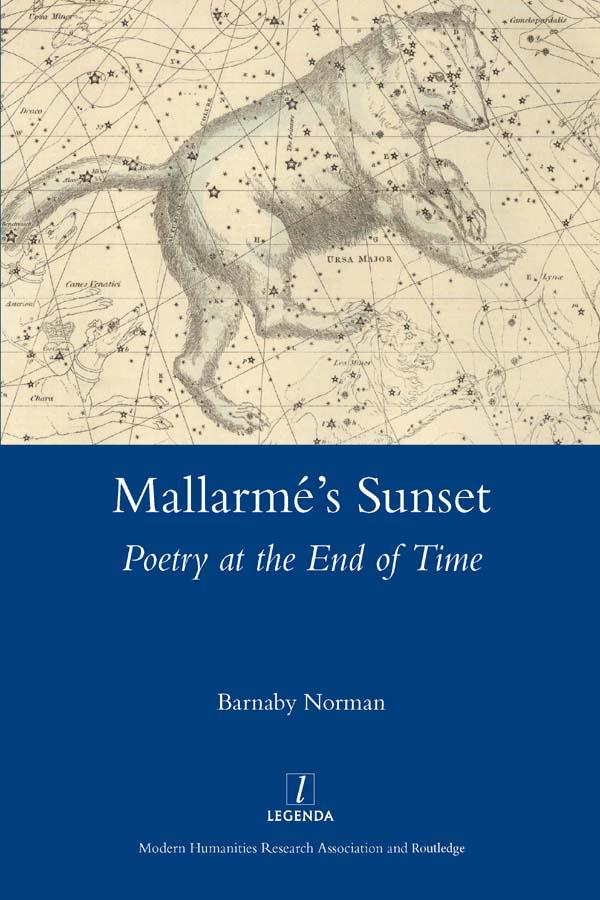
The writings of the great Symbolist poet Stephane Mallarme (1842-1898) were to become uniquely influential in twentieth century literary criticism. For critics and philosophers such as Maurice Blanchot and Jacques Derrida, Mallarme's name came to represent a rupture in literary history, and an opening of literature onto a radically new kind of writing. Through close readings of key works, Norman retraces Mallarme's trajectory as a poet, showing in particular how he positioned his work in relation to Hegel's Aesthetics. Analysing the motif of the sunset Norman argues that Mallarme situated his work at the conclusion of the history of art, in Hegelian terms, and it is this that made him so interesting for Blanchot and Derrida. Their readings, born of their wish to subvert Hegel's totalizing impulse, give rise to an entirely new view of works now almost universally seen as masterpieces.
Betal enkelt med kort, Klarna, Apple Pay eller Google Pay. Ikke fornøyd? Du har alltid 14 dagers angrerett. Les mer i våre vilkår. Har du spørsmål, send oss en e-post på hello@memmo.org.
Memmo gjør det enklere å studere – uansett hvor du er i verden. Hos oss samler du pensumbøker og smarte studieverktøy på ett og samme sted: sammendrag, quizer, podkaster og flashcards. Og så Ted, din studiekompis som svarer på alt du lurer på. Over 50 000 studenter studerer allerede her – bygget for at du skal lære raskere og stresse mindre.
Du vil kanskje også like
Kjøp boken0