
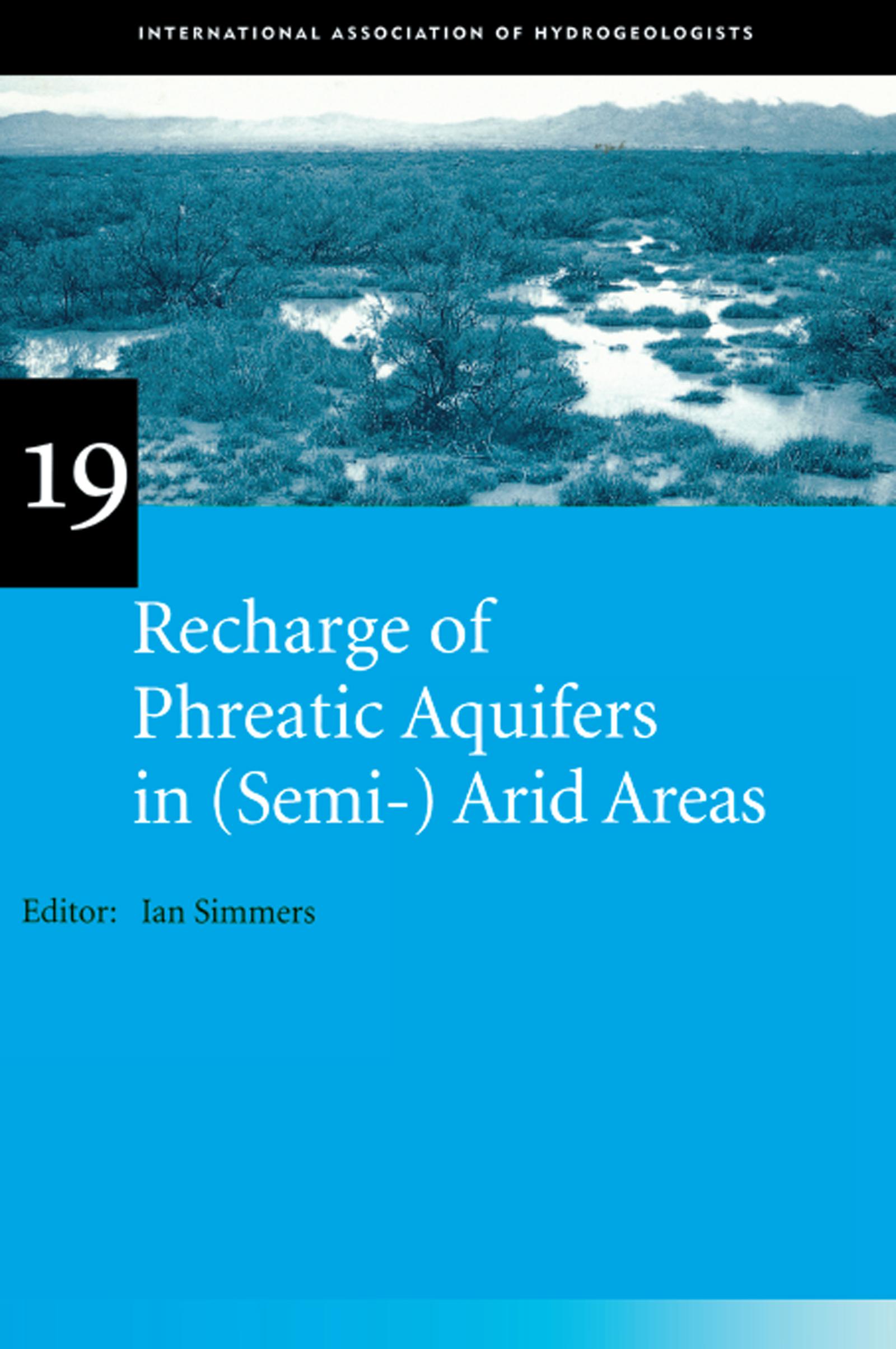
Groundwater use is of fundamental importance to meet the rapidly expanding urban, industrial and agricultural water requirements in (semi) arid areas. Quantifying the current rate of groundwater recharge and define its variability in space and time are thus prerequesites for efficient groundwater resource managment in these regions, where such resources are often the key to economic development. Attention focuses on recharge of phreatic aquifers, often the most readily-available and affordable source of water in (semi) arid regions. These aquifers are also the most susceptible to contamination, with the recharge rate determining their level of vulnerability. (Semi) arid zone recharge can be highly variable, the greater the aridity, the smaller and potentially more variable the natural flux. Its determination is an iterative process, involving progressive data collection and resource evaluation; there is also a need to use more than one technique to verify results. Direct, localised and indirect recharge mechanisms from a spectrum of known sources are addressed in the framework of recharge from precipitation, intermittant flow and permanent water bodies. The approach taken for each of these reflects the nature and current understanding of the processes involved. The volume also reviews current recharge estimation challenges, outlines recent developments and offers guidance for potential solutions.
Betal enkelt med kort, Klarna, Apple Pay eller Google Pay. Ikke fornøyd? Du har alltid 14 dagers angrerett. Les mer i våre vilkår. Har du spørsmål, send oss en e-post på hello@memmo.org.
Memmo gjør det enklere å studere – uansett hvor du er i verden. Hos oss samler du pensumbøker og smarte studieverktøy på ett og samme sted: sammendrag, quizer, podkaster og flashcards. Og så Ted, din studiekompis som svarer på alt du lurer på. Over 50 000 studenter studerer allerede her – bygget for at du skal lære raskere og stresse mindre.
Du vil kanskje også like
Kjøp boken0