
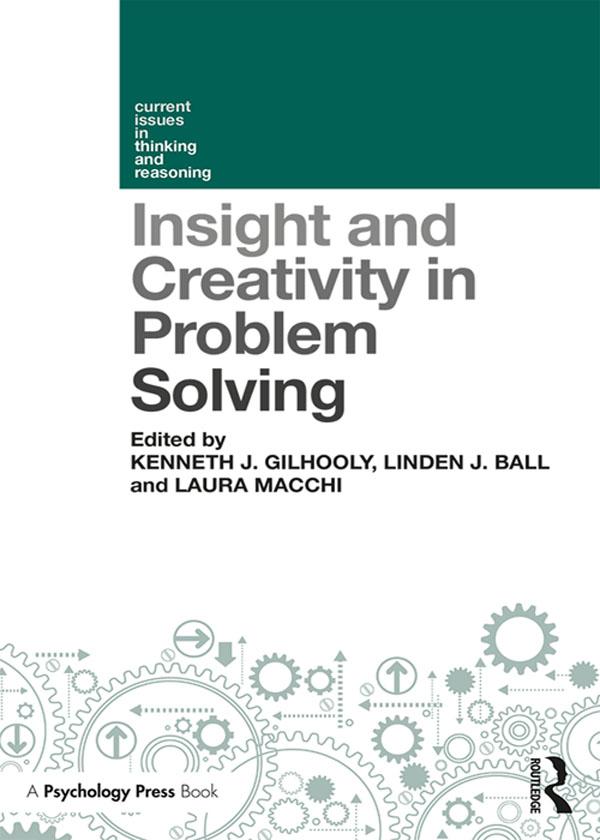
To date we have only a fragmentary understanding of the thought processes that engender insightful solutions to problems that require a change in representation or the discovery of distant associations to presented information. We likewise have only a piecemeal understanding of the thinking that underpins creative problem solving, where solutions are needed that are new to the solver. Recently there has been a growing interest in removing the mystery from insight and creativity through better specified theories and theory-driven experimentation.
The chapters in this volume reflect key developments in this expanding field of insight and creativity research. Collectively, the chapters converge on a nuanced view of insight and creative thinking as often arising from the interplay between two qualitatively distinct types of processes that interact to yield sudden, surprising and innovative solutions to problems that initially seemed impenetrable and resistant to the application of inventive ideas. This dual-process perspective, which capitalises on the distinction between ‘special’ (automatic, unconscious and associative) Type 1 processes and ‘routine’ (controlled, conscious and analytic) Type 2 processes, helps advance a theoretical understanding of insight and creativity, whilst also provoking important new research questions. This book was originally published as a special issue of Thinking and Reasoning.
Betal enkelt med kort, Klarna, Apple Pay eller Google Pay. Ikke fornøyd? Du har alltid 14 dagers angrerett. Les mer i våre vilkår. Har du spørsmål, send oss en e-post på hello@memmo.org.
Memmo gjør det enklere å studere – uansett hvor du er i verden. Hos oss samler du pensumbøker og smarte studieverktøy på ett og samme sted: sammendrag, quizer, podkaster og flashcards. Og så Ted, din studiekompis som svarer på alt du lurer på. Over 50 000 studenter studerer allerede her – bygget for at du skal lære raskere og stresse mindre.