
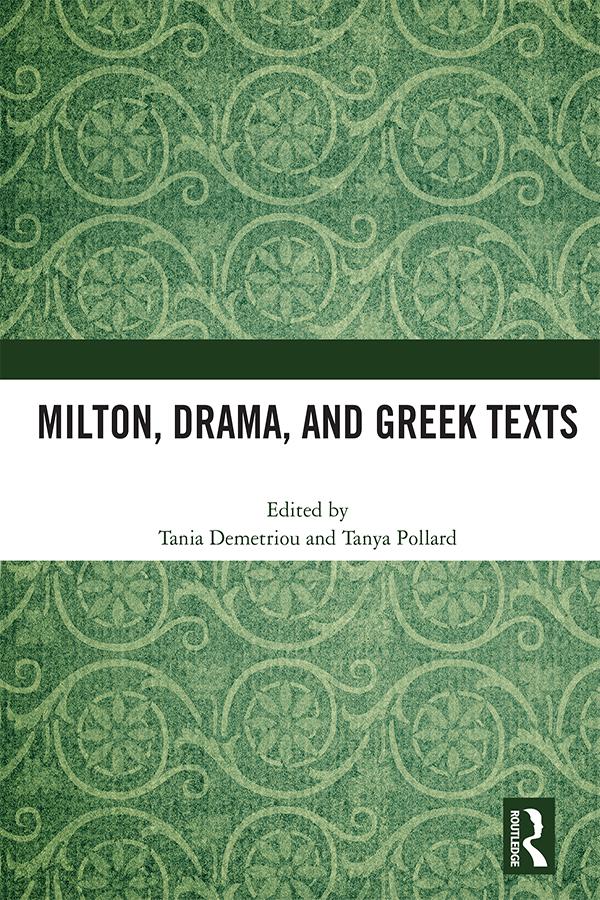
This collection reconsiders Milton’s engagement with Greek texts, with particular attention to the theological and theatrical meanings attached to Greek in the early modern period. Responding to new scholarship on early modern reactions to Greek authors – especially Euripides and Homer, Milton’s particular favourites – the collection emphasizes the associations of Greek with both Protestantism and the origins of tragedy, two arenas frequently in tension, but crucially linked in Milton’s literary imagination. The contributions explore a range of works spanning the whole of Milton’s career, from the early masque Comus, through the political and religious prose, to the 1671 closet drama, Samson Agonistes. They consider the ways in which the authority and controversy attached to Greek authors framed Milton’s approaches to their texts. Looking at both the texts and their interpretative traditions together, this book suggests that Greek authors shaped Milton’s attitudes to drama in ways even more extensive and surprising than we have yet recognized. This book was originally published as a special issue of The Seventeenth Century.
Betal enkelt med kort, Klarna, Apple Pay eller Google Pay. Ikke fornøyd? Du har alltid 14 dagers angrerett. Les mer i våre vilkår. Har du spørsmål, send oss en e-post på hello@memmo.org.
Memmo gjør det enklere å studere – uansett hvor du er i verden. Hos oss samler du pensumbøker og smarte studieverktøy på ett og samme sted: sammendrag, quizer, podkaster og flashcards. Og så Ted, din studiekompis som svarer på alt du lurer på. Over 50 000 studenter studerer allerede her – bygget for at du skal lære raskere og stresse mindre.