
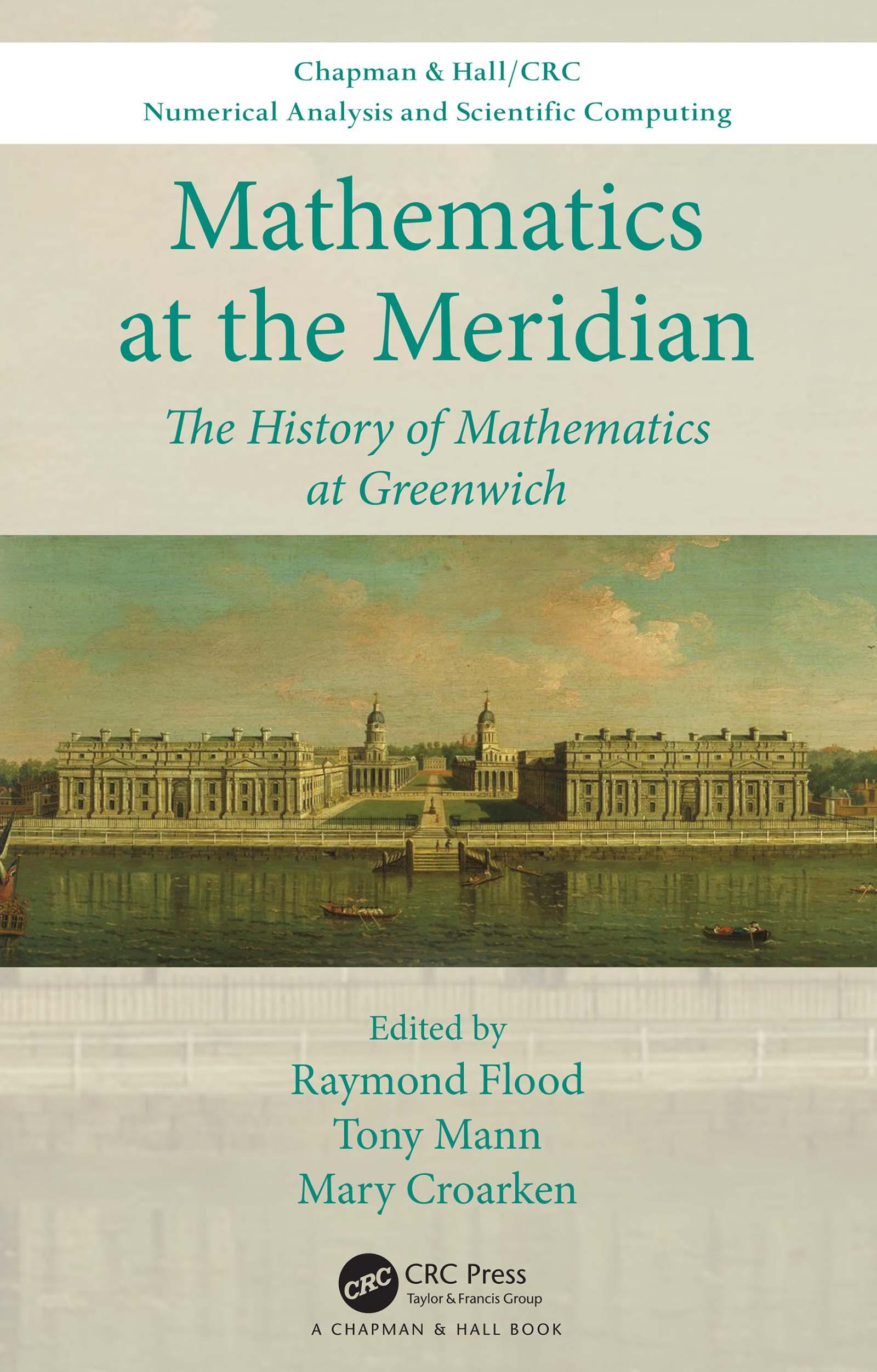
Greenwich has been a centre for scientific computing since the foundation of the Royal Observatory in 1675. Early Astronomers Royal gathered astronomical data with the purpose of enabling navigators to compute their longitude at sea. Nevil Maskelyne in the 18th century organised the work of computing tables for the Nautical Almanac, anticipating later methods used in safety-critical computing systems. The 19th century saw influential critiques of Charles Babbage’s mechanical calculating engines, and in the 20th century Leslie Comrie and others pioneered the automation of computation. The arrival of the Royal Naval College in 1873 and the University of Greenwich in 1999 has brought more mathematicians and different kinds of mathematics to Greenwich. In the 21st century computational mathematics has found many new applications. This book presents an account of the mathematicians who worked at Greenwich and their achievements.
Features
- A scholarly but accessible history of mathematics at Greenwich, from the seventeenth century to the present day, with each chapter written by an expert in the field
- The book will appeal to astronomical and naval historians as well as historians of mathematics and scientific computing.
Betal enkelt med kort, Klarna, Apple Pay eller Google Pay. Ikke fornøyd? Du har alltid 14 dagers angrerett. Les mer i våre vilkår. Har du spørsmål, send oss en e-post på hello@memmo.org.
Memmo gjør det enklere å studere – uansett hvor du er i verden. Hos oss samler du pensumbøker og smarte studieverktøy på ett og samme sted: sammendrag, quizer, podkaster og flashcards. Og så Ted, din studiekompis som svarer på alt du lurer på. Over 50 000 studenter studerer allerede her – bygget for at du skal lære raskere og stresse mindre.