
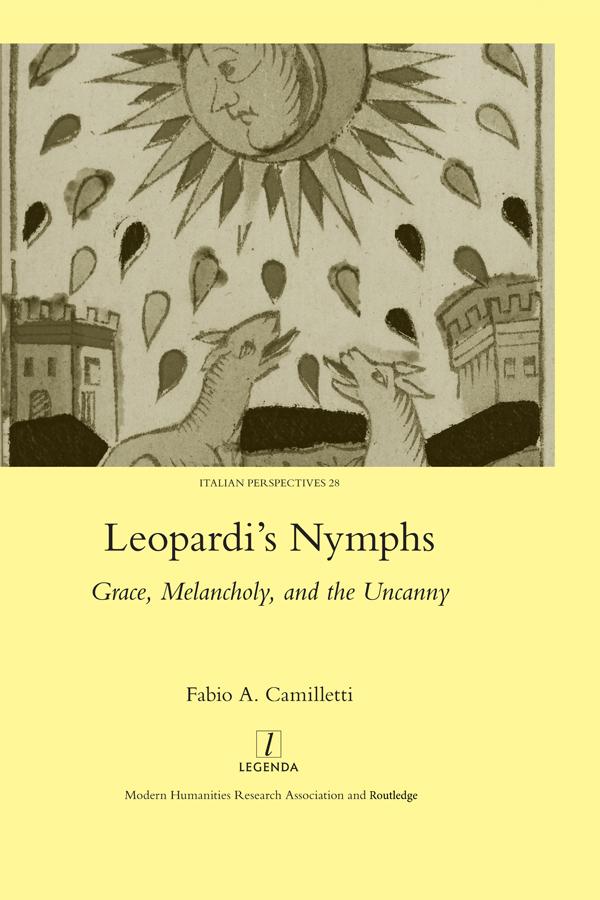
"How can one make poetry in a disenchanted age? For Giacomo Leopardi (1798-1837) this was the modern subject's most insolvable deadlock, after the Enlightenment's pitiless unveiling of truth. Still, in the poems written in 1828-29 between Pisa and the Marches, Leopardi manages to turn disillusion into a powerful source of inspiration, through an unprecedented balance between poetic lightness and philosophical density. The addressees of these cantos are two prematurely dead maidens bearing names of nymphs, and thus obliquely metamorphosed into the charmingly disquieting deities that in Greek lore brought knowledge and poetic speech through possession. The nymph, Camilletti argues, can be seen as the inspirational power allowing the utterance of a new kind of poetry, bridging antiquity and modernity, illusion and disenchantment, life and death. By reading Leopardi's poems in the light of Freudian psychoanalysis and of Aby Warburg's and Walter Benjamin's thought, Camilletti gives a groundbreaking interpretation of the way Leopardi negotiates the original fracture between poetry and philosophy that characterises Western culture. Fabio Camilletti is Assistant Professor in Italian at the University of Warwick."
Betal enkelt med kort, Klarna, Apple Pay eller Google Pay. Ikke fornøyd? Du har alltid 14 dagers angrerett. Les mer i våre vilkår. Har du spørsmål, send oss en e-post på hello@memmo.org.
Memmo gjør det enklere å studere – uansett hvor du er i verden. Hos oss samler du pensumbøker og smarte studieverktøy på ett og samme sted: sammendrag, quizer, podkaster og flashcards. Og så Ted, din studiekompis som svarer på alt du lurer på. Over 50 000 studenter studerer allerede her – bygget for at du skal lære raskere og stresse mindre.
Du vil kanskje også like
Kjøp boken0