
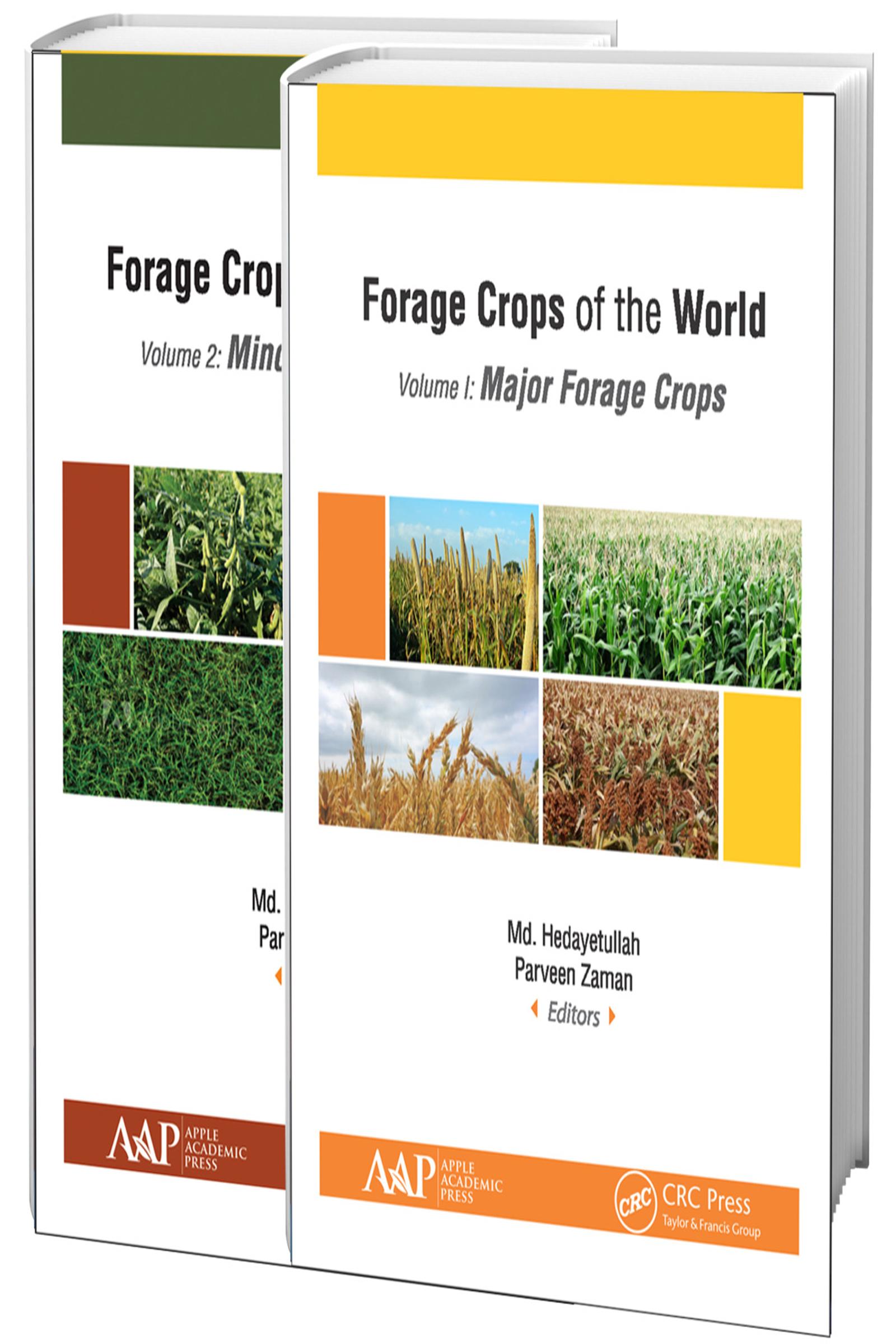
This new 2-volume set discusses the importance of fodder production of the minor fodder crops for animals. The volumes focuses on fodder production for forage crops, cover 17 major forage crops and 25 minor forage crops. The volumes discuss crop production methodology and agronomic management in a systemic way, providing an abundance of information on each type of forage crop discussed, including preferred soil type, land capability, cropping patterns, climate, and socioeconomic conditions. They also address pests of the various forage crops, disease management, agroforestry in fodder and forage crops, preservation of forage crops, and forage production and climate change.
Forage crops are very essential for quality milk and meat production. Farm animals are normally fed fodder available from cultivated areas, supplemented by a small extent with harvested grasses and top feeds. The three major sources of fodder are crop residues, cultivated fodder, and fodder from trees, pastures, and grazing lands. The patterns and types of fodder crops vary by geographical location.
Betal enkelt med kort, Klarna, Apple Pay eller Google Pay. Ikke fornøyd? Du har alltid 14 dagers angrerett. Les mer i våre vilkår. Har du spørsmål, send oss en e-post på hello@memmo.org.
Memmo gjør det enklere å studere – uansett hvor du er i verden. Hos oss samler du pensumbøker og smarte studieverktøy på ett og samme sted: sammendrag, quizer, podkaster og flashcards. Og så Ted, din studiekompis som svarer på alt du lurer på. Over 50 000 studenter studerer allerede her – bygget for at du skal lære raskere og stresse mindre.