
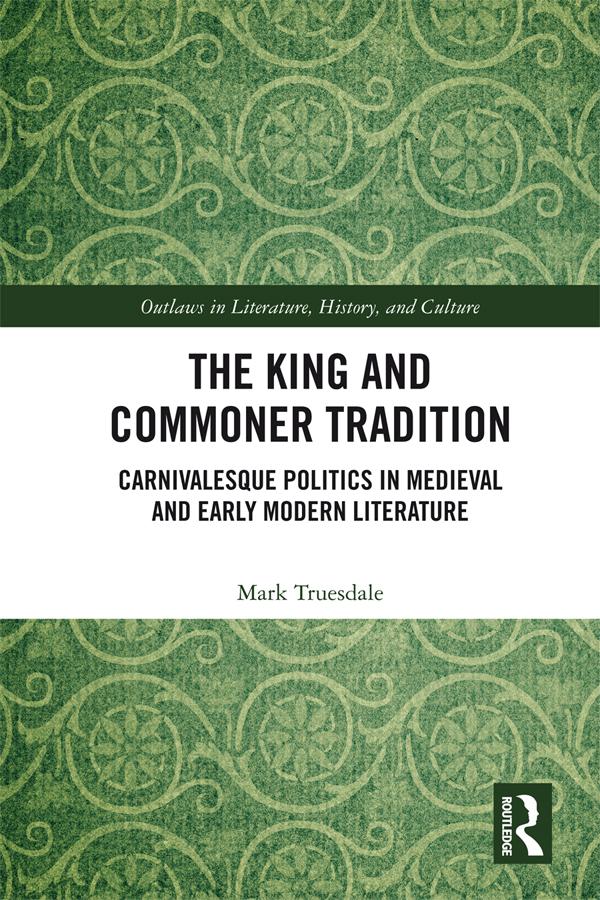
King and Commoner tales were hugely popular across the late medieval and early modern periods, their cultural influence extending from Robin Hood ballads to Shakespearean national histories. This study represents the first detailed exploration of this rich and fascinating literary tradition, tracing its development across deeply politicized fifteenth-century comic tales and early modern ballads.
The medieval King and Commoner tales depict an incognito king becoming lost in the forest and encountering a disgruntled commoner who complains of class oppression and poaches the king’s deer. This is an upside-down world of tricksters, violence, and politicized feasting that critiques and deconstructs medieval hierarchy. The commoners of these tales utilize the inversion of the medieval carnival, crowning themselves as liminal mock kings in the forest while threatening to rend and devour a body politic that would oppress them. These tales are complex and ambiguous, reimagining the socio-political upheaval of the late medieval period in sophisticated ruminations on class relations. By contrast, the early modern ballads and chapbooks see the tradition undergo a conservative metamorphosis. Suppressing its more radical elements amid a celebration of proto-panoptical kings, the tradition remerges as royalist propaganda in which the king watches his thankful subjects through the keyhole.
Betal enkelt med kort, Klarna, Apple Pay eller Google Pay. Ikke fornøyd? Du har alltid 14 dagers angrerett. Les mer i våre vilkår. Har du spørsmål, send oss en e-post på hello@memmo.org.
Memmo gjør det enklere å studere – uansett hvor du er i verden. Hos oss samler du pensumbøker og smarte studieverktøy på ett og samme sted: sammendrag, quizer, podkaster og flashcards. Og så Ted, din studiekompis som svarer på alt du lurer på. Over 50 000 studenter studerer allerede her – bygget for at du skal lære raskere og stresse mindre.