
How did Teotihuacán in Mexico become one of the world's largest cities? Why did Roman soldiers in Britain worship a Persian god? What important roles did women play in the Mongol empire?
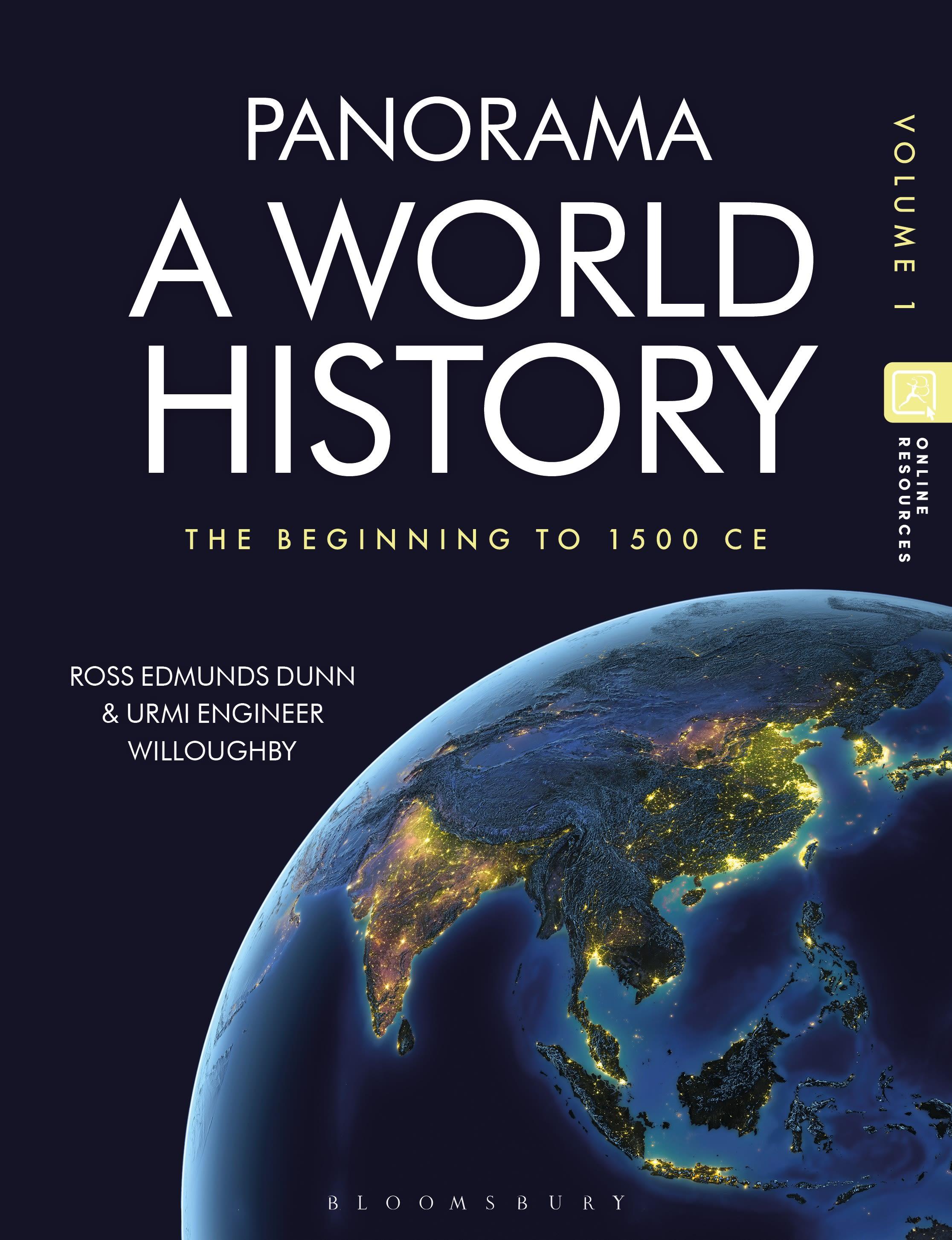
Panorama explores these questions by following the journey of humankind in a global context, weaving a world-scale narrative with a single chronological thread. It empowers you to connect the regional histories of particular states, empires, and cultural traditions to larger patterns of change on hemispheric and global scales-examining migratory movements, networks of trade, the spread of religions, pandemics, and environmental transformations.
Richly illustrated with 120 images and over 50 maps, this new edition is organized into four chronological parts, each covering a defined era in world history. Volume 1 starts with the Paleolithic era and surveys up to the late fifteenth century CE.
Each chapter includes dedicated learning features:
· “Individuals Matter” presents biographical sketches of individuals, both notable historical figures and ordinary people, whose lives in some way illuminate the chapter's main developments.
· “Weighing the Evidence” asks you to analyse and interpret primary sources, either texts or visual artifacts.
· “Thinking about the Past with Global and Comparative Themes” encourages you to examine the threads of change that cut across global space and time.
· “Thinking History” questions help consolidate your knowledge, and “Reflecting on the Past” questions invite you to contemplate broader chapter themes.
· In-margin definitions of words and phrases help you build key vocabulary.
With its unique global narrative, chronological storytelling and exceptional features, Panorama provides a clear framework to analyse and engage with the changes, continuities, and anomalies in our world's past-and their impact on the present.
Panorama explores these questions by following the journey of humankind in a global context, weaving a world-scale narrative with a single chronological thread. It empowers you to connect the regional histories of particular states, empires, and cultural traditions to larger patterns of change on hemispheric and global scales-examining migratory movements, networks of trade, the spread of religions, pandemics, and environmental transformations.
Richly illustrated with 120 images and over 50 maps, this new edition is organized into four chronological parts, each covering a defined era in world history. Volume 1 starts with the Paleolithic era and surveys up to the late fifteenth century CE.
Each chapter includes dedicated learning features:
· “Individuals Matter” presents biographical sketches of individuals, both notable historical figures and ordinary people, whose lives in some way illuminate the chapter's main developments.
· “Weighing the Evidence” asks you to analyse and interpret primary sources, either texts or visual artifacts.
· “Thinking about the Past with Global and Comparative Themes” encourages you to examine the threads of change that cut across global space and time.
· “Thinking History” questions help consolidate your knowledge, and “Reflecting on the Past” questions invite you to contemplate broader chapter themes.
· In-margin definitions of words and phrases help you build key vocabulary.
With its unique global narrative, chronological storytelling and exceptional features, Panorama provides a clear framework to analyse and engage with the changes, continuities, and anomalies in our world's past-and their impact on the present.
Betal enkelt med kort, Klarna, Apple Pay eller Google Pay. Ikke fornøyd? Du har alltid 14 dagers angrerett. Les mer i våre vilkår. Har du spørsmål, send oss en e-post på hello@memmo.org.
Memmo gjør det enklere å studere – uansett hvor du er i verden. Hos oss samler du pensumbøker og smarte studieverktøy på ett og samme sted: sammendrag, quizer, podkaster og flashcards. Og så Ted, din studiekompis som svarer på alt du lurer på. Over 50 000 studenter studerer allerede her – bygget for at du skal lære raskere og stresse mindre.