
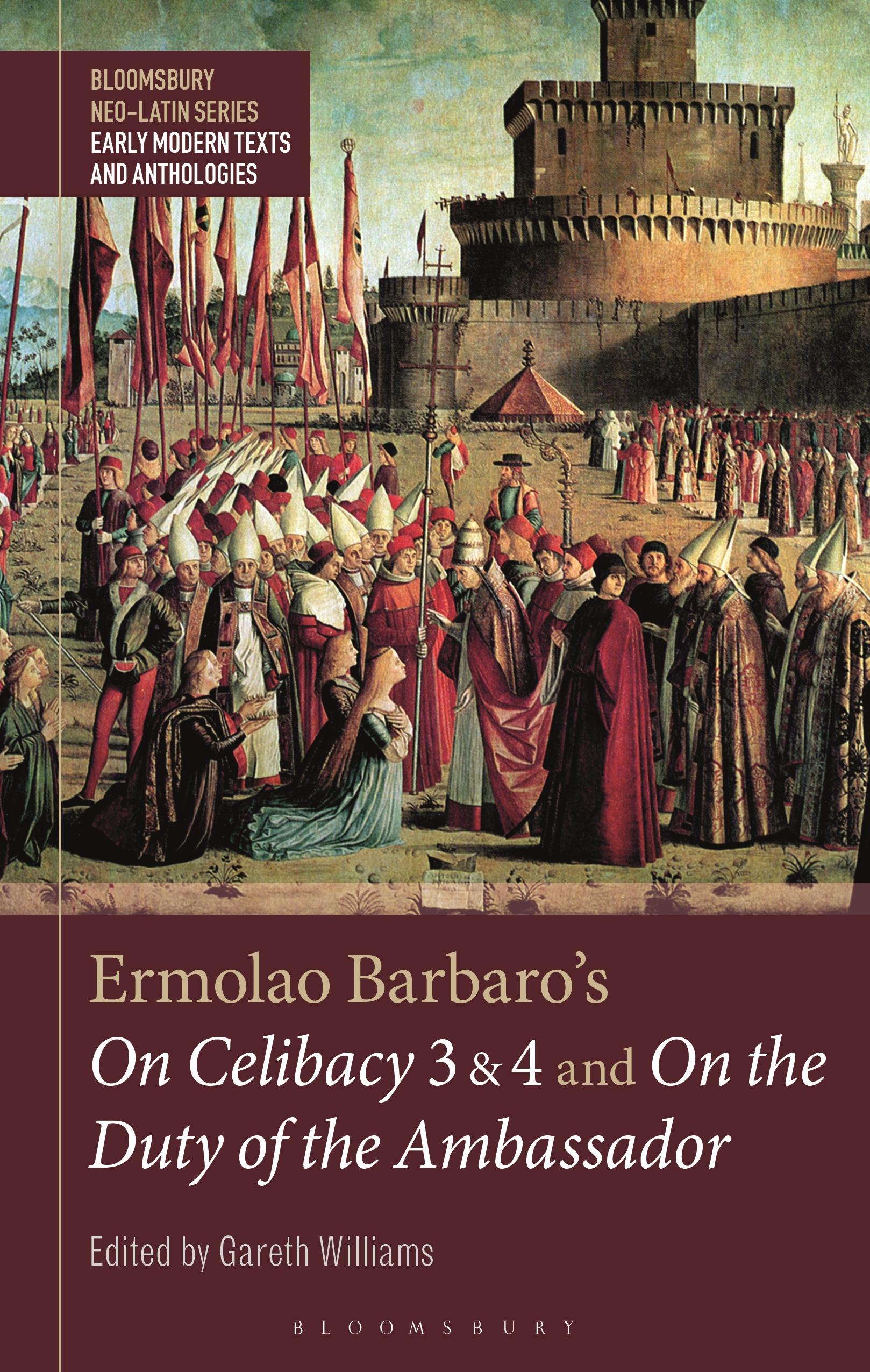
This book offers the first annotated translation into English of two works of the eminent Venetian humanist, Ermolao Barbaro (1454–93). Books 3 and 4 of On Celibacy seek to justify a contemplative existence at a far remove from the active life and career-path expected of a figure of Barbaro's standing within the Venetian patriciate; Books 1 and 2 of On Celibacy are presented in the companion-piece to this second volume. The second work presented here is Barbaro's short treatise On the Duty of Ambassador (1488): based on Barbaro's own practical experience as a Venetian envoy abroad, this treatise outlines the conduct expected of the dedicated career diplomat.
Viewed against each other, Barbaro's On Celibacy and On the Duty of the Ambassador offer contrasting perspectives on the wider 15th-century debate about the claims of the reflective as opposed to the active life – a debate that extends all the way back to Greco-Roman antiquity. In On Celibacy the young Barbaro is committed to a life that proudly renounces civic engagement in the name of self-discovery and inner fulfilment. Yet a different Barbaro asserts himself in On the Duty of the Ambassador: he now presents himself as a committed public servant in a work that is ahead if its time in theorizing the nature of 'modern' Renaissance diplomacy. On a personal level, these two works capture the profound dichotomy in Barbaro's life between his humanist devotion to scholarship on the one hand and, on the other, his call of duty to the Republic of Venice.
Viewed against each other, Barbaro's On Celibacy and On the Duty of the Ambassador offer contrasting perspectives on the wider 15th-century debate about the claims of the reflective as opposed to the active life – a debate that extends all the way back to Greco-Roman antiquity. In On Celibacy the young Barbaro is committed to a life that proudly renounces civic engagement in the name of self-discovery and inner fulfilment. Yet a different Barbaro asserts himself in On the Duty of the Ambassador: he now presents himself as a committed public servant in a work that is ahead if its time in theorizing the nature of 'modern' Renaissance diplomacy. On a personal level, these two works capture the profound dichotomy in Barbaro's life between his humanist devotion to scholarship on the one hand and, on the other, his call of duty to the Republic of Venice.
Betal enkelt med kort, Klarna, Apple Pay eller Google Pay. Ikke fornøyd? Du har alltid 14 dagers angrerett. Les mer i våre vilkår. Har du spørsmål, send oss en e-post på hello@memmo.org.
Memmo gjør det enklere å studere – uansett hvor du er i verden. Hos oss samler du pensumbøker og smarte studieverktøy på ett og samme sted: sammendrag, quizer, podkaster og flashcards. Og så Ted, din studiekompis som svarer på alt du lurer på. Over 50 000 studenter studerer allerede her – bygget for at du skal lære raskere og stresse mindre.