
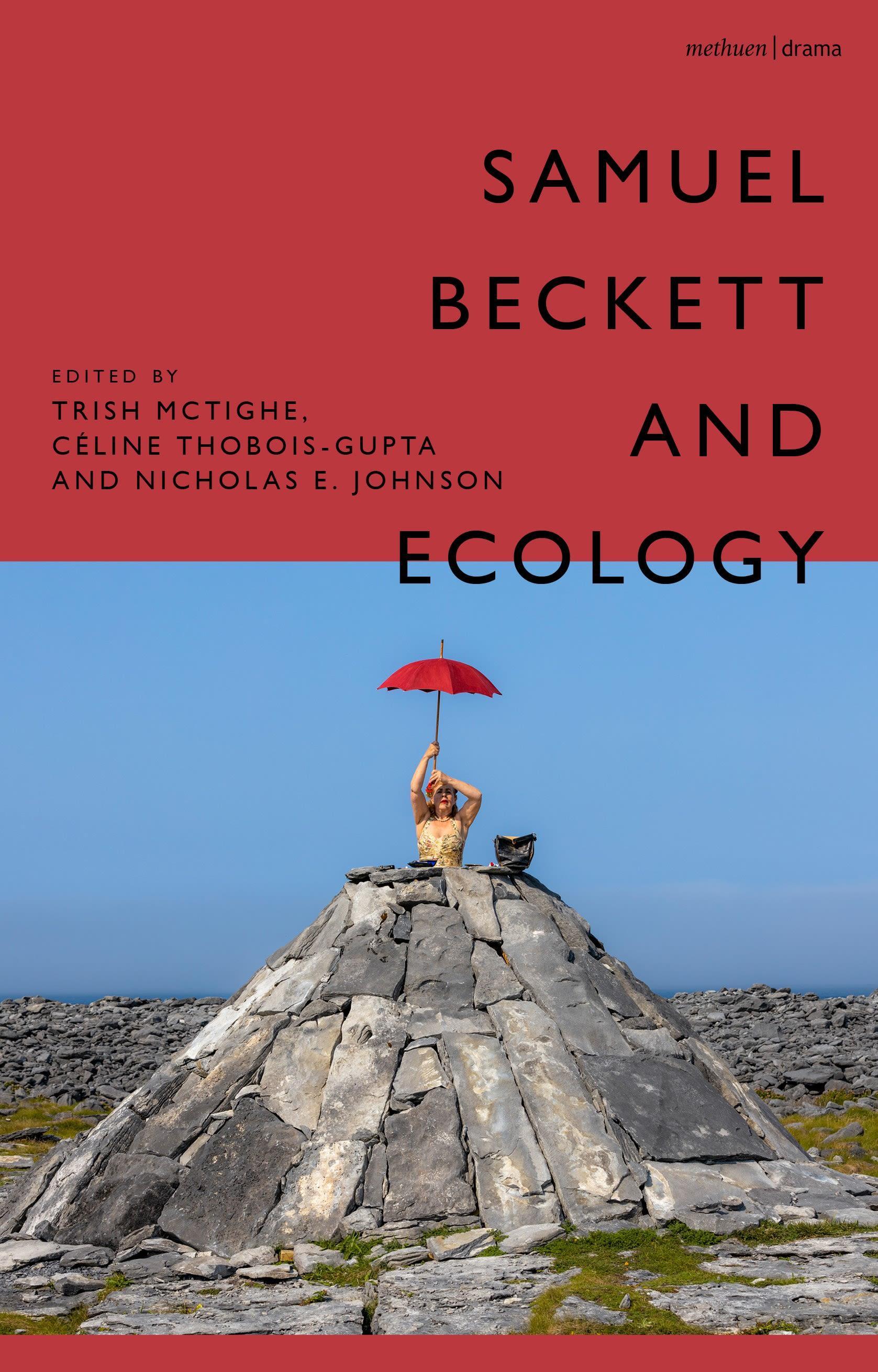
This is the first full-length book to investigate Samuel Beckett's work through contemporary ecological thinking, offering a wide range of artistic and scholarly responses to the ecological crises provoked, mediated or challenged by Beckett's work.
Beckett was not an environmental artist, but his oeuvre, poised between forms of precarity and hope, is a rich territory for the exploration of the most pressing issues of our time: the rift between the human species, its technological and economic advancement and the ecologies that sustain it all.
In recent years, Beckett's name, aphorisms and work have been invoked relative to environmental catastrophe, helping stimulate debates on ecology, the arts and the ecosystemic place of the human. The volume reflects on ecology as a productive term, as well as the varied practices and narratives in Beckettian intermedial ecologies. While some authors offer new insights into the connections between Beckett and the Anthropocene across translation, adaptation, performance and the visual arts, others also explore the potential of Happy Days (1961) for ecological thought and the role it has taken in recent ecodramaturgical experiments in the theatre. Woven throughout the volume are short bursts of writing, 'coups de gong', which testify to the variety of Beckett-inspired local responses to global climate instability.
Beckett was not an environmental artist, but his oeuvre, poised between forms of precarity and hope, is a rich territory for the exploration of the most pressing issues of our time: the rift between the human species, its technological and economic advancement and the ecologies that sustain it all.
In recent years, Beckett's name, aphorisms and work have been invoked relative to environmental catastrophe, helping stimulate debates on ecology, the arts and the ecosystemic place of the human. The volume reflects on ecology as a productive term, as well as the varied practices and narratives in Beckettian intermedial ecologies. While some authors offer new insights into the connections between Beckett and the Anthropocene across translation, adaptation, performance and the visual arts, others also explore the potential of Happy Days (1961) for ecological thought and the role it has taken in recent ecodramaturgical experiments in the theatre. Woven throughout the volume are short bursts of writing, 'coups de gong', which testify to the variety of Beckett-inspired local responses to global climate instability.
Betal enkelt med kort, Klarna, Apple Pay eller Google Pay. Ikke fornøyd? Du har alltid 14 dagers angrerett. Les mer i våre vilkår. Har du spørsmål, send oss en e-post på hello@memmo.org.
Memmo gjør det enklere å studere – uansett hvor du er i verden. Hos oss samler du pensumbøker og smarte studieverktøy på ett og samme sted: sammendrag, quizer, podkaster og flashcards. Og så Ted, din studiekompis som svarer på alt du lurer på. Over 50 000 studenter studerer allerede her – bygget for at du skal lære raskere og stresse mindre.