
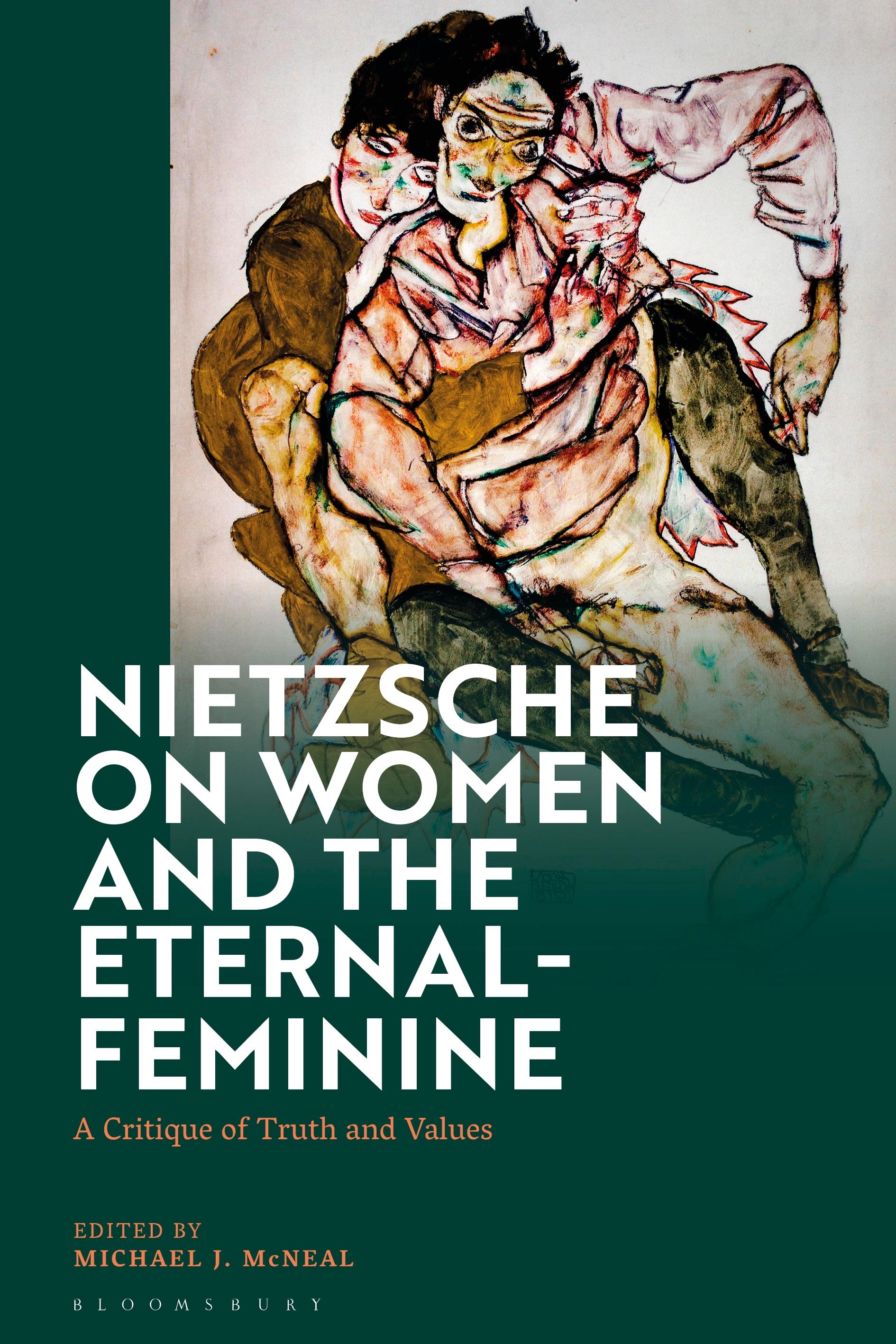
By re-examining Nietzsche's notion of the “eternal-feminine” and his views on women and feminism, this volume offers new perspectives on some of his key ideas. It brings together a diverse group of scholars to critically engage with Nietzsche's use of late-19th-century gender stereotypes and the ways in which they served his critique of values, including his use of “woman” as a trope for truth.
Among other subjects, the contributors consider the role of psychology in Nietzsche's thought, his concern with style, self-creation, and advocacy of perfectionism, his views on romantic love and marriage, and his aim of revaluing all values to instigate a distant philosophy of the future. They investigate parallels between Nietzsche's thought and Shaktism, his relation to Goethe and Stendahl, and his influence on Beauvoir, Butler, and Dohm. With the inclusion of two seminal essays on Nietzsche and women by Lawrence J. Hatab and Kelly Oliver, the volume also illustrates some of the ways in which scholarship on these subjects has evolved over the last four decades.
Providing fresh insights into these inter-related subjects, Nietzsche on Women and the Eternal-Feminine highlights the enduring relevance of his thought and its still-underappreciated potential for re-thinking both the bases for and aims of feminism and other emancipatory movements.
Among other subjects, the contributors consider the role of psychology in Nietzsche's thought, his concern with style, self-creation, and advocacy of perfectionism, his views on romantic love and marriage, and his aim of revaluing all values to instigate a distant philosophy of the future. They investigate parallels between Nietzsche's thought and Shaktism, his relation to Goethe and Stendahl, and his influence on Beauvoir, Butler, and Dohm. With the inclusion of two seminal essays on Nietzsche and women by Lawrence J. Hatab and Kelly Oliver, the volume also illustrates some of the ways in which scholarship on these subjects has evolved over the last four decades.
Providing fresh insights into these inter-related subjects, Nietzsche on Women and the Eternal-Feminine highlights the enduring relevance of his thought and its still-underappreciated potential for re-thinking both the bases for and aims of feminism and other emancipatory movements.
Betal enkelt med kort, Klarna, Apple Pay eller Google Pay. Ikke fornøyd? Du har alltid 14 dagers angrerett. Les mer i våre vilkår. Har du spørsmål, send oss en e-post på hello@memmo.org.
Memmo gjør det enklere å studere – uansett hvor du er i verden. Hos oss samler du pensumbøker og smarte studieverktøy på ett og samme sted: sammendrag, quizer, podkaster og flashcards. Og så Ted, din studiekompis som svarer på alt du lurer på. Over 50 000 studenter studerer allerede her – bygget for at du skal lære raskere og stresse mindre.