
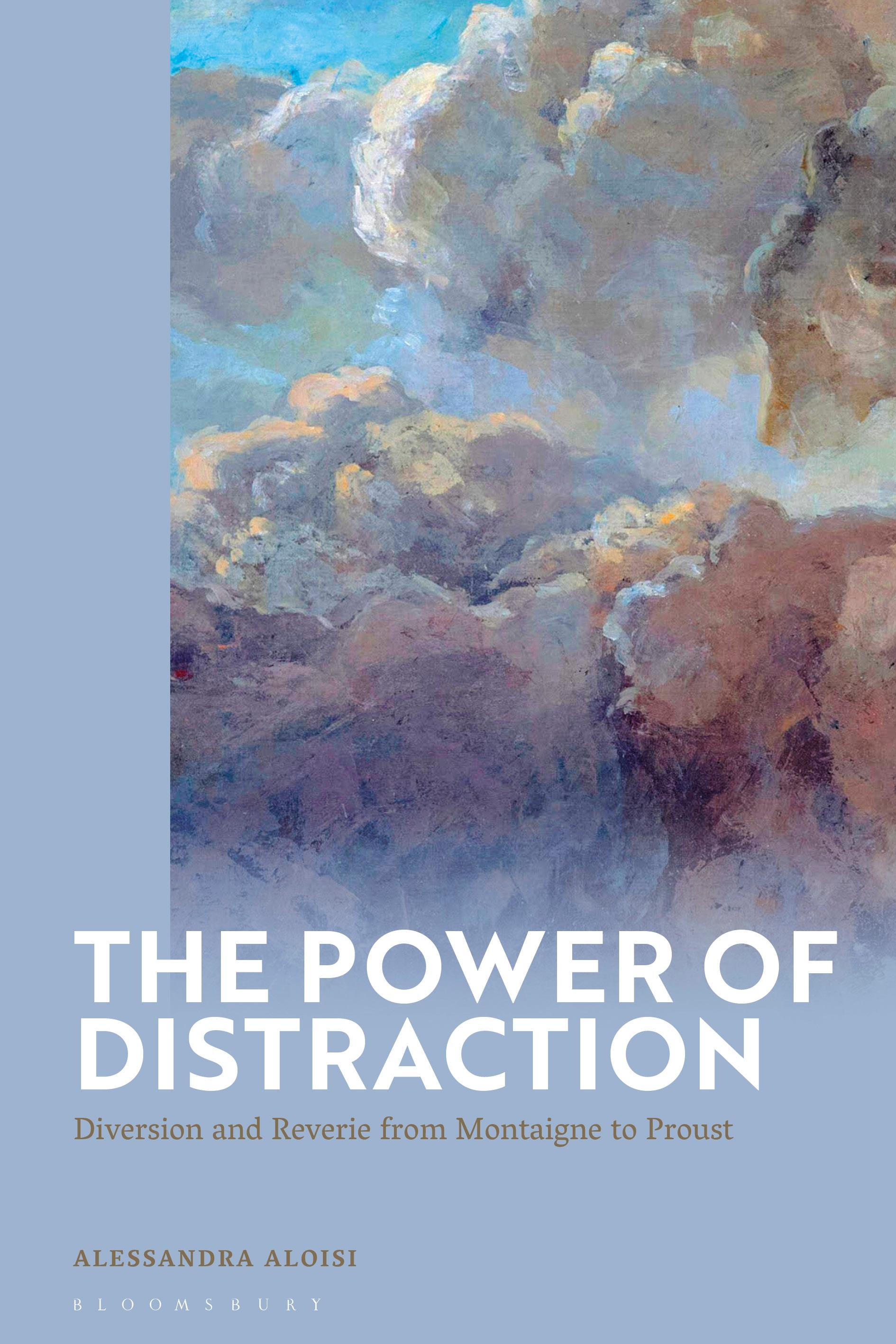
From Pascal to contemporary anxieties about attention, we have constantly been urged to avoid distraction if we want to live and work better. But Alessandra Aloisi argues that we are missing the point.Drawing on a broad range ofEuropean philosophy and literature, this book considers distraction not as an expression of human imperfection, but as a creative, subversive, and aesthetic capability.
In contrast to the traditional accounts, from Saint Augustine to Robert Burton, which either associated distraction with sin or considered it as a symptom of melancholy, Aloisi argues that it is often precisely when we stop thinking about something that inspiration finds us. Why else are artists described as having their heads in the clouds? This book demonstrates the serendipity of distraction through close readings of cultural and visual sources ranging from the mathematician Poincaré to the Netflix show, Black Mirror.
With inspiration from La Bruyère, Rousseau, Leopardi, Stendhal, Baudelaire, and others, Aloisi further examines the political value of distraction. After all, in an age of ubiquitous technology and 24/7 availability fighting for our attention, distraction provides what Bergson called a 'slight revolt' from the codes and behaviors that society dictates.
Combining philosophy, literature, art, and politics, The Power of Distraction encourages us to think differently about our attention and considers just how productive daydreams can be.
In contrast to the traditional accounts, from Saint Augustine to Robert Burton, which either associated distraction with sin or considered it as a symptom of melancholy, Aloisi argues that it is often precisely when we stop thinking about something that inspiration finds us. Why else are artists described as having their heads in the clouds? This book demonstrates the serendipity of distraction through close readings of cultural and visual sources ranging from the mathematician Poincaré to the Netflix show, Black Mirror.
With inspiration from La Bruyère, Rousseau, Leopardi, Stendhal, Baudelaire, and others, Aloisi further examines the political value of distraction. After all, in an age of ubiquitous technology and 24/7 availability fighting for our attention, distraction provides what Bergson called a 'slight revolt' from the codes and behaviors that society dictates.
Combining philosophy, literature, art, and politics, The Power of Distraction encourages us to think differently about our attention and considers just how productive daydreams can be.
Betal enkelt med kort, Klarna, Apple Pay eller Google Pay. Ikke fornøyd? Du har alltid 14 dagers angrerett. Les mer i våre vilkår. Har du spørsmål, send oss en e-post på hello@memmo.org.
Memmo gjør det enklere å studere – uansett hvor du er i verden. Hos oss samler du pensumbøker og smarte studieverktøy på ett og samme sted: sammendrag, quizer, podkaster og flashcards. Og så Ted, din studiekompis som svarer på alt du lurer på. Over 50 000 studenter studerer allerede her – bygget for at du skal lære raskere og stresse mindre.