
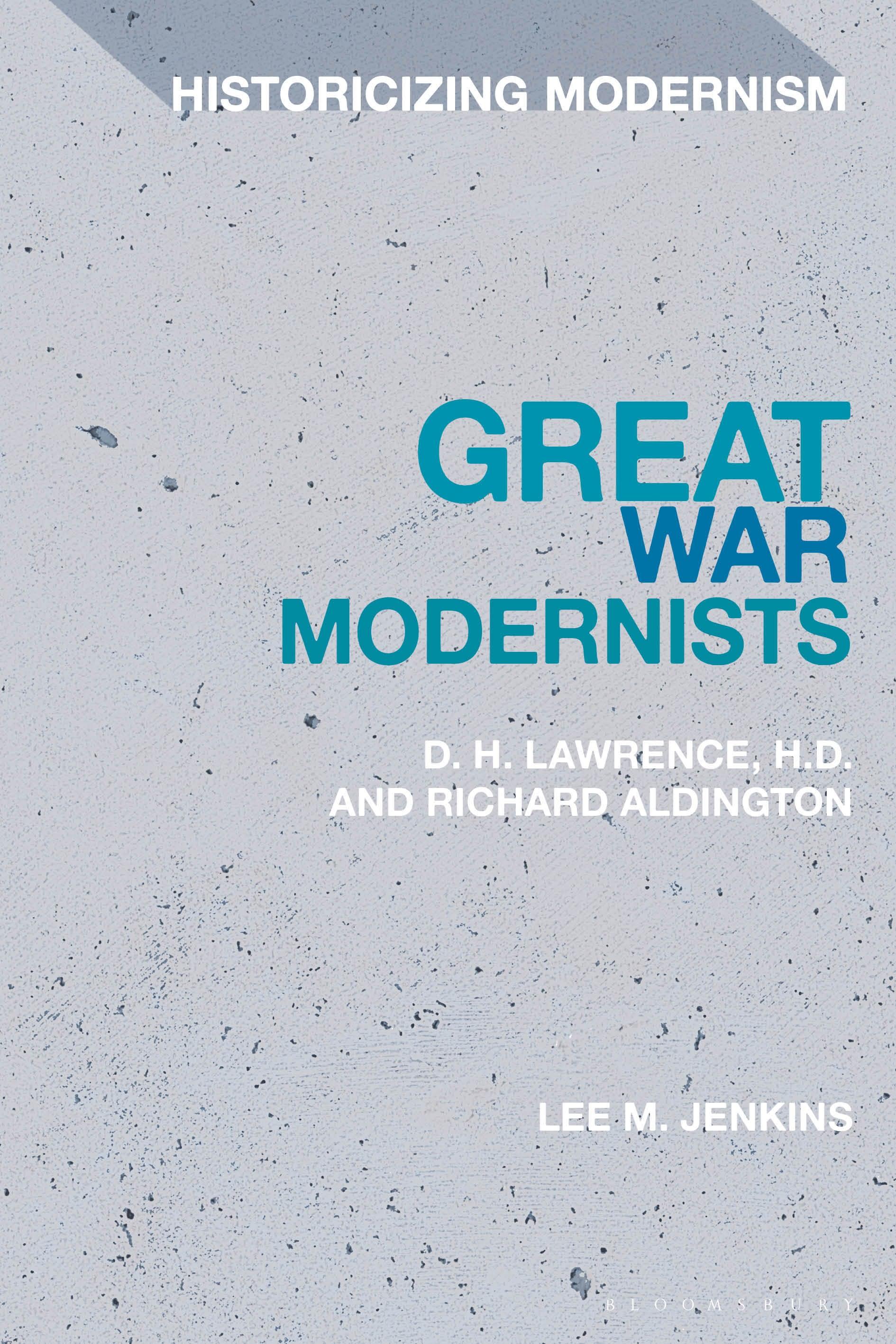
Taking 44 Mecklenburgh Square as the focal point and springboard for a critical group study of D.H. Lawrence, H.D. and Richard Aldington, this book offers a fresh perspective on the relationship of modernist biofiction and poetry to the literature of the First World War.
A group that Perdita Schaffner described as 'another Bloomsbury set', the Mecklenburgh Square writers, like the Bloomsbury Group proper, 'lived in squares' and 'loved in triangles', in Dorothy Parker's famous formulation. Geographically adjacent, these sets intersected socially and, at points, in their aesthetics: both practiced innovative forms of what may broadly be defined as 'life writing'. But, demarcating the Mecklenburgh Square writers from the Bloomsbury Set, the former had its origins in the transatlantic avant-garde: Lawrence. H.D., Aldington (and John Cournos) were all associated with Imagism, the poetic movement which instantiated Anglo-American modernism.
Considered as a pro-tem collective, these four poets, all of whom were also novelists and translators, contest the binaries that still obtain between modernist and First World War writing. This group study of Lawrence, H.D., Aldington and Cournos tracks the transition of Imagism from a pre-war mode to a war poetics which includes but is not confined to the trench lyric and it traces, in the transtextual relations between the Mecklenburgh Square novels, the traumatic imprint of the war on modernist life writing.
A group that Perdita Schaffner described as 'another Bloomsbury set', the Mecklenburgh Square writers, like the Bloomsbury Group proper, 'lived in squares' and 'loved in triangles', in Dorothy Parker's famous formulation. Geographically adjacent, these sets intersected socially and, at points, in their aesthetics: both practiced innovative forms of what may broadly be defined as 'life writing'. But, demarcating the Mecklenburgh Square writers from the Bloomsbury Set, the former had its origins in the transatlantic avant-garde: Lawrence. H.D., Aldington (and John Cournos) were all associated with Imagism, the poetic movement which instantiated Anglo-American modernism.
Considered as a pro-tem collective, these four poets, all of whom were also novelists and translators, contest the binaries that still obtain between modernist and First World War writing. This group study of Lawrence, H.D., Aldington and Cournos tracks the transition of Imagism from a pre-war mode to a war poetics which includes but is not confined to the trench lyric and it traces, in the transtextual relations between the Mecklenburgh Square novels, the traumatic imprint of the war on modernist life writing.
Betal enkelt med kort, Klarna, Apple Pay eller Google Pay. Ikke fornøyd? Du har alltid 14 dagers angrerett. Les mer i våre vilkår. Har du spørsmål, send oss en e-post på hello@memmo.org.
Memmo gjør det enklere å studere – uansett hvor du er i verden. Hos oss samler du pensumbøker og smarte studieverktøy på ett og samme sted: sammendrag, quizer, podkaster og flashcards. Og så Ted, din studiekompis som svarer på alt du lurer på. Over 50 000 studenter studerer allerede her – bygget for at du skal lære raskere og stresse mindre.