
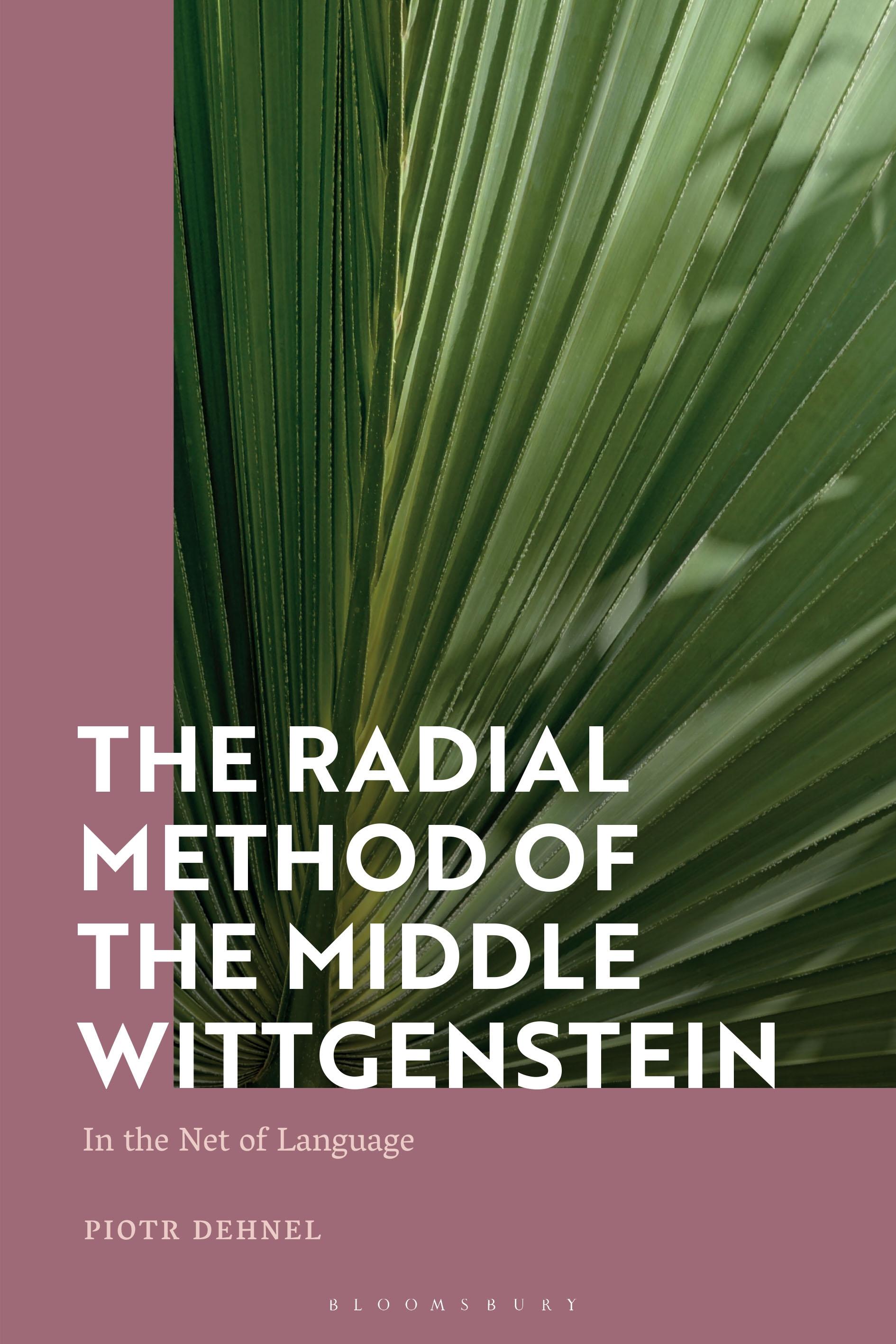
Spanning the period between Wittgenstein's return to Cambridge in 1929 and the first version of Philosophical Investigations in 1936, Piotr Dehnel explores the middle stage in Ludwig Wittgenstein's philosophical development and identifies the major issues which engrossed him, including phenomenology, philosophy of mathematics and philosophy of language. Contrary to the dominant perspective, Dehnel argues that this period was intrinsically different from the early and late stages and should not be viewed as a mere transitional phase.
The distinctiveness of Wittgenstein's middle work can be seen in his philosophical thinking as it unfolds in a non-linear trajectory: thoughts do not follow upon each other, ideas do not appear sequentially one by one, and insights do not form a straight chain. Dehnel portrays the diffused and multifarious quality of Wittgenstein's middle thinking, enabling readers to form a more comprehensive view of his entire philosophy and acquire a better grasp of his conceptual trajectory, complete with the intricacies and challenges that it poses.
The distinctiveness of Wittgenstein's middle work can be seen in his philosophical thinking as it unfolds in a non-linear trajectory: thoughts do not follow upon each other, ideas do not appear sequentially one by one, and insights do not form a straight chain. Dehnel portrays the diffused and multifarious quality of Wittgenstein's middle thinking, enabling readers to form a more comprehensive view of his entire philosophy and acquire a better grasp of his conceptual trajectory, complete with the intricacies and challenges that it poses.
Betal enkelt med kort, Klarna, Apple Pay eller Google Pay. Ikke fornøyd? Du har alltid 14 dagers angrerett. Les mer i våre vilkår. Har du spørsmål, send oss en e-post på hello@memmo.org.
Memmo gjør det enklere å studere – uansett hvor du er i verden. Hos oss samler du pensumbøker og smarte studieverktøy på ett og samme sted: sammendrag, quizer, podkaster og flashcards. Og så Ted, din studiekompis som svarer på alt du lurer på. Over 50 000 studenter studerer allerede her – bygget for at du skal lære raskere og stresse mindre.