
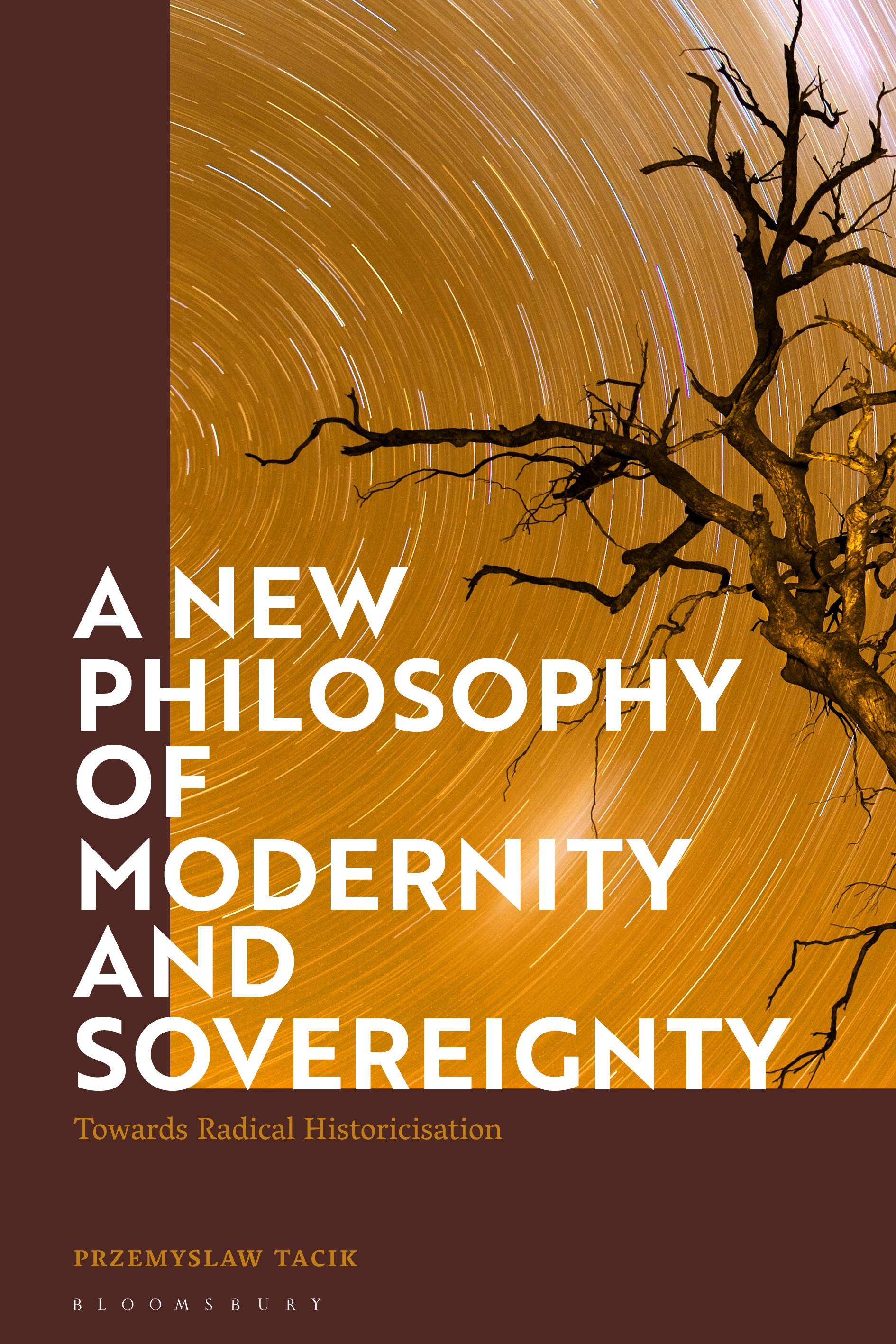
Tackling important philosophical questions on modernity – what it is, where it begins and when it ends – Przemyslaw Tacik challenges the idea that modernity marks a particular epoch, and historicises its conception to offer a radical critique of it. His deconstruction-informed critique collects and assesses reflections on modernity from major philosophers including Hegel, Heidegger, Lacan, Arendt, Agamben, and Žižek.
This analysis progresses a new understanding of modernity intrinsically connected to the growth of sovereignty as an organising principle of contemporary life. He argues that it is the idea of 'modernity', as a taken-for-granted era, which is positioned as the essential condition for making linear history possible, when it should instead be history, in and of itself, which dictates the existence of a particular period. Using Hegel's notion of 'spirit' to trace the importance of sovereignty to the conception of the modern epoch within German idealism, Tacik traces Hegel's influence on Heidegger through reference to the 'star' in his late philosophy which represents the hope of overcoming the metaphysical poverty of modernity. This line of thought reveals the necessity of a paradigm shift in our understanding of modernity that speaks to contemporary continental philosophy, theories of modernity, political theory, and critical re-assessments of Marxism.
This analysis progresses a new understanding of modernity intrinsically connected to the growth of sovereignty as an organising principle of contemporary life. He argues that it is the idea of 'modernity', as a taken-for-granted era, which is positioned as the essential condition for making linear history possible, when it should instead be history, in and of itself, which dictates the existence of a particular period. Using Hegel's notion of 'spirit' to trace the importance of sovereignty to the conception of the modern epoch within German idealism, Tacik traces Hegel's influence on Heidegger through reference to the 'star' in his late philosophy which represents the hope of overcoming the metaphysical poverty of modernity. This line of thought reveals the necessity of a paradigm shift in our understanding of modernity that speaks to contemporary continental philosophy, theories of modernity, political theory, and critical re-assessments of Marxism.
Betal enkelt med kort, Klarna, Apple Pay eller Google Pay. Ikke fornøyd? Du har alltid 14 dagers angrerett. Les mer i våre vilkår. Har du spørsmål, send oss en e-post på hello@memmo.org.
Memmo gjør det enklere å studere – uansett hvor du er i verden. Hos oss samler du pensumbøker og smarte studieverktøy på ett og samme sted: sammendrag, quizer, podkaster og flashcards. Og så Ted, din studiekompis som svarer på alt du lurer på. Over 50 000 studenter studerer allerede her – bygget for at du skal lære raskere og stresse mindre.