
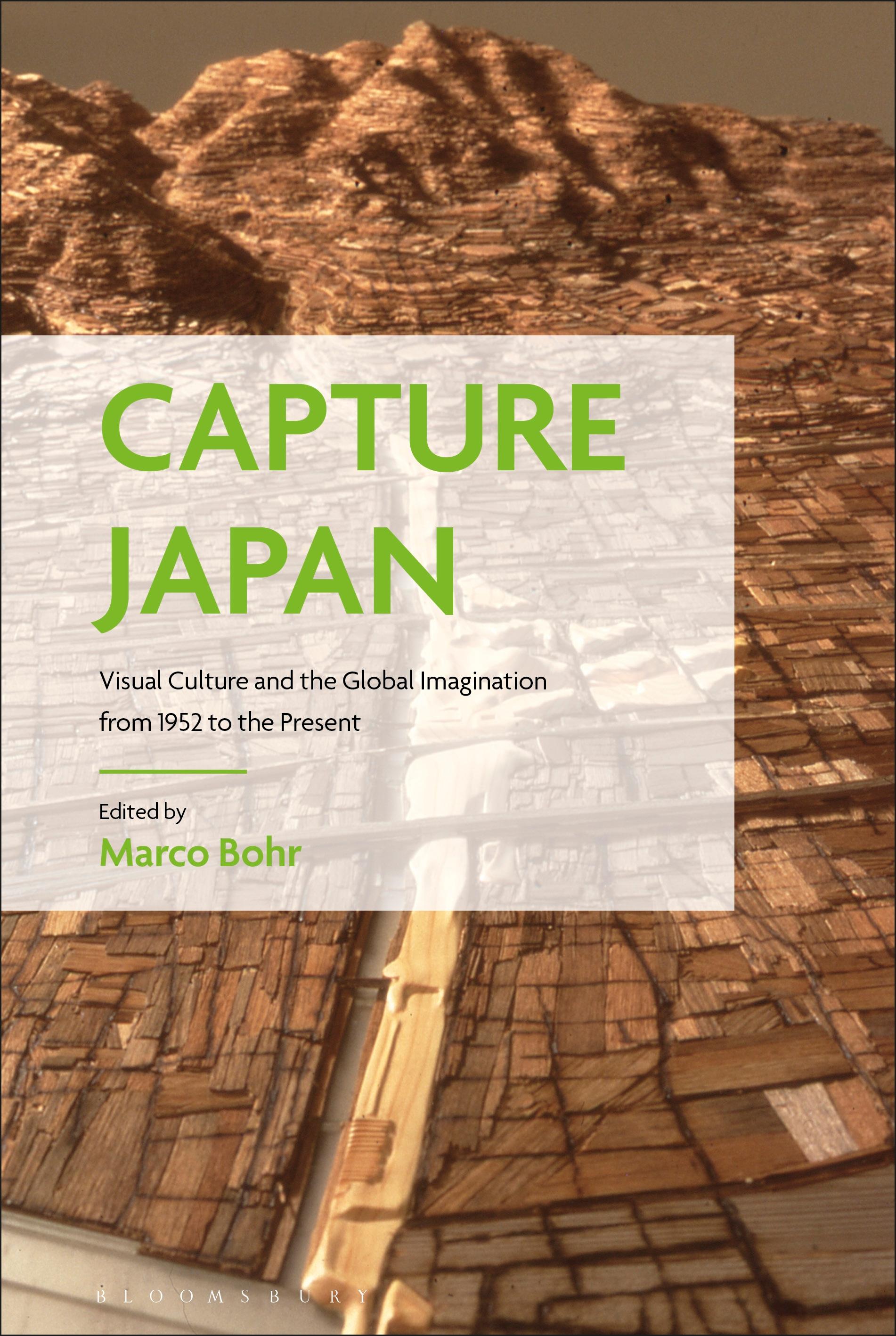
Capture Japan investigates the formation of visual tropes and how these have contributed to perceptions of Japan in the global imagination. The book proposes that images are not incidental in the formation of such perceptions, but central to notions about identity, history and memory. From a tentative western ally in 1952 to a 'soft power' superpower with a huge global influence in the 21st century, the book locates questions about Japan in the global imagination to the country's transforming geopolitical position. By adopting an interdisciplinary approach, with a multiplicity of perspectives from around the world, Capture Japan goes beyond binarisms to uncover how images can also produce discourses that challenge, subvert or even contradict each other.
The word 'capture' in the title of the book recognises both the deeply problematic role that images have played in relation to colonialism, as well as the potential dominance that visual spectacles can wield in a contemporary context. Diverse essays from a wide range of perspectives investigate the institutional framework that has allowed certain types of images of Japan to be promoted, while others have been suppressed.
In doing so, the book points to a vast network of images that have shaped the perception of Japan both from within and from outside, revealing how these images are inextricably linked to wider ideological, political, cultural or economic agendas.
The word 'capture' in the title of the book recognises both the deeply problematic role that images have played in relation to colonialism, as well as the potential dominance that visual spectacles can wield in a contemporary context. Diverse essays from a wide range of perspectives investigate the institutional framework that has allowed certain types of images of Japan to be promoted, while others have been suppressed.
In doing so, the book points to a vast network of images that have shaped the perception of Japan both from within and from outside, revealing how these images are inextricably linked to wider ideological, political, cultural or economic agendas.
Betal enkelt med kort, Klarna, Apple Pay eller Google Pay. Ikke fornøyd? Du har alltid 14 dagers angrerett. Les mer i våre vilkår. Har du spørsmål, send oss en e-post på hello@memmo.org.
Memmo gjør det enklere å studere – uansett hvor du er i verden. Hos oss samler du pensumbøker og smarte studieverktøy på ett og samme sted: sammendrag, quizer, podkaster og flashcards. Og så Ted, din studiekompis som svarer på alt du lurer på. Over 50 000 studenter studerer allerede her – bygget for at du skal lære raskere og stresse mindre.