
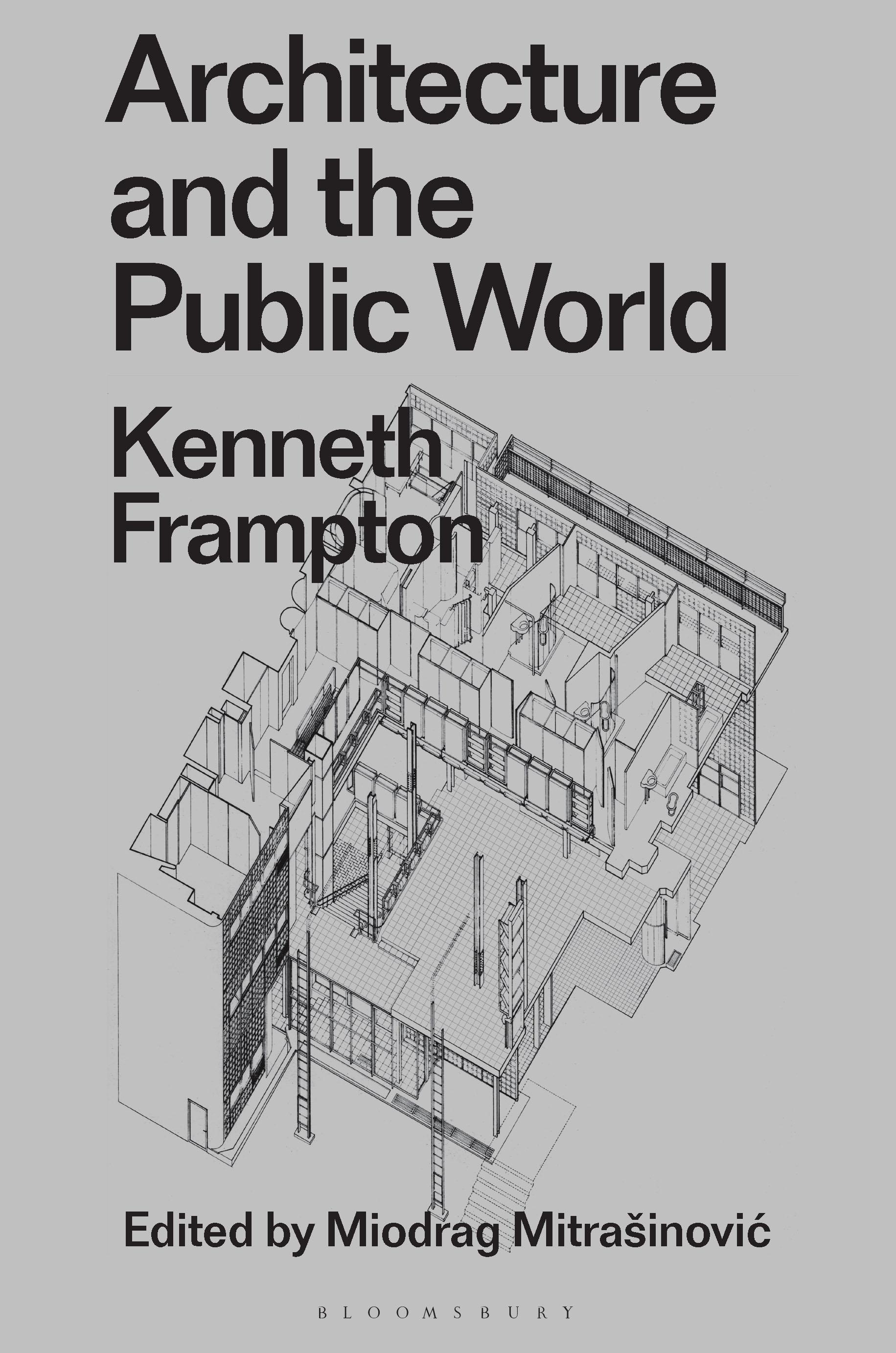
This book brings together Kenneth Frampton's essays from the 1960s to today which epitomize his reflections on the historical–theoretical entanglements of architecture with place, the public realm, cultural identity, urban landscape and environment, and the political question of the “predicament” of architecture in the new Millennium.
The essays explore Frampton's contention that architecture's imperative is to assume a significant responsibility for the edification and stewardship of the Arendtian 'public world.' One of the most theoretically sophisticated and politically committed architectural thinkers, Frampton's work breaks emphatically with the limits and norms of much contemporary practice and restores a sense of richness and social consequence of architecture's 'unfinished project,' while offering abiding lessons not only for architecture but for social, cultural, and design criticism alike.
The essays explore Frampton's contention that architecture's imperative is to assume a significant responsibility for the edification and stewardship of the Arendtian 'public world.' One of the most theoretically sophisticated and politically committed architectural thinkers, Frampton's work breaks emphatically with the limits and norms of much contemporary practice and restores a sense of richness and social consequence of architecture's 'unfinished project,' while offering abiding lessons not only for architecture but for social, cultural, and design criticism alike.
Betal enkelt med kort, Klarna, Apple Pay eller Google Pay. Ikke fornøyd? Du har alltid 14 dagers angrerett. Les mer i våre vilkår. Har du spørsmål, send oss en e-post på hello@memmo.org.
Memmo gjør det enklere å studere – uansett hvor du er i verden. Hos oss samler du pensumbøker og smarte studieverktøy på ett og samme sted: sammendrag, quizer, podkaster og flashcards. Og så Ted, din studiekompis som svarer på alt du lurer på. Over 50 000 studenter studerer allerede her – bygget for at du skal lære raskere og stresse mindre.