
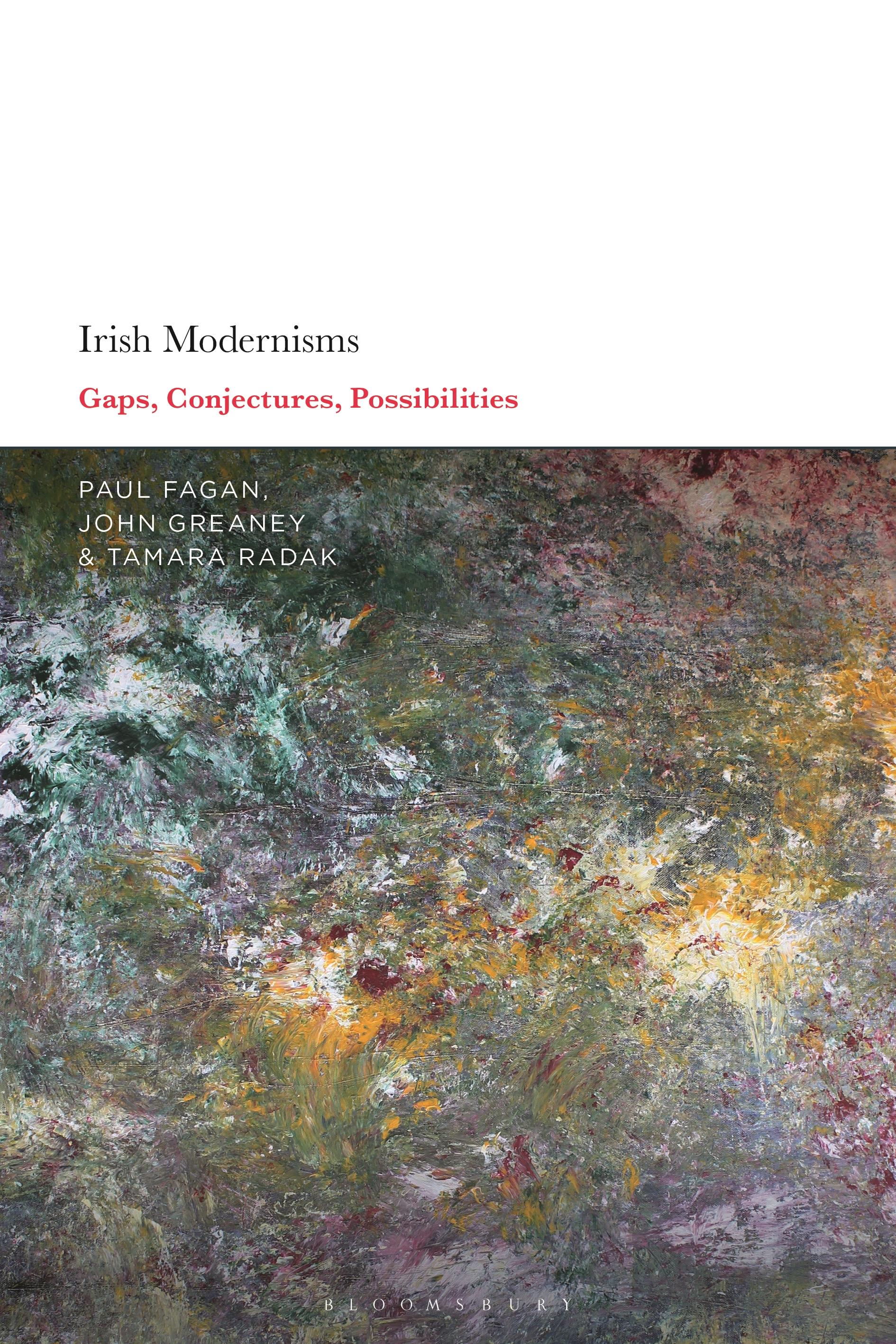
This book focuses on previously unexplored gaps, limitations and avenues of inquiry within the canon and scholarship of Irish modernism to develop a more attentive and fluid theoretical account of this conceptual field. Foregrounding interfaces between literary, visual, musical, dramatic, cinematic, epistolary and journalistic media, these essays introduce previously peripheral writers, artists and cultural figures to debates about Irish modernism: Hannah Berman, Ethel Colburn Mayne, Mary Devenport O'Neill, Sheila Wingfield, Freda Laughton, Rhoda Coghill, Elizabeth Bowen, Máirtín Ó Cadhain, Joseph Plunkett, Liam O'Flaherty, Edward Martyn, Jane Barlow, Seosamh Ó Torna, Jack B. Yeats and Brian O'Nolan all feature here to interrogate the term's implications.
Probing Irish modernism's responsiveness to contemporary theory beyond postcolonial and Irish studies, Irish Modernisms: Gaps, Conjectures, Possibilities uses diverse paradigms, including weak theory, biopolitics, posthumanism and the nonhuman turn, to rethink Irish modernism's organising themes: the material body, language, mediality, canonicity, war, state violence, prostitution, temporality, death, mourning. Across the volume, cutting-edge work from queer theory and gender studies draws urgent attention to the too-often marginalized importance of women's writing and queer expression to the Irish avant-garde, while critical reappraisals of the coordinates of race and national history compel us to ask not only where and when Irish modernism occurred, but also whose modernism it was?
Probing Irish modernism's responsiveness to contemporary theory beyond postcolonial and Irish studies, Irish Modernisms: Gaps, Conjectures, Possibilities uses diverse paradigms, including weak theory, biopolitics, posthumanism and the nonhuman turn, to rethink Irish modernism's organising themes: the material body, language, mediality, canonicity, war, state violence, prostitution, temporality, death, mourning. Across the volume, cutting-edge work from queer theory and gender studies draws urgent attention to the too-often marginalized importance of women's writing and queer expression to the Irish avant-garde, while critical reappraisals of the coordinates of race and national history compel us to ask not only where and when Irish modernism occurred, but also whose modernism it was?
Sider: 280
Kategori: Litteraturvetenskap & Teori
e-ISBN: 9781350177383
Fraktvekt: 1.2 kg
Sendes innen: 1-2 dager
Betal enkelt med kort, Klarna, Apple Pay eller Google Pay. Ikke fornøyd? Du har alltid 14 dagers angrerett. Les mer i våre vilkår. Har du spørsmål, send oss en e-post på hello@memmo.org.
Memmo gjør det enklere å studere – uansett hvor du er i verden. Hos oss samler du pensumbøker og smarte studieverktøy på ett og samme sted: sammendrag, quizer, podkaster og flashcards. Og så Ted, din studiekompis som svarer på alt du lurer på. Over 50 000 studenter studerer allerede her – bygget for at du skal lære raskere og stresse mindre.