
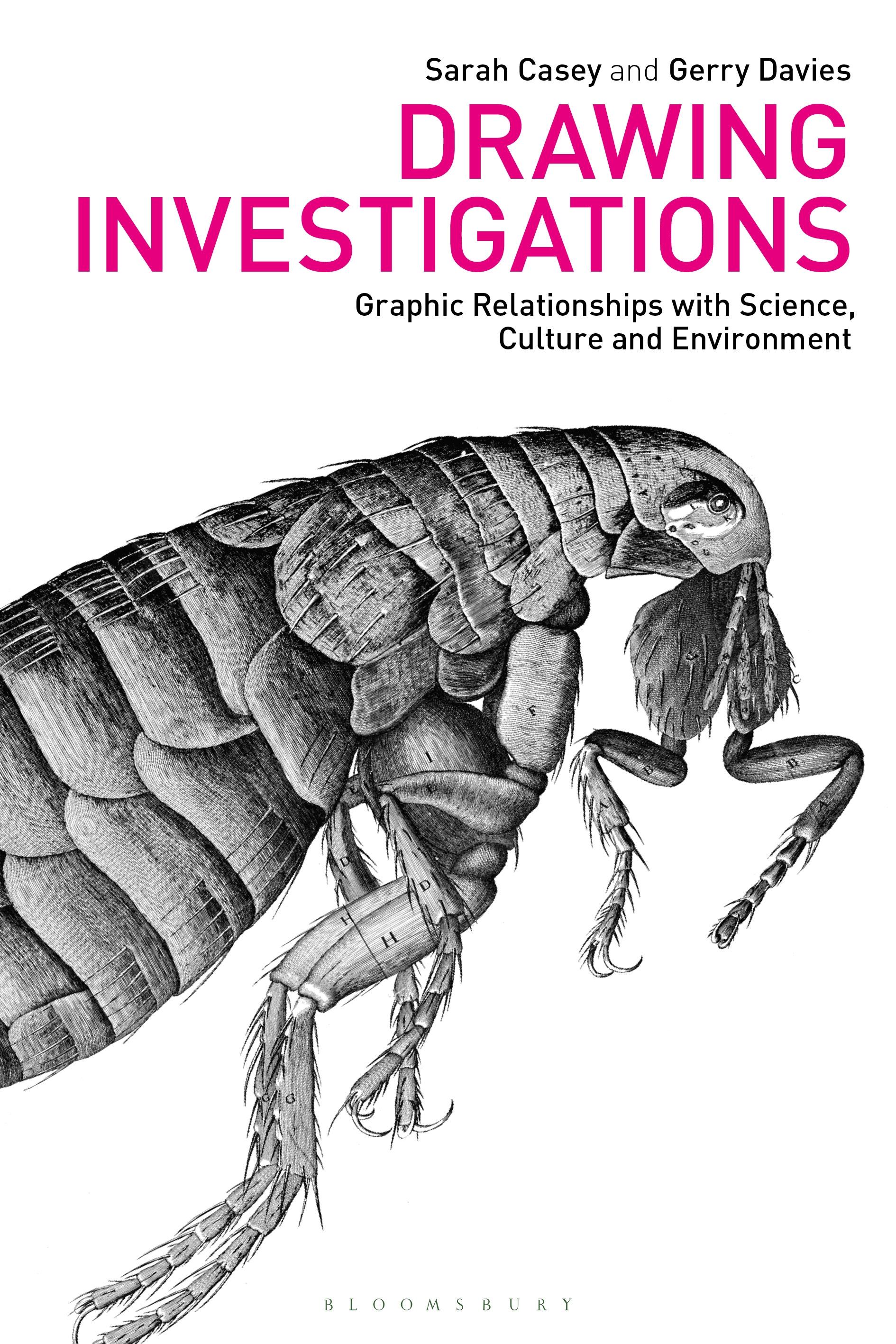
Using close visual analysis of drawings, artist interviews, critical analysis and exegesis, Drawing Investigations examines how artists use drawing as an investigative tool to reveal information that would otherwise remain unseen and unnoticed.
How does drawing add shape to ideas? How does the artist accommodate to challenges and restraints of a particular environment? To what extent is a drawing complementary and continuous with its subject and where is it disruptive and provocative? Casey and Davies address these questions while focusing on artists working collaboratively and the use of drawing in challenging or unexpected environments.
Drawing Investigations evaluates the emergence of a way of thinking among an otherwise disconnected group of artists by exploring commonalities in the application of analytical drawing to the natural world, urban environment, social forces and lived experience. Examples represent a spectrum of research in international contexts: an oceanographic Institute in California, the archives of Amsterdam's Rijksmuseum, the Antarctic Survey, geothermal research in Japan and the Kurdish diaspora in Iraq. Issues are situated in the contemporary theory and practice of drawing including relationships to historical precedents.
By exploring drawing's capacity to capture and describe experience, to sharpen visual faculties and to bridge embodied and conceptual knowledge, Drawing Investigations offers a fresh critical perspective on contemporary drawing practice.
How does drawing add shape to ideas? How does the artist accommodate to challenges and restraints of a particular environment? To what extent is a drawing complementary and continuous with its subject and where is it disruptive and provocative? Casey and Davies address these questions while focusing on artists working collaboratively and the use of drawing in challenging or unexpected environments.
Drawing Investigations evaluates the emergence of a way of thinking among an otherwise disconnected group of artists by exploring commonalities in the application of analytical drawing to the natural world, urban environment, social forces and lived experience. Examples represent a spectrum of research in international contexts: an oceanographic Institute in California, the archives of Amsterdam's Rijksmuseum, the Antarctic Survey, geothermal research in Japan and the Kurdish diaspora in Iraq. Issues are situated in the contemporary theory and practice of drawing including relationships to historical precedents.
By exploring drawing's capacity to capture and describe experience, to sharpen visual faculties and to bridge embodied and conceptual knowledge, Drawing Investigations offers a fresh critical perspective on contemporary drawing practice.
Betal enkelt med kort, Klarna, Apple Pay eller Google Pay. Ikke fornøyd? Du har alltid 14 dagers angrerett. Les mer i våre vilkår. Har du spørsmål, send oss en e-post på hello@memmo.org.
Memmo gjør det enklere å studere – uansett hvor du er i verden. Hos oss samler du pensumbøker og smarte studieverktøy på ett og samme sted: sammendrag, quizer, podkaster og flashcards. Og så Ted, din studiekompis som svarer på alt du lurer på. Over 50 000 studenter studerer allerede her – bygget for at du skal lære raskere og stresse mindre.