
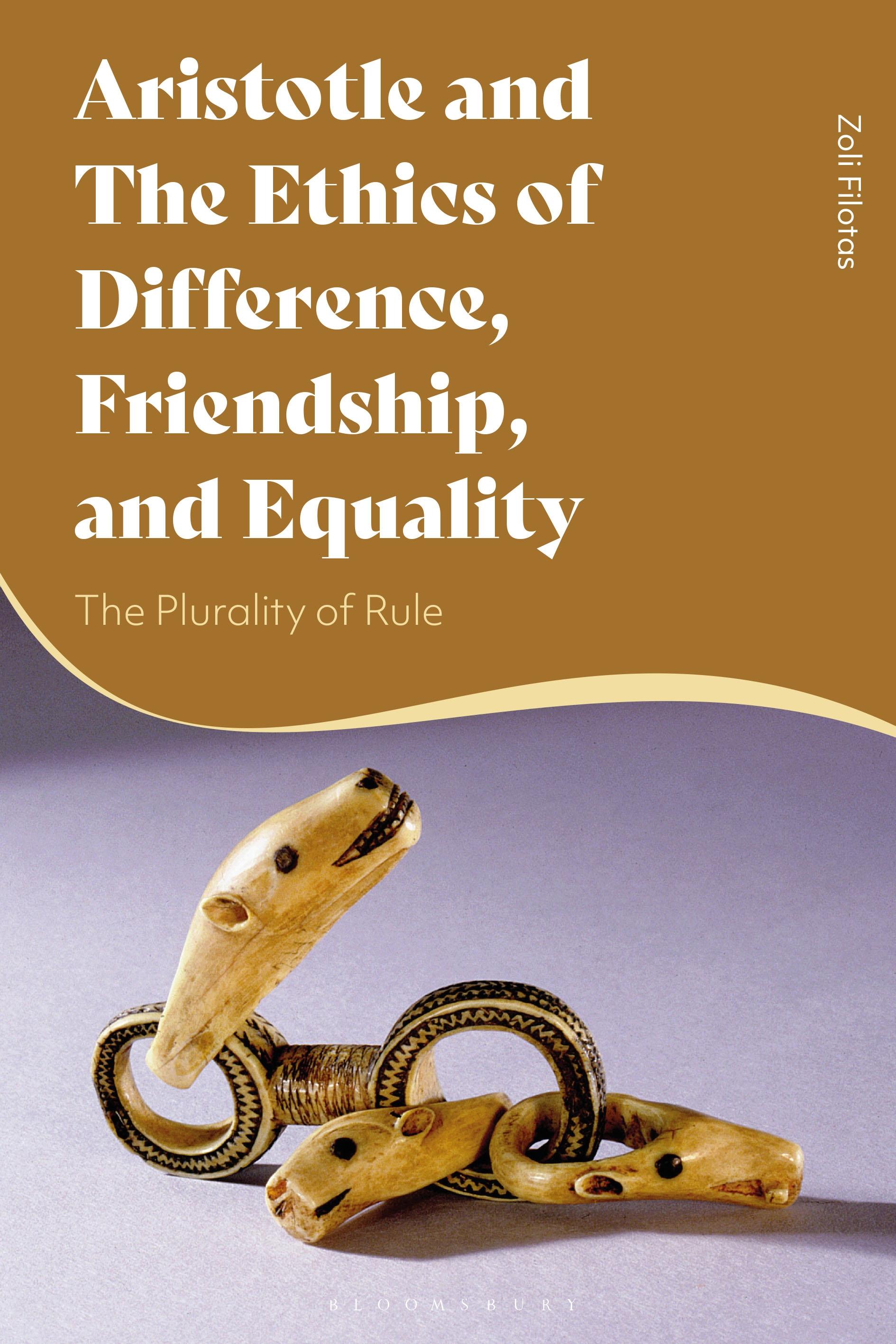
Connecting several strands of Aristotle's thought, Zoli Filotas sheds light on one of the axioms of Aristotle's ethics and political philosophy – that every community has a ruler – and demonstrates its relevance to his ideas on personal relationships.
Aristotle and the Ethics of Difference, Friendship, and Equality reveals a pluralistic theory of rule in Aristotle's thought, tracing it through his corpus and situating it in a discussion among such figures as Gorgias, Xenophon, and Plato. Considering the similarities and differences among various forms of rule, Filotas shows that for Aristotle even virtuous friends must exercise a version of rule akin to that of slaveholders. He also explores why Aristotle distinguishes the hierarchical rule over women from both the mastery of slaves and the political rule exercised by free and equal citizens. In doing so, he argues that natural and social differences among human beings play a complex, and troubling, role in Aristotle's reasoning. Illuminating and thought-provoking, this book reveals Aristotle's ambivalence about political relations and the equal treatment they involve and offers an engaging inquiry into how he understood the common structures of human relationships.
Aristotle and the Ethics of Difference, Friendship, and Equality reveals a pluralistic theory of rule in Aristotle's thought, tracing it through his corpus and situating it in a discussion among such figures as Gorgias, Xenophon, and Plato. Considering the similarities and differences among various forms of rule, Filotas shows that for Aristotle even virtuous friends must exercise a version of rule akin to that of slaveholders. He also explores why Aristotle distinguishes the hierarchical rule over women from both the mastery of slaves and the political rule exercised by free and equal citizens. In doing so, he argues that natural and social differences among human beings play a complex, and troubling, role in Aristotle's reasoning. Illuminating and thought-provoking, this book reveals Aristotle's ambivalence about political relations and the equal treatment they involve and offers an engaging inquiry into how he understood the common structures of human relationships.
Betal enkelt med kort, Klarna, Apple Pay eller Google Pay. Ikke fornøyd? Du har alltid 14 dagers angrerett. Les mer i våre vilkår. Har du spørsmål, send oss en e-post på hello@memmo.org.
Memmo gjør det enklere å studere – uansett hvor du er i verden. Hos oss samler du pensumbøker og smarte studieverktøy på ett og samme sted: sammendrag, quizer, podkaster og flashcards. Og så Ted, din studiekompis som svarer på alt du lurer på. Over 50 000 studenter studerer allerede her – bygget for at du skal lære raskere og stresse mindre.