
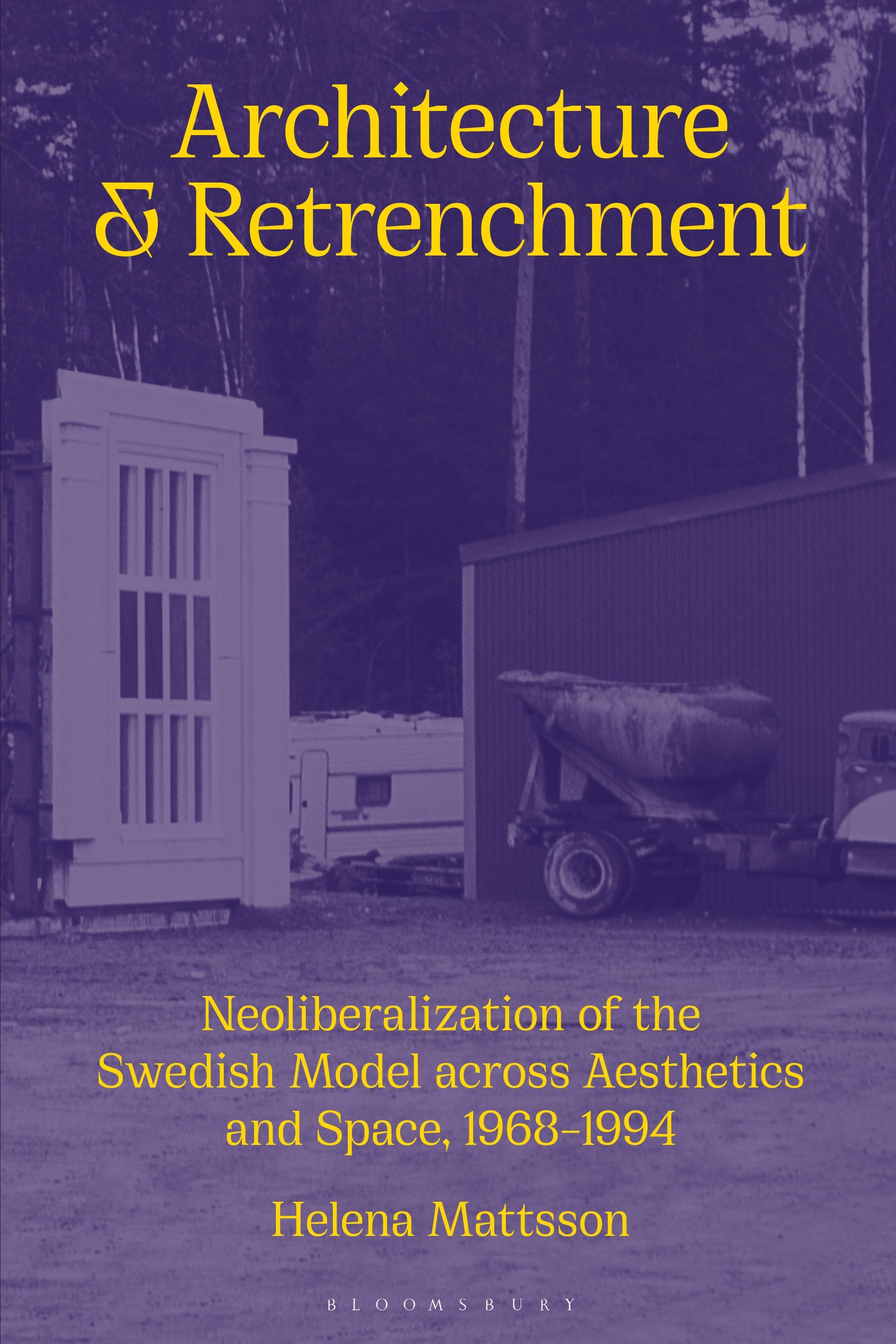
Shortlisted for the Architects Sweden Critic's Award 2023
Scholars in architectural and urban history have, over the last decade, been trying to come to terms with architecture's 'neoliberal turn' and its various impacts - from municipal policy to the artistic imagination. However most scholarship has focussed on generalizations, with very little work to date focussing on specific cases.
Architecture and Retrenchment brings one such case to the fore – investigating the relation between architecture and the Swedish Model of the welfare state. It tracks the response of architecture to the gradual retrenchment and ultimate dismantling of the Swedish welfare state – which was, in its heyday, world-famous for its integration of architecture and the built environment into the welfare system. Ultimately, neoliberal economics prevailed, yet this book reveals how new architectural strategies and techniques were developed in order to protect the agency of architecture in the newly reorganised society of the 1980s and 1990s.
Through eight in-depth case-studies, the book situates the often abstract, generalised discourse of neoliberalism and privatisation in specific architectural sites, and provides an original interpretation of how architecture, space, aesthetics, and politics converged at the end of the twentieth century.
Scholars in architectural and urban history have, over the last decade, been trying to come to terms with architecture's 'neoliberal turn' and its various impacts - from municipal policy to the artistic imagination. However most scholarship has focussed on generalizations, with very little work to date focussing on specific cases.
Architecture and Retrenchment brings one such case to the fore – investigating the relation between architecture and the Swedish Model of the welfare state. It tracks the response of architecture to the gradual retrenchment and ultimate dismantling of the Swedish welfare state – which was, in its heyday, world-famous for its integration of architecture and the built environment into the welfare system. Ultimately, neoliberal economics prevailed, yet this book reveals how new architectural strategies and techniques were developed in order to protect the agency of architecture in the newly reorganised society of the 1980s and 1990s.
Through eight in-depth case-studies, the book situates the often abstract, generalised discourse of neoliberalism and privatisation in specific architectural sites, and provides an original interpretation of how architecture, space, aesthetics, and politics converged at the end of the twentieth century.
Betal enkelt med kort, Klarna, Apple Pay eller Google Pay. Ikke fornøyd? Du har alltid 14 dagers angrerett. Les mer i våre vilkår. Har du spørsmål, send oss en e-post på hello@memmo.org.
Memmo gjør det enklere å studere – uansett hvor du er i verden. Hos oss samler du pensumbøker og smarte studieverktøy på ett og samme sted: sammendrag, quizer, podkaster og flashcards. Og så Ted, din studiekompis som svarer på alt du lurer på. Over 50 000 studenter studerer allerede her – bygget for at du skal lære raskere og stresse mindre.