
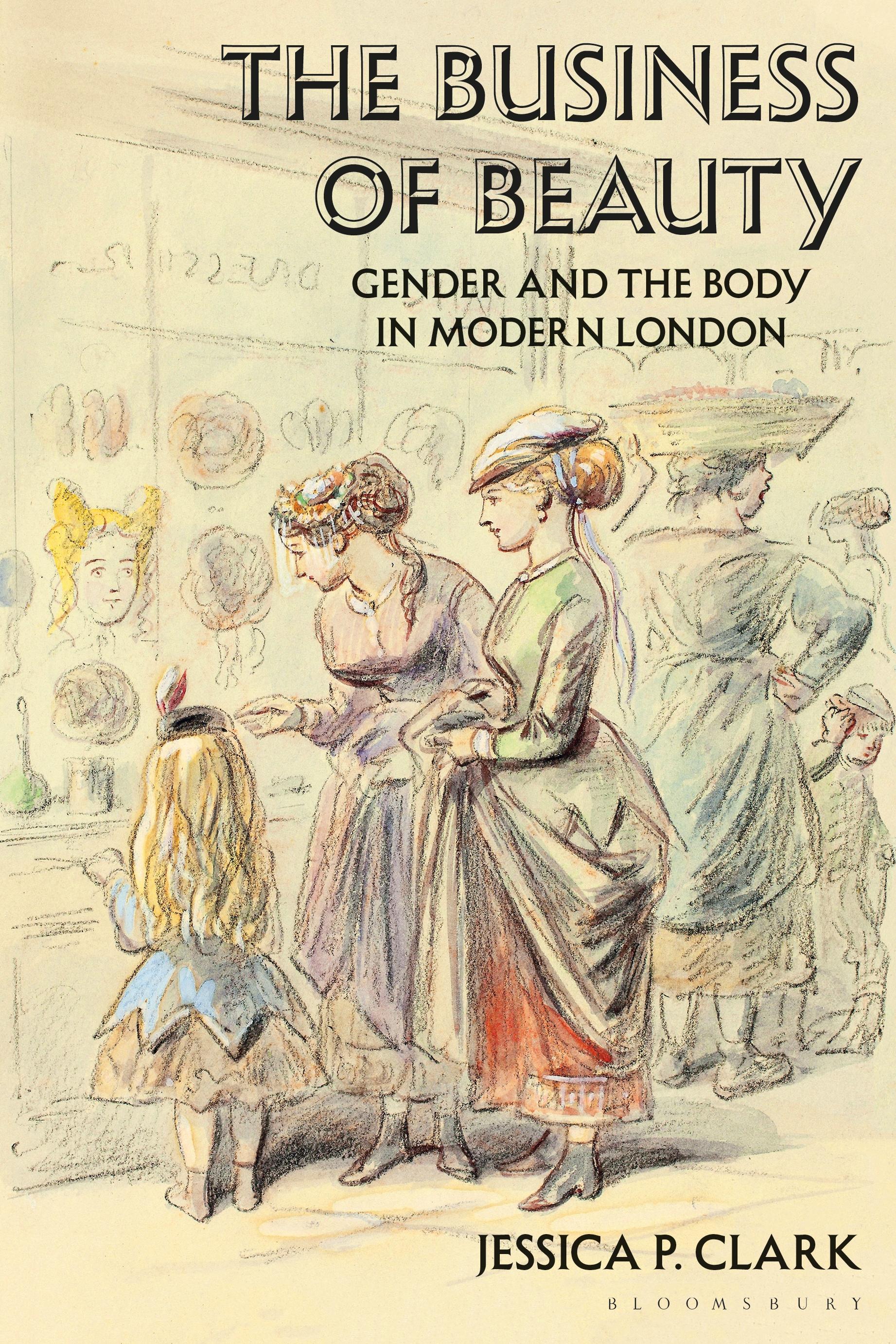
The Business of Beauty is a unique exploration of the history of beauty, consumption, and business in Victorian and Edwardian London. Illuminating national and cultural contingencies specific to London as a global metropolis, it makes an important intervention by challenging the view of those who-like their historical contemporaries-perceive the 19th and early 20th centuries as devoid of beauty praxis, let alone a commercial beauty culture.
Contrary to this perception, The Business of Beauty reveals that Victorian and Edwardian women and men developed a number of tacit strategies to transform their looks including the purchase of new goods and services from a heterogeneous group of urban entrepreneurs: hairdressers, barbers, perfumers, wigmakers, complexion specialists, hair-restorers, manicurists, and beauty “culturists.” Mining trade journals, census data, periodical print, and advice literature, Jessica P. Clark takes us on a journey through Victorian and Edwardian London's beauty businesses, from the shady back parlors of Sarah “Madame Rachel” Leverson to the elegant showrooms of Eugène Rimmel into the first Mayfair salon of Mrs. Helena Titus, aka Helena Rubinstein.
By revealing these stories, Jessica P. Clark revises traditional chronologies of British beauty consumption and provides the historical background to 20th-century developments led by Rubinstein and others. Weaving together histories of gender, fashion, and business to investigate the ways that Victorian critiques of self-fashioning and beautification defined both the buying and selling of beauty goods, this is a revealing resource for scholars, students, fashion followers, and beauty enthusiasts alike.
Contrary to this perception, The Business of Beauty reveals that Victorian and Edwardian women and men developed a number of tacit strategies to transform their looks including the purchase of new goods and services from a heterogeneous group of urban entrepreneurs: hairdressers, barbers, perfumers, wigmakers, complexion specialists, hair-restorers, manicurists, and beauty “culturists.” Mining trade journals, census data, periodical print, and advice literature, Jessica P. Clark takes us on a journey through Victorian and Edwardian London's beauty businesses, from the shady back parlors of Sarah “Madame Rachel” Leverson to the elegant showrooms of Eugène Rimmel into the first Mayfair salon of Mrs. Helena Titus, aka Helena Rubinstein.
By revealing these stories, Jessica P. Clark revises traditional chronologies of British beauty consumption and provides the historical background to 20th-century developments led by Rubinstein and others. Weaving together histories of gender, fashion, and business to investigate the ways that Victorian critiques of self-fashioning and beautification defined both the buying and selling of beauty goods, this is a revealing resource for scholars, students, fashion followers, and beauty enthusiasts alike.
Betal enkelt med kort, Klarna, Apple Pay eller Google Pay. Ikke fornøyd? Du har alltid 14 dagers angrerett. Les mer i våre vilkår. Har du spørsmål, send oss en e-post på hello@memmo.org.
Memmo gjør det enklere å studere – uansett hvor du er i verden. Hos oss samler du pensumbøker og smarte studieverktøy på ett og samme sted: sammendrag, quizer, podkaster og flashcards. Og så Ted, din studiekompis som svarer på alt du lurer på. Over 50 000 studenter studerer allerede her – bygget for at du skal lære raskere og stresse mindre.