
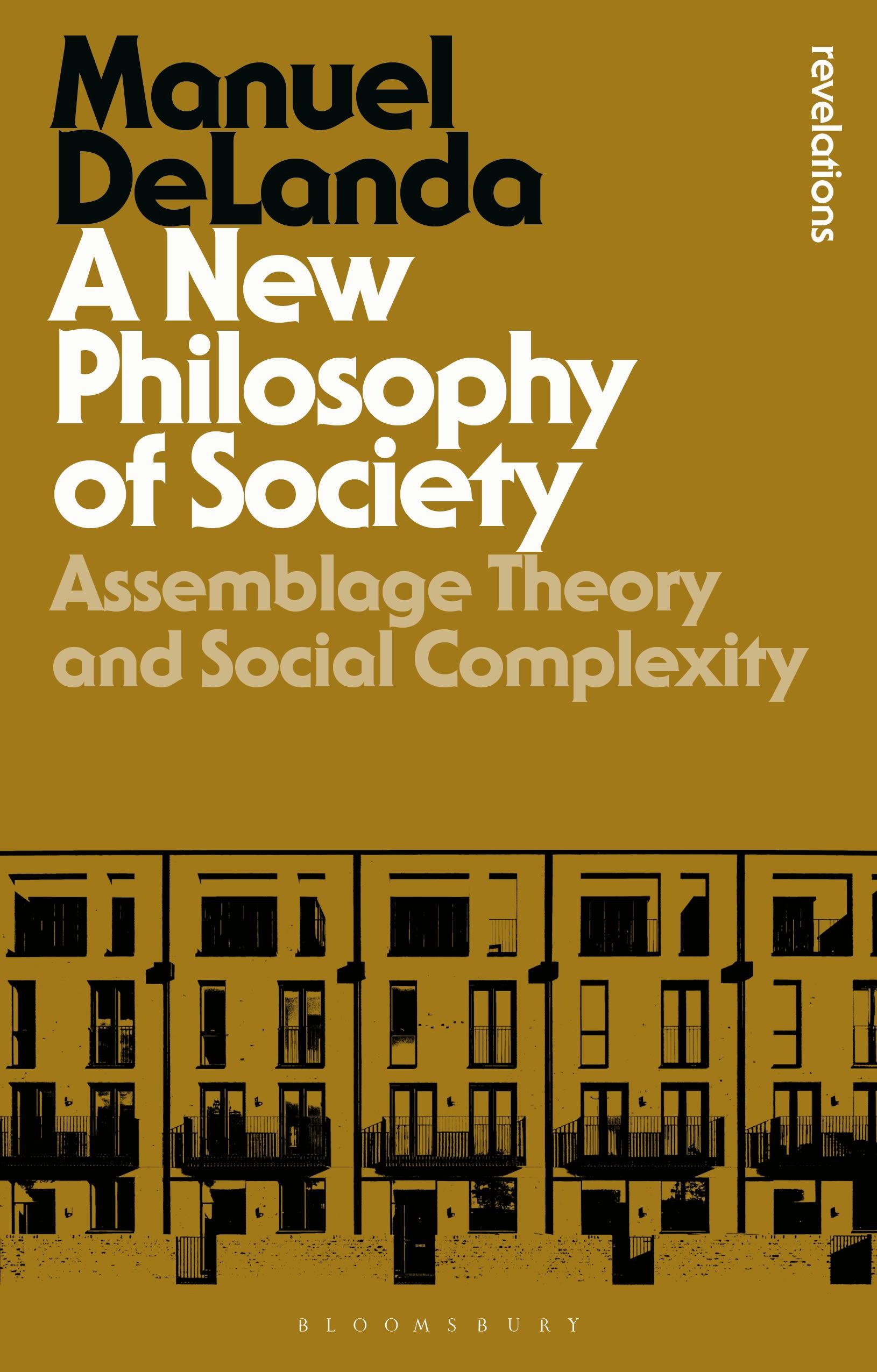
In A New Philosophy of Society Manuel DeLanda offers a fascinating look at how the contemporary world is characterized by an extraordinary social complexity. Since most social entities, from small communities to large nation-states would disappear altogether if our cognitive abilities ceased to exist, DeLanda proposes a novel approach to social ontology that asserts the autonomy of social entities from the conceptions we have of them.
He argues that Gilles Deleuze's theory of assemblages provides a framework in which sociologists and geographers studying social networks and regions can properly locate their work and fully elucidate the connections between them. Indeed, assemblage theory, as DeLanda argues, can be used to model any community, from interpersonal networks and institutional organizations, to central governments, cities and nation states.
He argues that Gilles Deleuze's theory of assemblages provides a framework in which sociologists and geographers studying social networks and regions can properly locate their work and fully elucidate the connections between them. Indeed, assemblage theory, as DeLanda argues, can be used to model any community, from interpersonal networks and institutional organizations, to central governments, cities and nation states.
Betal enkelt med kort, Klarna, Apple Pay eller Google Pay. Ikke fornøyd? Du har alltid 14 dagers angrerett. Les mer i våre vilkår. Har du spørsmål, send oss en e-post på hello@memmo.org.
Memmo gjør det enklere å studere – uansett hvor du er i verden. Hos oss samler du pensumbøker og smarte studieverktøy på ett og samme sted: sammendrag, quizer, podkaster og flashcards. Og så Ted, din studiekompis som svarer på alt du lurer på. Over 50 000 studenter studerer allerede her – bygget for at du skal lære raskere og stresse mindre.