
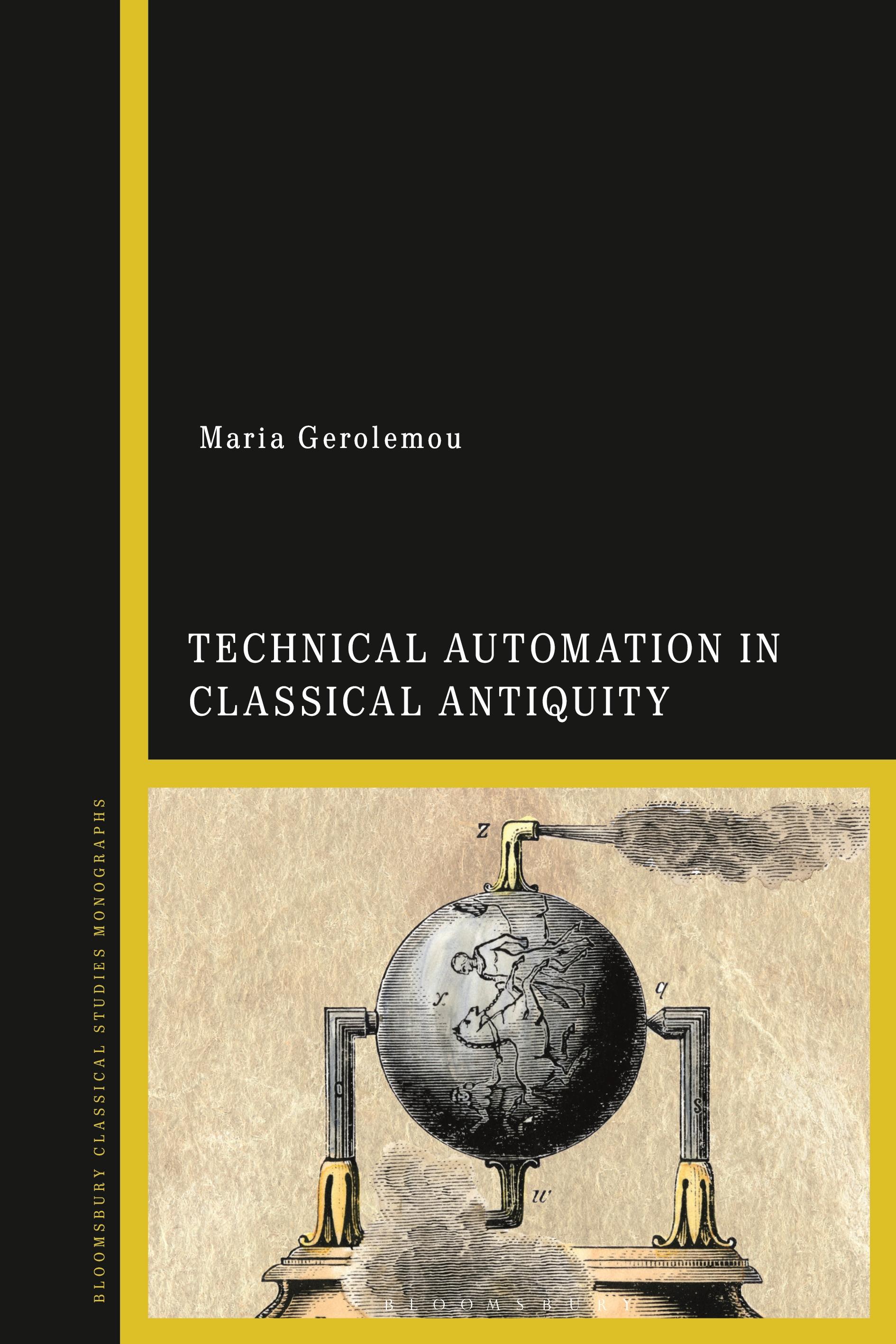
Technical automation – the ability of man-made (or god-made) objects to move and act autonomously – is not just the province of engineering or science fiction. In this book, Maria Gerolemou, by taking as her starting point the close semantic and linguistic relevance of technical automation to natural automatism, demonstrates how ancient literature, performance and engineering were often concerned with the way nature and artifice interacted. Moving across epic, didactic, tragedy, comedy, philosophy and ancient science, this is a brilliant assembly of evidence for the power of 'automatic theatre' in ancient literature.
Gerolemou starts with the earliest Greek literature of Homer and Hesiod, where Hephaestus' self-moving artefacts in the Iliad reflect natural forces of motion and the manufactured Pandora becomes an autonomous woman. Her second chapter looks at Greek drama, where technical automation is used to augment and undermine nature not only through staging and costume but also in plot devices where statues come to life and humans behave as automatic devices. In the third chapter, Gerolemou considers how the philosophers of the 4th century BCE and the engineers of the Hellenistic period with their mechanical devices contributed to a growing dialogue around technical automation and how it could help its audience glance and marvel at the hidden mechanisms of self-motion. Finally, the book explores the ways technical automation is employed as an ekphrastic technique in late antiquity and early Byzantium.
Gerolemou starts with the earliest Greek literature of Homer and Hesiod, where Hephaestus' self-moving artefacts in the Iliad reflect natural forces of motion and the manufactured Pandora becomes an autonomous woman. Her second chapter looks at Greek drama, where technical automation is used to augment and undermine nature not only through staging and costume but also in plot devices where statues come to life and humans behave as automatic devices. In the third chapter, Gerolemou considers how the philosophers of the 4th century BCE and the engineers of the Hellenistic period with their mechanical devices contributed to a growing dialogue around technical automation and how it could help its audience glance and marvel at the hidden mechanisms of self-motion. Finally, the book explores the ways technical automation is employed as an ekphrastic technique in late antiquity and early Byzantium.
Betal enkelt med kort, Klarna, Apple Pay eller Google Pay. Ikke fornøyd? Du har alltid 14 dagers angrerett. Les mer i våre vilkår. Har du spørsmål, send oss en e-post på hello@memmo.org.
Memmo gjør det enklere å studere – uansett hvor du er i verden. Hos oss samler du pensumbøker og smarte studieverktøy på ett og samme sted: sammendrag, quizer, podkaster og flashcards. Og så Ted, din studiekompis som svarer på alt du lurer på. Over 50 000 studenter studerer allerede her – bygget for at du skal lære raskere og stresse mindre.