
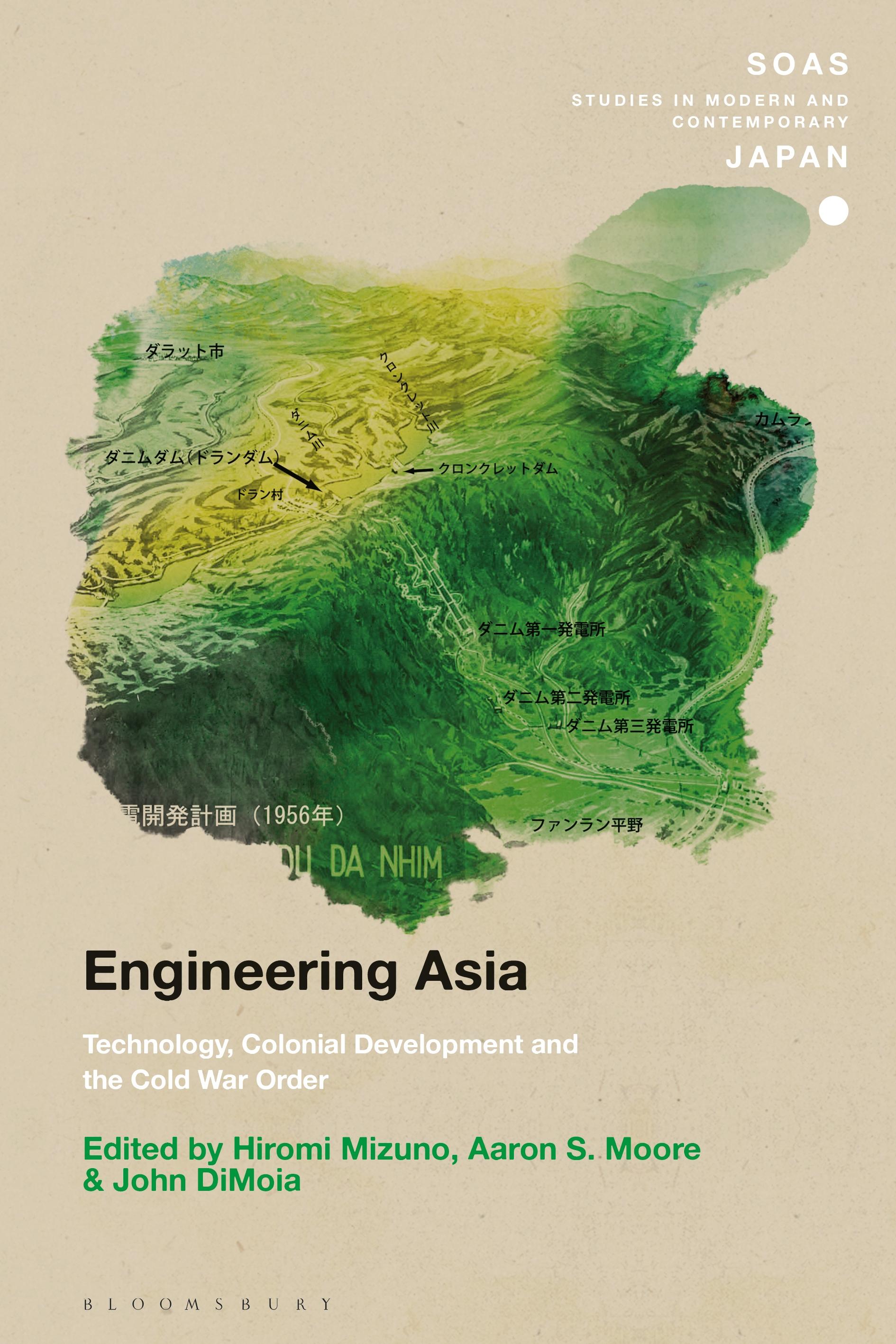
Weaving together chapters on imperial Japan's wartime mobilization, Asia's first wave of postwar decolonization, and Cold War geopolitical conflict in the region, Engineering Asia seeks to demonstrate how Asia's present prosperity did not arise from a so-called 'economic miracle' but from the violent and dynamic events of the 20th century. The book argues that what continued to operate throughout these tumultuous eras were engineering networks of technology. Constructed at first for colonial development under Japan, these networks transformed into channels of overseas development aid that constituted the Cold War system in Asia.
Through highlighting how these networks helped shape Asia's contemporary economic landscape, Engineering Asia challenges dominant narratives in Western scholarship of an 'economic miracle' in Japan and South Korea, and the 'Asian Tigers' of Southeast Asia. Students and scholars of East Asian studies, development studies, postcolonialism, Cold War studies and the history of technology and science will find this book immensely useful.
Through highlighting how these networks helped shape Asia's contemporary economic landscape, Engineering Asia challenges dominant narratives in Western scholarship of an 'economic miracle' in Japan and South Korea, and the 'Asian Tigers' of Southeast Asia. Students and scholars of East Asian studies, development studies, postcolonialism, Cold War studies and the history of technology and science will find this book immensely useful.
Betal enkelt med kort, Klarna, Apple Pay eller Google Pay. Ikke fornøyd? Du har alltid 14 dagers angrerett. Les mer i våre vilkår. Har du spørsmål, send oss en e-post på hello@memmo.org.
Memmo gjør det enklere å studere – uansett hvor du er i verden. Hos oss samler du pensumbøker og smarte studieverktøy på ett og samme sted: sammendrag, quizer, podkaster og flashcards. Og så Ted, din studiekompis som svarer på alt du lurer på. Over 50 000 studenter studerer allerede her – bygget for at du skal lære raskere og stresse mindre.