
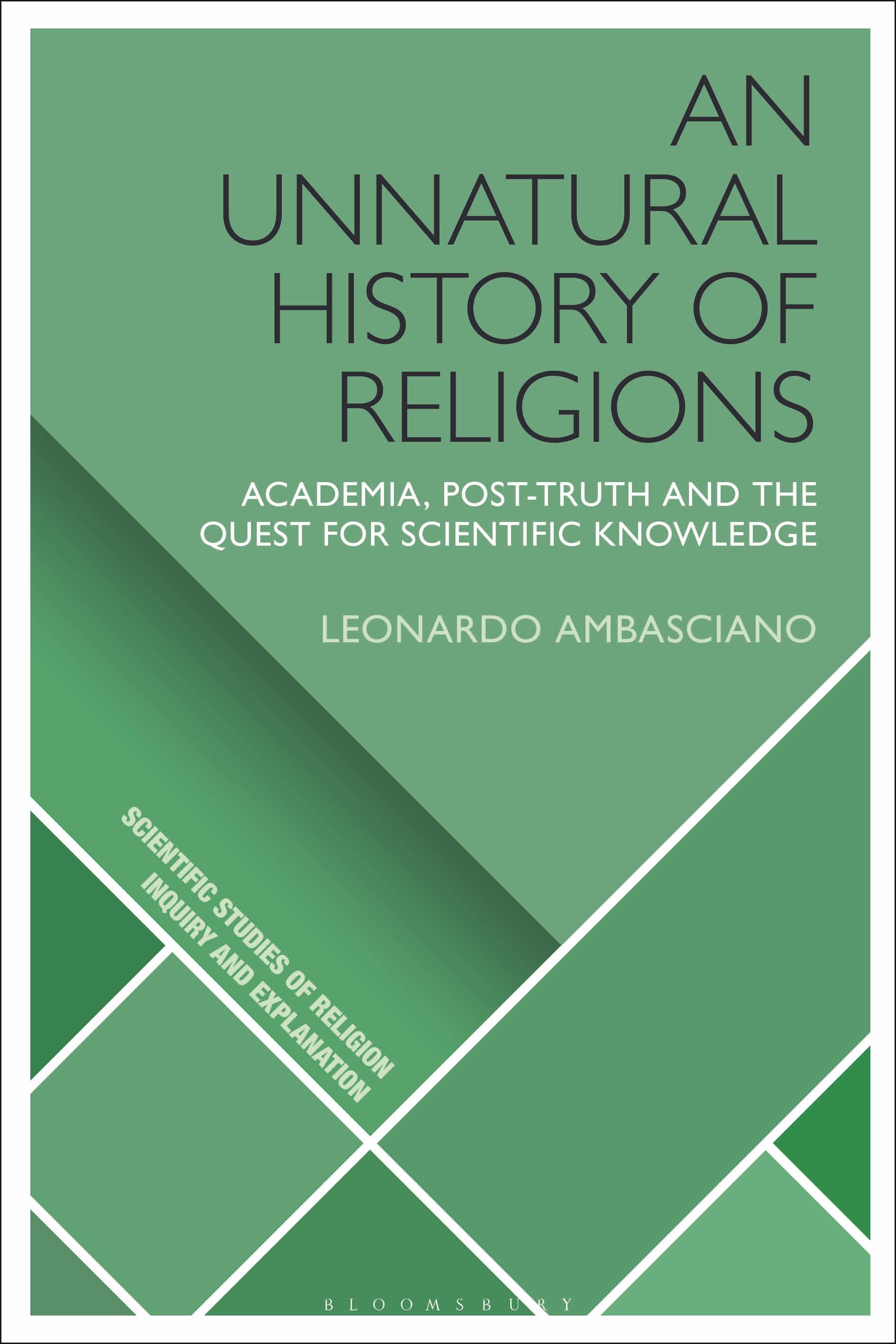
An Unnatural History of Religions examines the origins, development, and critical issues concerning the history of religion and its relationship with science. The book explores the ideological biases, logical fallacies, and unwarranted beliefs that surround the scientific foundations (or lack thereof) in the academic discipline of the history of religions, positioning them in today's 'post-truth' culture.
Leonardo Ambasciano provides the necessary critical background to evaluate the most important theories and working concepts dedicated to the explanation of the historical developments of religion. He covers the most important topics and paradigm shifts in the field, such as phenomenology, postmodernism, and cognitive science. These are taken into consideration chronologically, each time with case studies on topics such as shamanism, gender biases, ethnocentrism, and biological evolution.
Ambasciano argues that the roots of post-truth may be deep in human biases, but that historical justifications change each time, resulting in different combinations. The surprising rise of once-fringe beliefs, such as conspiracy theories, pseudoscientific claims, and so-called scientific creationism, demonstrates the alarming influence that post-truth ideas may exert on both politics and society. Recognising them before they spread anew may be the first step towards a scientifically renewed study of religion.
Leonardo Ambasciano provides the necessary critical background to evaluate the most important theories and working concepts dedicated to the explanation of the historical developments of religion. He covers the most important topics and paradigm shifts in the field, such as phenomenology, postmodernism, and cognitive science. These are taken into consideration chronologically, each time with case studies on topics such as shamanism, gender biases, ethnocentrism, and biological evolution.
Ambasciano argues that the roots of post-truth may be deep in human biases, but that historical justifications change each time, resulting in different combinations. The surprising rise of once-fringe beliefs, such as conspiracy theories, pseudoscientific claims, and so-called scientific creationism, demonstrates the alarming influence that post-truth ideas may exert on both politics and society. Recognising them before they spread anew may be the first step towards a scientifically renewed study of religion.
Betal enkelt med kort, Klarna, Apple Pay eller Google Pay. Ikke fornøyd? Du har alltid 14 dagers angrerett. Les mer i våre vilkår. Har du spørsmål, send oss en e-post på hello@memmo.org.
Memmo gjør det enklere å studere – uansett hvor du er i verden. Hos oss samler du pensumbøker og smarte studieverktøy på ett og samme sted: sammendrag, quizer, podkaster og flashcards. Og så Ted, din studiekompis som svarer på alt du lurer på. Over 50 000 studenter studerer allerede her – bygget for at du skal lære raskere og stresse mindre.