
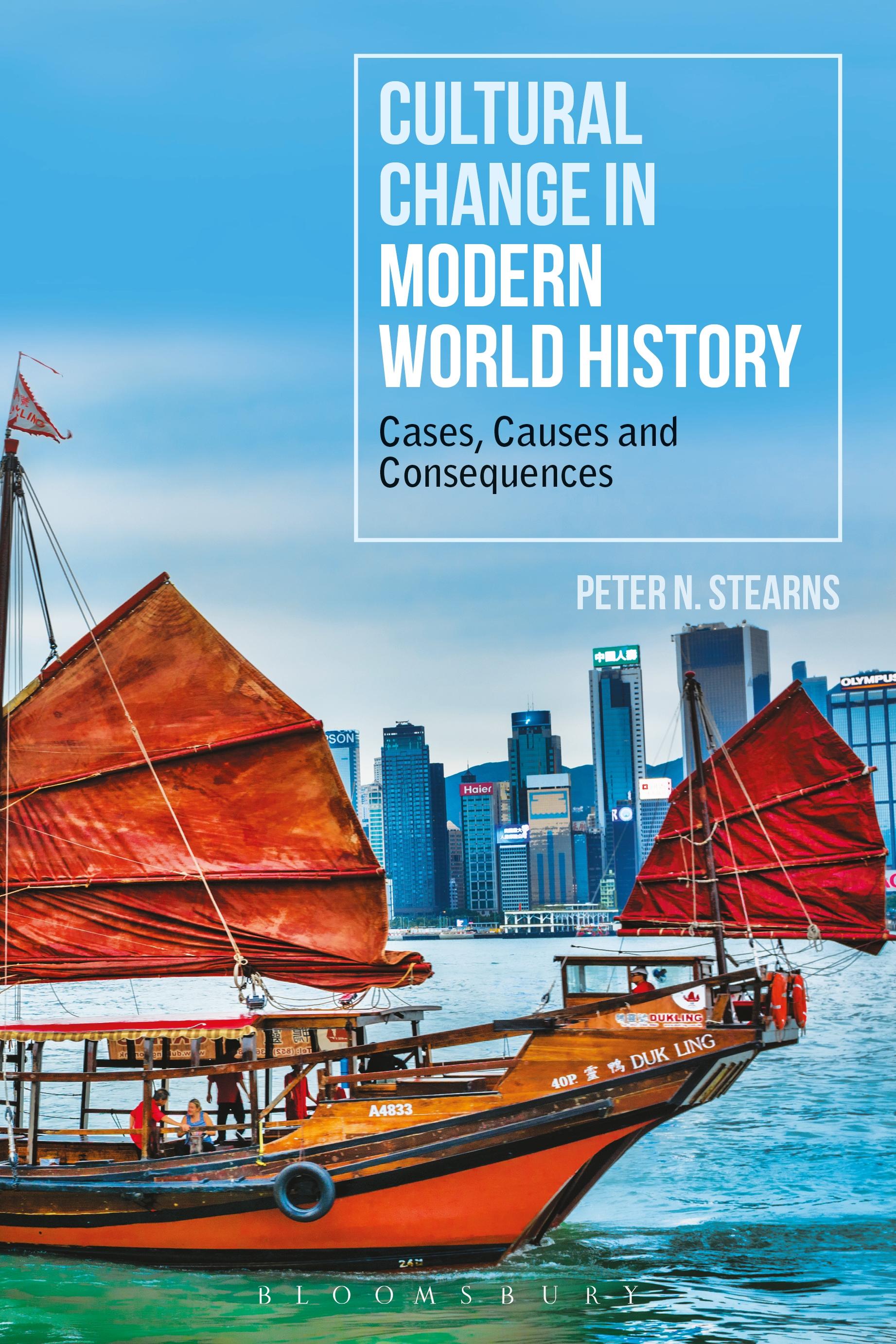
In this innovative textbook, leading world historian Peter Stearns analyses key examples of culture change from around the world, highlighting what culture change involves and how it can be explained and assessed, both historically and in the contemporary world.
Culture change is one of the most interesting and significant features of human society, but until now there has been no book for the classroom which looks explicitly at this phenomenon. Cultural Change in Modern World History covers different kinds and levels of culture change since 1500 – from colonial culture contact in British India to modernization in Meiji Japan and changing attitudes towards gay marriage in the past decade – considering how we should define culture change, how to deal with causation and how to evaluate continuities and consequences. Stearns addresses fundamental questions: why do groups of people change their beliefs and values, and what happens when they do? Conversely, why do some groups resist culture change, and how do some manage to combine novel and more traditional cultural components?
Figuring out how better to understand why groups or societies change their minds – or refuse to do so – provides a crucial perspective on human behaviors and values. As the first book to explore this important question, Cultural Change in Modern World History is a ground-breaking text for students of world history, cultural history and anthropology.
Culture change is one of the most interesting and significant features of human society, but until now there has been no book for the classroom which looks explicitly at this phenomenon. Cultural Change in Modern World History covers different kinds and levels of culture change since 1500 – from colonial culture contact in British India to modernization in Meiji Japan and changing attitudes towards gay marriage in the past decade – considering how we should define culture change, how to deal with causation and how to evaluate continuities and consequences. Stearns addresses fundamental questions: why do groups of people change their beliefs and values, and what happens when they do? Conversely, why do some groups resist culture change, and how do some manage to combine novel and more traditional cultural components?
Figuring out how better to understand why groups or societies change their minds – or refuse to do so – provides a crucial perspective on human behaviors and values. As the first book to explore this important question, Cultural Change in Modern World History is a ground-breaking text for students of world history, cultural history and anthropology.
Betal enkelt med kort, Klarna, Apple Pay eller Google Pay. Ikke fornøyd? Du har alltid 14 dagers angrerett. Les mer i våre vilkår. Har du spørsmål, send oss en e-post på hello@memmo.org.
Memmo gjør det enklere å studere – uansett hvor du er i verden. Hos oss samler du pensumbøker og smarte studieverktøy på ett og samme sted: sammendrag, quizer, podkaster og flashcards. Og så Ted, din studiekompis som svarer på alt du lurer på. Over 50 000 studenter studerer allerede her – bygget for at du skal lære raskere og stresse mindre.