
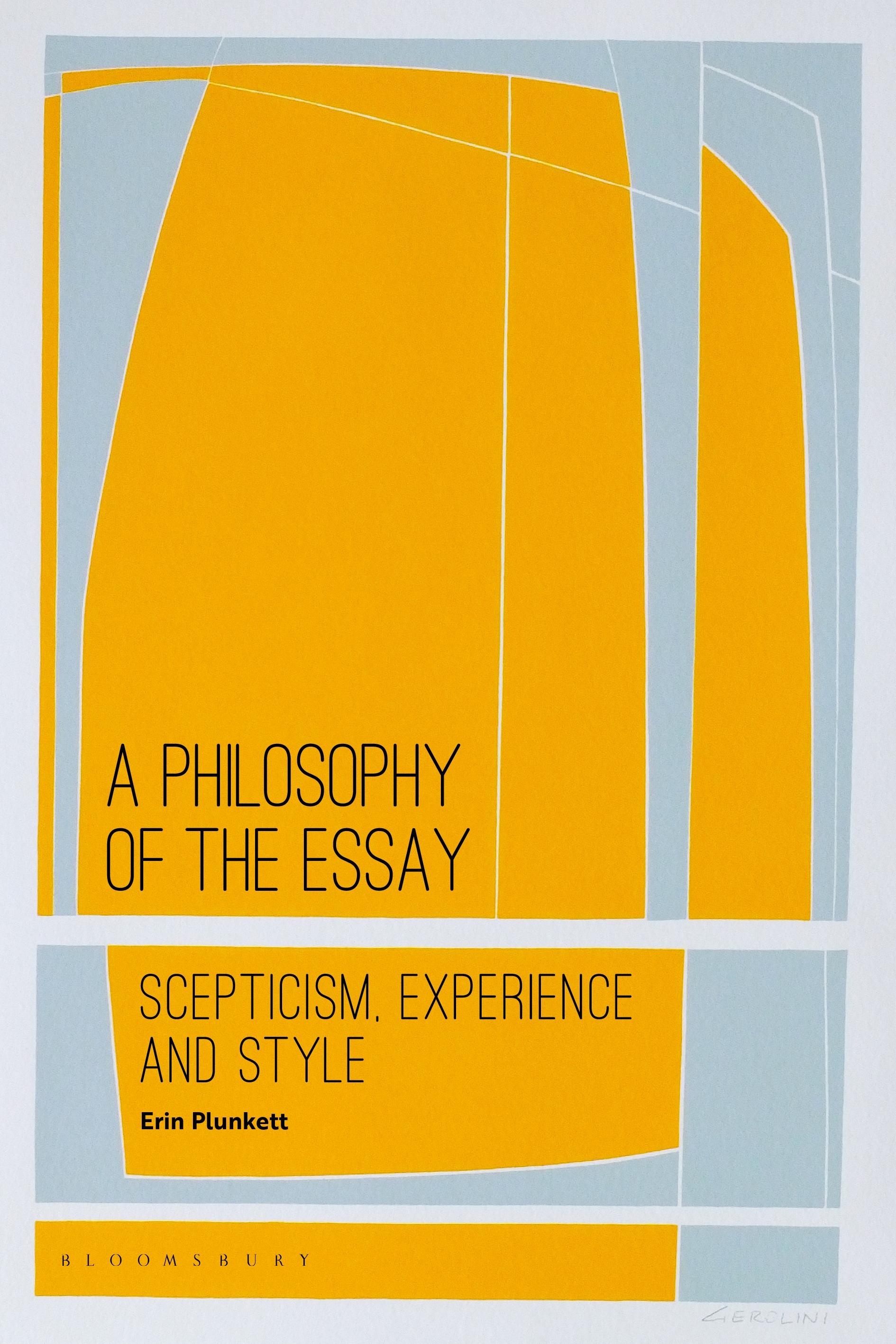
Erin Plunkett draws from both analytic and continental sources to argue for the philosophical relevance of style, making the case that the essay form is uniquely suited to address the sceptical problem. The authors examined here-Montaigne, Hume, the early German Romantics, Kierkegaard and Stanley Cavell-bring into relief the relationship between scepticism and ordinary life and situate the will to know within a broader frame of meaningful human activity. The formal features of the essay call attention to time, subjectivity, and language as the existential conditions of knowledge.
In contrast to foundationalist approaches, which expect philosophy to reach empirical or rational certainty, Plunkett demonstrates through these writings the philosophical advantages of a fragmentary, non-dogmatic style of writing. A Philosophy of the Essay shows how this medium can help us come to terms with the contingency and uncertainty of life.
In contrast to foundationalist approaches, which expect philosophy to reach empirical or rational certainty, Plunkett demonstrates through these writings the philosophical advantages of a fragmentary, non-dogmatic style of writing. A Philosophy of the Essay shows how this medium can help us come to terms with the contingency and uncertainty of life.
Betal enkelt med kort, Klarna, Apple Pay eller Google Pay. Ikke fornøyd? Du har alltid 14 dagers angrerett. Les mer i våre vilkår. Har du spørsmål, send oss en e-post på hello@memmo.org.
Memmo gjør det enklere å studere – uansett hvor du er i verden. Hos oss samler du pensumbøker og smarte studieverktøy på ett og samme sted: sammendrag, quizer, podkaster og flashcards. Og så Ted, din studiekompis som svarer på alt du lurer på. Over 50 000 studenter studerer allerede her – bygget for at du skal lære raskere og stresse mindre.