
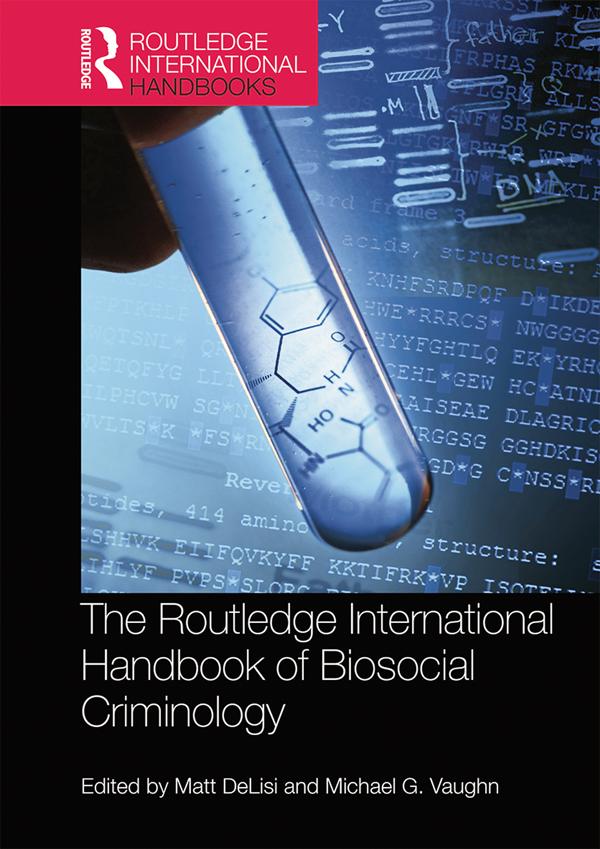
Biosocial criminology is an interdisciplinary field that aims to explain crime and antisocial behavior by exploring both biological factors and environmental factors. Since the mapping of the human genome, scientists have been able to study the biosocial causes of human behaviour with the greatest specificity.
After decades of almost exclusive sociological focus, criminology has undergone a paradigm shift where the field is more interdisciplinary and this book combines perspectives from criminology and sociology with contributions from fields such as genetics, neuropsychology, and evolutionary psychology. The Routledge International Handbook of Biosocial Criminology is the largest and most comprehensive work of its kind, and is organized into five sections that collectively span the terrain of biosocial research on antisocial behavior.
Bringing together leading experts from around the world, this book considers the criminological, genetic and neuropsychological foundations of offending, as well as the legal and criminal justice applications of biosocial criminological theory. The handbook is essential reading for students, researchers, and practitioners from across the social, behavioural, and natural sciences who are engaged in the study of antisocial behaviour.
Betal enkelt med kort, Klarna, Apple Pay eller Google Pay. Ikke fornøyd? Du har alltid 14 dagers angrerett. Les mer i våre vilkår. Har du spørsmål, send oss en e-post på hello@memmo.org.
Memmo gjør det enklere å studere – uansett hvor du er i verden. Hos oss samler du pensumbøker og smarte studieverktøy på ett og samme sted: sammendrag, quizer, podkaster og flashcards. Og så Ted, din studiekompis som svarer på alt du lurer på. Over 50 000 studenter studerer allerede her – bygget for at du skal lære raskere og stresse mindre.