
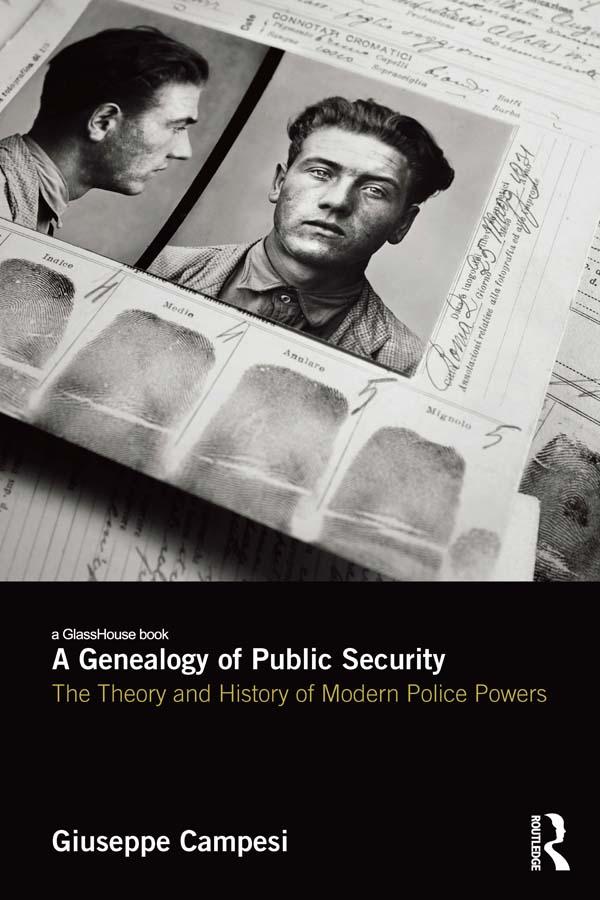
There are many histories of the police as a law-enforcement institution, but no genealogy of the police as a form of power. This book provides a genealogy of modern police by tracing the evolution of "police science" and of police institutions in Europe, from the ancien régime to the early 19th century. Drawing on the theoretical path outlined by Michel Foucault at the crossroads between historical sociology, critical legal theory and critical criminology, it shows how the development of police power was an integral part of the birth of the modern state’s governmental rationalities and how police institutions were conceived as political technologies for the government and social disciplining of populations. Understanding the modern police not as an institution at the service of the judiciary and the law, but as a complex political technology for governing the economic and social processes typical of modern capitalist societies, this book shows how the police have played an active role in actually shaping order, rather than merely preserving it.
Betal enkelt med kort, Klarna, Apple Pay eller Google Pay. Ikke fornøyd? Du har alltid 14 dagers angrerett. Les mer i våre vilkår. Har du spørsmål, send oss en e-post på hello@memmo.org.
Memmo gjør det enklere å studere – uansett hvor du er i verden. Hos oss samler du pensumbøker og smarte studieverktøy på ett og samme sted: sammendrag, quizer, podkaster og flashcards. Og så Ted, din studiekompis som svarer på alt du lurer på. Over 50 000 studenter studerer allerede her – bygget for at du skal lære raskere og stresse mindre.