
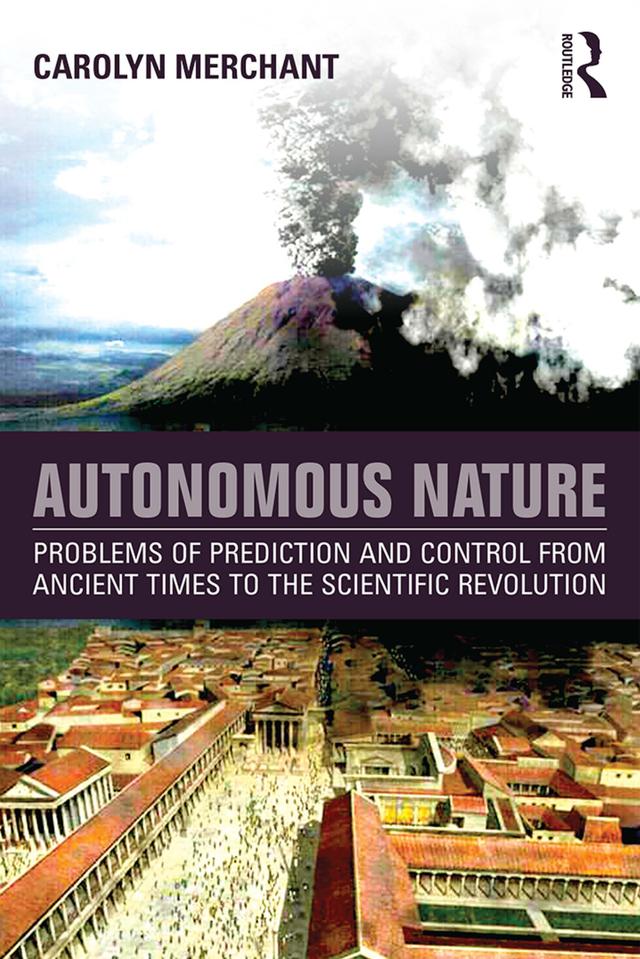
Autonomous Nature investigates the history of nature as an active, often unruly force in tension with nature as a rational, logical order from ancient times to the Scientific Revolution of the seventeenth century. Along with subsequent advances in mechanics, hydrodynamics, thermodynamics, and electromagnetism, nature came to be perceived as an orderly, rational, physical world that could be engineered, controlled, and managed. Autonomous Nature focuses on the history of unpredictability, why it was a problem for the ancient world through the Scientific Revolution, and why it is a problem for today. The work is set in the context of vignettes about unpredictable events such as the eruption of Mt. Vesuvius, the Bubonic Plague, the Lisbon Earthquake, and efforts to understand and predict the weather and natural disasters. This book is an ideal text for courses on the environment, environmental history, history of science, or the philosophy of science.
Betal enkelt med kort, Klarna, Apple Pay eller Google Pay. Ikke fornøyd? Du har alltid 14 dagers angrerett. Les mer i våre vilkår. Har du spørsmål, send oss en e-post på hello@memmo.org.
Memmo gjør det enklere å studere – uansett hvor du er i verden. Hos oss samler du pensumbøker og smarte studieverktøy på ett og samme sted: sammendrag, quizer, podkaster og flashcards. Og så Ted, din studiekompis som svarer på alt du lurer på. Over 50 000 studenter studerer allerede her – bygget for at du skal lære raskere og stresse mindre.